








TOP

On the vast map of life science research, the exploration of gene functions has always been an unavoidable core topic. Whether it's finding breakthroughs for malignant tumors or cultivating super traits for crops that are stress-resistant and stable, only by truly understanding the 'script' of genes can we write the future.
The emergence of CRISPR-Cas9 provides a powerful tool for cracking genetic "orchestration." However, faced with tens of thousands of genes in the whole genome, the workload of knockout screening one by one is enormous. How can large-scale genetic scanning be completed efficiently and precisely to avoid missing key targets? When high-throughput CRISPR library screening becomes a disruptive paradigm, professional library construction and service become crucial.
What is CRISPR gRNA library screening?
Each gRNA in a cell population acts like a scout, and with the help of Cas proteins (such as Cas9 or dCas9), it initiates systematic perturbations on various targets at the genome-wide level or on specific signaling pathways. CRISPR library screening combines drug screening, stress induction, metabolic stress and other experimental conditions to closely link cell phenotypes with endogenous gene functions. Ultimately, high-throughput sequencing quantitatively analyzes the changes in sgRNA abundance before and after through "tracing the cause," thereby identifying the targets that truly exert critical functions.

Statistics show that the global CRISPR technology market is expected to reach $4.2 billion by 2026, with a compound annual growth rate of 15.5%, and is expected to surpass $13.5 billion by 2034. This means that in the future, more and more massive genetic screening will be efficiently completed with the help of high-throughput libraries.
Sometimes, during the screening process, we encounter large fluctuations in results, poor repeatability, or even complete failure, often stemming from three main issues: the quality of library design, the rigor of the database creation process, and the standards of platform delivery.
Design Stage: SgRNAs that go off track can lead you astray.
gRNA design must comprehensively consider multidimensional indicators such as high editing activity, low off-target risk, and frameshift mutation thoroughness. For example, it is necessary to prioritize selecting homomer sequences with high GC content and avoiding ≥ 4T, and to target cleavage sites, ensure that the reading frame shifts that induce the target gene. If the gRNA design itself is not sophisticated enough, all subsequent interference and screening may derail.
Synthesis Stage: Uneven oligonucleotide pools are the source of data distortion.
The source of experimental validation lies in the accuracy of DNA oligonucleotide pool synthesis. As is well known, when the industry's average mutation rate is 5‰, the correct proportion of 100nt-long sgRNA is only 60.6%.
Amplification Threshold: Insufficient coverage will cause you to "miss" most key targets.
When the plasmid bank is in the bacterial expansion phase, it is essential to ensure extremely high electroplasia efficiency and colony coverage, and to ensure that all gRNA sequences designed are evenly included in the final library. If the initial library coverage is below 90%, it means many key genes have already been eliminated before screening begins.
Uniformity Barrier: Abundance bias turns data analysis into a "mirage" Even.
if coverage is sufficient, if the representative frequency of different sgRNA quantities varies greatly in the database, the enrichment of certain targets after screening is likely not caused by biological factors but by "pseudo-traces" of initial abundance deviation. If the deviation exceeds 20%, it can lead people astray.
GentleGen provides one-stop gRNA library services
GentleGen has built a gene service technology platform integrating automation and intelligence, embedding an integrated link between gene synthesis, oligonucleotide synthesis, high-throughput sequencing, and gene editing services, providing a truly standardized, highly precise, and cost-effective one-stop solution for CRISPR sgRNA library construction and screening.
Ultra-high synthesis accuracy ensures every sgRNA is precisely positioned
Relying on its self-developed oligonucleotide synthesis platform, GentleGen has achieved an ultimate mutation rate of 1‰ in oligonucleotide synthesis—
this means that for critical sequence lengths, Junji Biotech can ensure that over 90.5% of sgRNA sequences perfectly match theoretical designs, guaranteeing precise targeting of every gRNA from the sequence source!
Coverage and homogeneity are the "golden dual cores" for evaluating document quality. Under a strict quality control system, GentleGen delivers over 99% library coverage to clients, while maintaining an industry-leading level of uniformity below 10.
High-standard quality control + NGS deep sequencing verification, data speaks for itself at a glance
Once the library is built, it is not simply a matter of packaging and shipping. GentleGen independently validates every delivered plasmid library strictly according to NGS sequencing depth ≥300×, delivering high-purity, endotoxin-free plasmids (total volume ≥ 200μg), allowing you to control quality right from the "first mile" of experiments without extra effort.
There are many directions for basic research or drug development. For whole-genome exploration, GentleGen can directly provide standardized human and mouse whole-genome knockout libraries to support large-scale genetic screening efforts. For specific needs for precisely targeting specific signaling pathways or target gene sets, GentleGen's customized services are always on standby, tailoring and synthesizing each client's unique targets.
From screening to validation, chain-based delivery enables closed loops to arrive faster
Relying on strong NGS bioanalytical capabilities and long-term gene editing experience, GentleGen is not limited to library plasmid construction—from lentiviral packaging, cell infection, screening pressure application, to final high-throughput sequencing and data analysis, GentleGen can scientifically and reasonably integrate generations, helping researchers shorten project cycles, quickly lock onto "targets," and achieve a complete validation closed loop.

So, what can this comprehensive, high-standard library construction and CRISPR screening solution bring you?
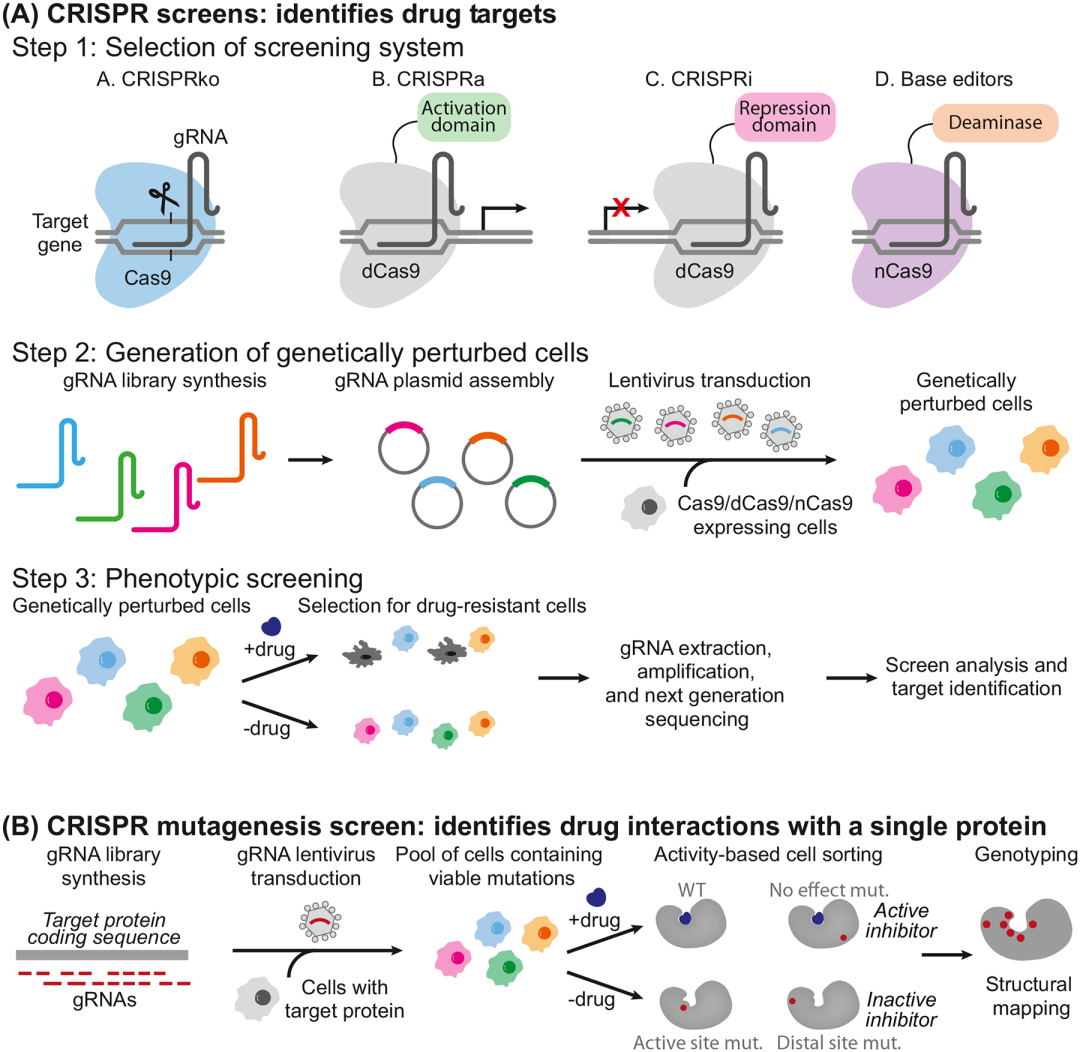
If you are a drug target discoverer from "0 to 1," CRISPR whole-genome knockout screening can help you systematically detect tumor resistance, immune evasion, and key nodes in the body's metabolic networks, avoiding the traditional blind sensation screening;
If you are a researcher focused on signaling pathways and molecular logic, customized CRISPRa/gRNA activation libraries or CRISPRi inhibitory libraries can allow for more precise and flexible regulation between gaining and losing functions;
If you are committed to synthetic biology and engineering transformation, GentleGen's integrated platform transplants automated production lines into the core stages of biological design, elevating accuracy and editing efficiency to new heights, thereby empowering strain modification and industrial upgrading.
GentleGen offers a one-stop sgRNA library service with high precision, high efficiency, and high cost-performance, defined precisely by standards! GentleGen can provide related services. For detailed information about related services, please send an email to marketing@gentlegen.com.