






TOP

In early summer 2026, the global oncology community is turning its attention to Chicago, USA. From May 29 to June 2, the American Society of Clinical Oncology (ASCO) Annual Meeting was held as scheduled, marking a true "highlight moment" for Chinese innovative pharmaceutical companies at this conference—94 studies were selected for oral presentations, and 13 new breakthrough abstracts (LBAs) set a new record.
From "quantity explosion" to "quality breakthrough," Chinese pharmaceutical companies are shifting from "followers" to "competitors," competing for the right to define standards on the international academic stage. And in this dazzling galaxy, the most dazzling coordinates are undoubtedly Akeso Biotechnology.
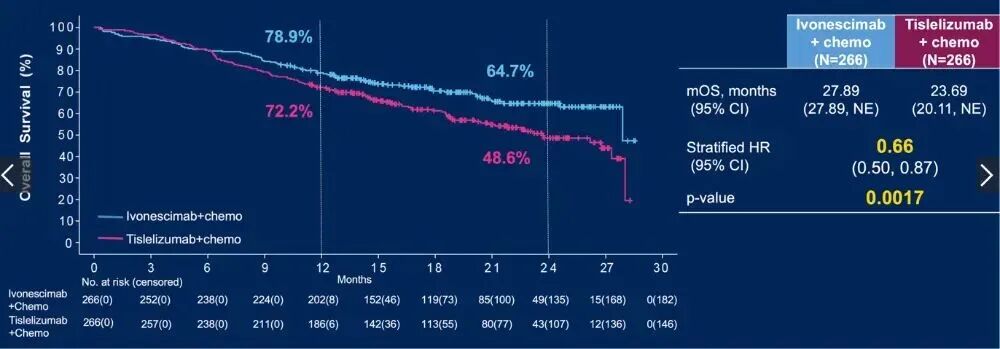
At this year's ASCO, Akeso Biologics' globally pioneering PD-1/VEGF bispecific antibody ivoximab (AK112) became the focus thanks to its phase III HARMONi-6 study. This study was not only selected as the only Chinese indigenous innovative drug research to be included in ASCO's 61-year plenary session, but was also simultaneously published in the main issue of The Lancet.
Data showed: Among 532 patients with advanced lung squamous cell carcinoma, the median overall survival (OS) for the evocal plus chemotherapy group was 27.9 months, while the control group (tislelizumab plus chemotherapy) was 23.7 months, with a significant 34% reduction in mortality risk (HR=0.66); Median progression-free survival (PFS) was 11.1 months vs. 6.9 months, with a 40% risk reduction (HR=0.60).

Regardless of PD-L1 expression levels, all key subgroups consistently benefited. This is the world's first Phase III trial in lung cancer to achieve positive OS and PFS endpoints compared to PD-1 combined with chemotherapy. Previously, Ivoxi had already defeated the "king of medicines" K Pharma in a head-to-head challenge. The "moment of victory" for the dual resistance has arrived.
From efficiency bottlenecks to one-stop breakthroughs: Junji Bio empowers a new paradigm for bispecific antibody R&D
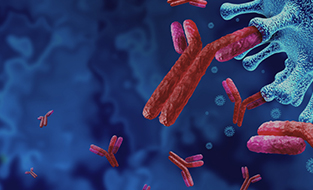
Behind these dazzling clinical data lies the difficulty of developing bispecific antibodies far greater than traditional monoclonal antibodies. Bispecific antibodies require the delicate integration of two binding domains within a single molecule, placing extremely high demands on gene synthesis, sequence optimization, and expression validation.
In traditional manual models, multi-platform collaboration involving gene synthesis, codon optimization, and protein expression leads to fragmented workflows, and a candidate antibody often takes 2-4 weeks from design to obtaining preliminary expression products; Bispecific antibodies require screening a large number of candidate sequences, making efficiency bottlenecks particularly pronounced.
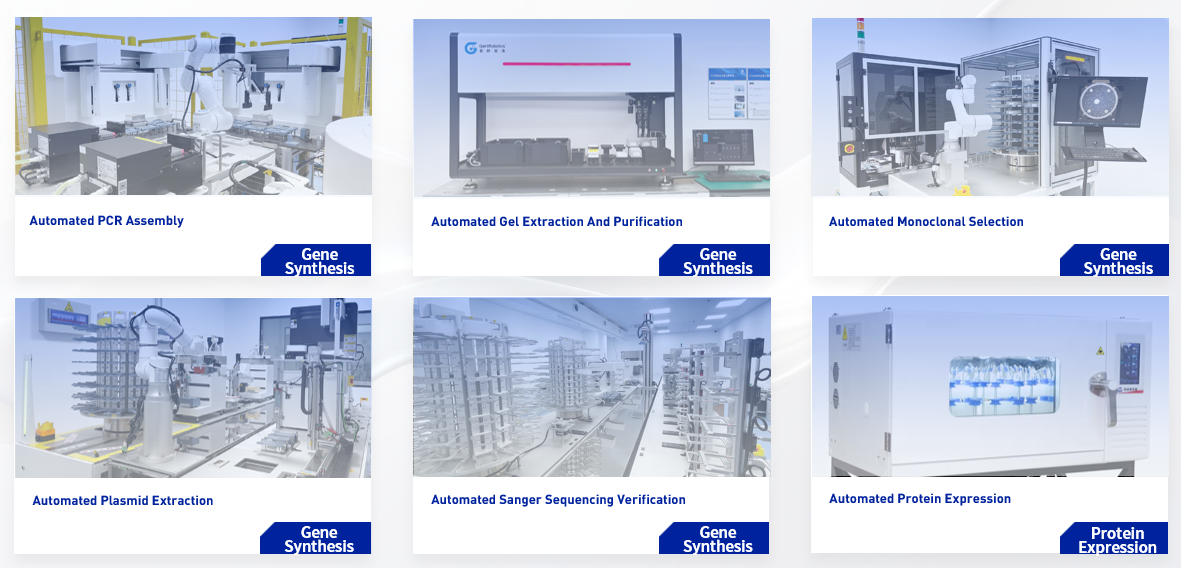
GentleGen centers on "automation + intelligence," creating a one-stop gene technology platform covering the entire process including gene synthesis, oligonucleotide synthesis, sequencing, and protein expression.
GentSynExp 3.0 G-Lab fully automated gene antibody platform.
This platform adopts a "black-light factory" modular production system, achieving full-chain unmanned operations from gene design to plasmid delivery, significantly improving efficiency and accuracy: from gene synthesis to antibody supernatant delivery, it takes as little as 10 days, shortening the industry average cycle by more than 50%; A single throughput can reach 5000+ antibody gene synthesis and expression, greatly meeting the needs for early-stage high-throughput antibody screening

This efficiency advantage is especially valuable—when the number of bispecific antibody candidate sequences is large, each round of rapid expression and validation means a significant compression of the entire project development cycle.
Technical barriers: Overcoming the challenge of complex sequence synthesis
In bispecific antibody development, complex sequence synthesis is a core technical challenge. GentleGen's self-developed intelligent codon optimization algorithm and complex sequence assembly technology have overcome bottlenecks such as high GC/AT and repeatable sequences, enabling efficient synthesis of genes over 10kb, with a first-time synthesis success rate of 99%, sequence accuracy of 99.9%, and superhelical plasmid proportion exceeding 90%.
A high success rate means fewer repeated attempts, shorter cycles, and lower trial-and-error costs, providing key support for bispecific antibody molecules to accelerate the transition from design to validation.
Quality control system: Multi-dimensional assurance of product stability
GentleGen has established a full-process, multi-dimensional quality control: plasmid OD260/280 1.8-2.0, endotoxin ≤0.1 EU/μg; Antibody product purity ≥ 95%, endotoxin ≤ 1 EU/mg, delivery concentration ≥ 1 mg/ml.
Strict source-to-end quality control ensures reliable and coherent data, clearing barriers to translation from early detection to clinical development.
Cost advantages and full-chain service coverage
Cost reduction and efficiency improvement through automated scaling: IgG gene synthesis as low as 49.9 USD/clones, VHH as low as 29.9 USD/clones, with 800 μl of supernatant included per antibody pair.
The service covers the entire lifecycle from antibody discovery to optimization, with full automation for bispecific antibody expression services, a delivery cycle of 3 weeks, and SEC-HPLC purity ≥95%, laying a solid technical foundation for bispecific antibody development. For more information, please contact us at: marketing@gentlegen.com.