









When it comes to AI for antibodies, many people's first thought is: input a target, and AI instantly spits out a perfect drug antibody. But in reality, developing large molecule new drugs is far from simple.
From virtual sequences in computers to candidate drugs that can be injected into patients, there are layers of synthesis, expression, activity validation, animal testing, and then human clinical trials. AI can greatly expand the boundaries of our antibody search, but wet experiment validation is always an unavoidable hurdle.
Generate Biomedicines' GB-0895 is precisely such a benchmark project worth careful consideration across the entire AIDD industry.
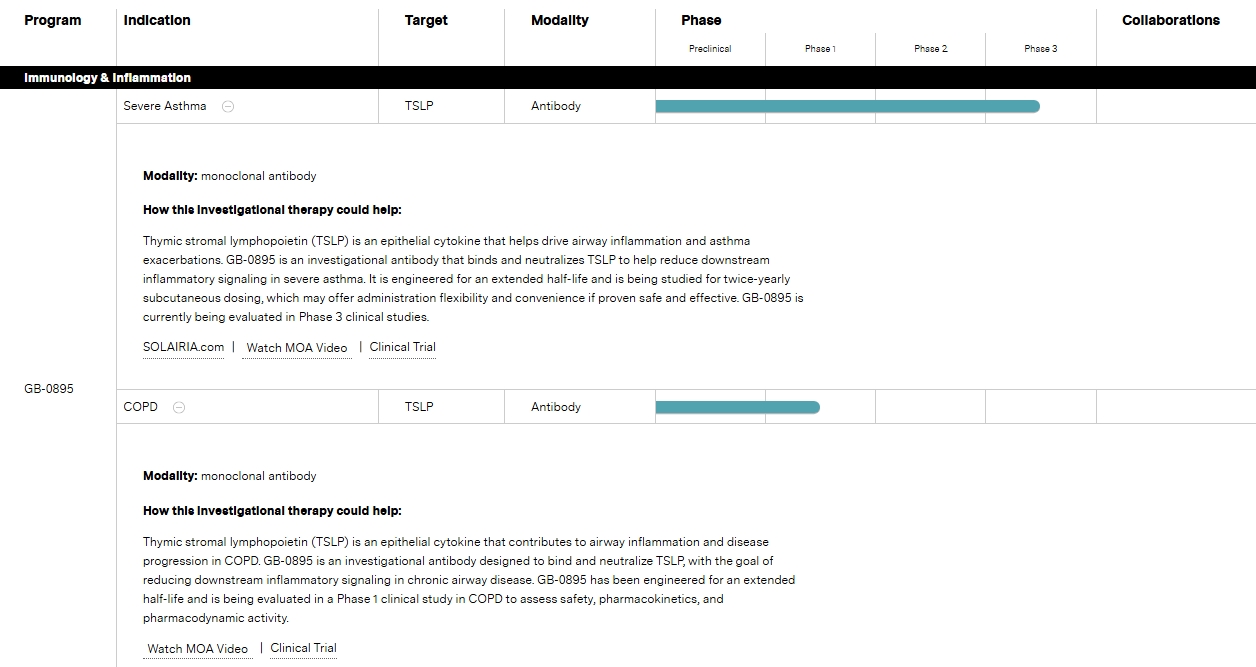
As anti-TSLP antibodies designed from scratch by generative AI, its two global Phase III clinical trials, SOLAIRIA-1 and SOLAIRIA-2, are currently recruiting enthusiastically and are among the few AI-derived antibodies worldwide that have reached late-stage clinical trials.
AI is attempting to break the ceiling of traditional antibody development
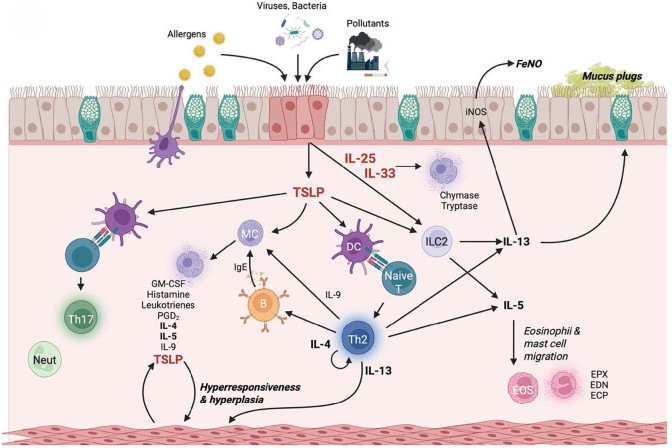
There has always been a real pain point in treating severe asthma. TSLP, as a key inflammatory driver, is a very mature target in the asthma field. Antibody drugs targeting TSLP are already available on the market, but most require monthly dosing. For patients who need long-term disease control, frequent medical visits and injections often make it difficult to guarantee adherence.

In the past, creating an antibody with higher affinity and an ultra-long half-life was not easy with traditional methods.
Whether it's animal immunity, phage or yeast library screening, essentially, it's like searching for a needle in a haystack within the antibody sequence libraries already existing in nature. After obtaining the basic antibodies, they conduct extensive fixed-site mutation trial-and-error to gradually optimize affinity, stability, and pharmacokinetic properties. The cycle is long, the workload is enormous, and the results are full of uncertainty.
Generate's approach is different: instead of relying on natural and ready-made antibodies, they directly use generative AI to design protein sequences from scratch. AI is no longer just making minor modifications to existing antibodies; it is exploring sequence spaces in computers that have never appeared in natural evolution. Targeting TSLP targets, multiple conditions such as affinity, specificity, immunogenicity, and long-term Fc modification are simultaneously integrated into the model for multi-target optimization, producing a large number of candidates in bulk.
But here's a key point: all AI-generated sequences are virtual sequences. No matter how good the paper score is, it doesn't mean the protein can be smoothly expressed in cells, nor does it mean it truly has ideal biological activity.
Therefore, the core of the entire system is not the AI model itself, but a complete closed-loop dry and wet system: AI-generated candidate sequences→ high-throughput wet experiments for expression, affinity, and physicochemical testing → real experimental data return, feeding back into iterative AI models and starting the next round of design.
One injection every six months, AI-designed antibody sprint for Phase III clinical trials
After multiple rounds of iterative selection, GB-0895 stood out. This anti-TSLP antibody features two very striking differentiated features:
Affinity has been greatly improved, about 20 times higher than the marketed benchmark drugs, reaching the fM-level binding level;
Fc has undergone AI-targeted modification, extending its half-life in vivo to about 89 days, with the goal of subcutaneous injection every six months.
From monthly injections to semi-annual injections, if successfully validated in Phase III, it will greatly improve patients' long-term medication adherence. Preliminary phase I clinical data also gave the industry confidence: after a single dose, the inhibitory effect on biomarkers can be maintained for at least six months.
Based on this, Generate officially launched two global Phase III registration clinical trials, SOLAIRIA-1 and SOLAIRIA-2. The trial targets patients aged 12 and above who are poorly controlled by conventional therapies, planning to enroll approximately 1,600 subjects in total. The trial covers 42 countries worldwide, with 33 countries already recruiting participants. The primary endpoint of the trial was to observe the situation over a 52-week cycle, while also comprehensively assessing the drug's safety and tolerability.

Of course, we must view it objectively: GB-0895 is still a candidate drug under investigation and has not yet been approved for marketing. Phase III large-sample human trials are the toughest test for AI designers; the final efficacy and safety still await the release of top-tier data.
Industry Reflection: AI is not magic; closed loops are the core competitiveness
GB-0895 marks a major step forward, greatly encouraging the AIDD industry. But we must still be wary of the narrative traps of "AI one-click drug creation."
In actual projects, it is common to encounter situations where AI outputs a batch of antibody sequences with all indicators excellent, and the computer simulation results are nearly perfect. But once you enter the lab, issues such as expression failure, protein aggregation, and actual affinity far below predictions can occur.
The reason is practical: AI learns patterns from past datasets, not fully replicates the real complex biological systems. Faced with new targets and epitopes, model predictions inevitably become biased.
Therefore, mature AIDD antibody discoveries have never been a one-way "AI sequence output, randomly test a few." The truly valuable R&D model is a closed-loop loop: AI-generated candidate sequences → synthetic expressions and multidimensional functional representations → obtaining real experimental data → reflow correction models → a new round of AI design.
AI is responsible for opening up vast sequence spaces, helping us narrow down the candidate pool; Wet experiments are responsible for verifying hypotheses and correcting AI biases. The two are synergistic, not replacements.
This is also the R&D logic GentleGen insists on.
AI completes intelligent antibody sequence generation and initial druggability screening, outputting candidate sequences; Automated high-throughput wet experiments undertake gene synthesis, antibody expression, BLI/ELISA affinity detection, and physicochemical property characterization; Experimental data is recycled and iterative AI models are continuously improved to improve sequence prediction accuracy.
Full-process automation: Making AI high-throughput screening a routine in the lab
Relying on its independently developed GentSyn-Exp3.0G-Lab fully automated production line, GentleGen has built a one-stop, high-throughput technology platform covering gene design, synthesis, validation, protein expression, and antibody affinity characterization. Traditional R&D models rely heavily on manual validation, but GentleGen has redefined the efficiency and cost of wet experiments through automation.
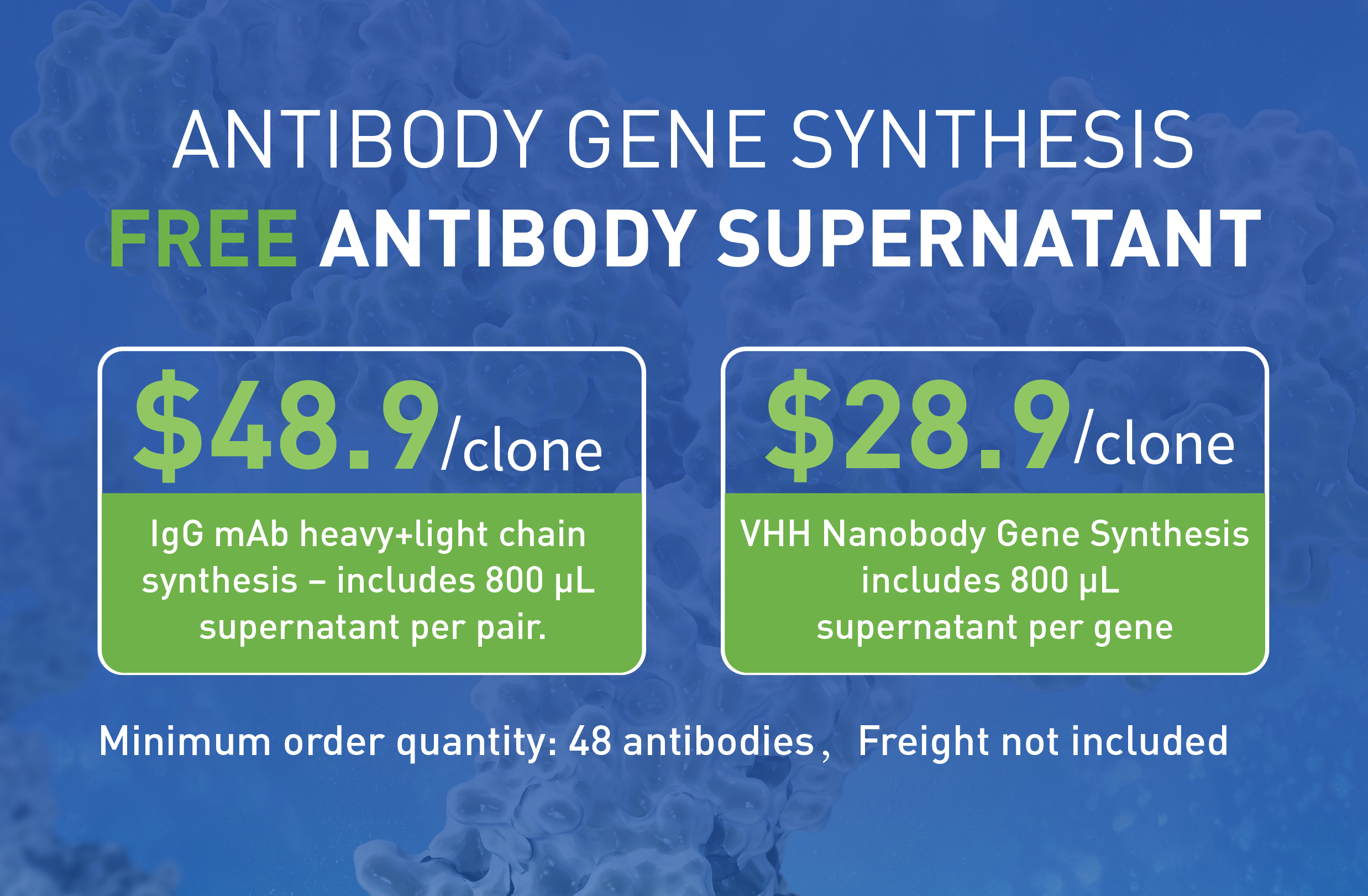
High-throughput screening: High-throughput expression screening greatly reduces the detection cost of individual samples—IgG monoclonal antibody at 48.9 USD/clones, VHH nanobody at 28.9 USD/clones. Each antibody comes with an 800 μl of antibody supernatant that can be directly used for functional validation—eliminating purification steps and skipping intermediate steps, providing one-stop downstream testing from genes to antibodies.

Affinity testing: GentleGen offers three major affinity testing platforms—ELISA, BLE, and SPR—covering the entire process from early-stage high-throughput screening to precise candidate molecular characterization. No matter what stage of antibody discovery you are in, GentleGen can match the most suitable affinity testing protocol.
What AI fears most is the "invalid feedback" caused by failed experiments. GentleGen leverages automation and AI algorithm optimization, achieving a first-time synthesis success rate of 99% and sequence accuracy of 99.9%. This ensures that every feedback signal received by AI agents is genuine and reliable, greatly improving the efficiency of autonomous exploration.
Candidates designed by AI can obtain wet experimental data in the shortest possible time. For more details about related services, you can send an email to marketing@gentlegen.com.