


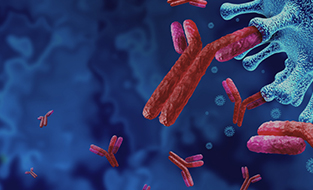




In the development of antibody drugs, scientists often face a core question: how tightly is the antibody in my hand "attached" to its target antigen?
This degree of "closeness" is scientifically called affinity. The higher the affinity, the stronger the binding between antibodies and antigens, and the more likely the drug will be effective. So, how can we accurately measure this bonding strength?
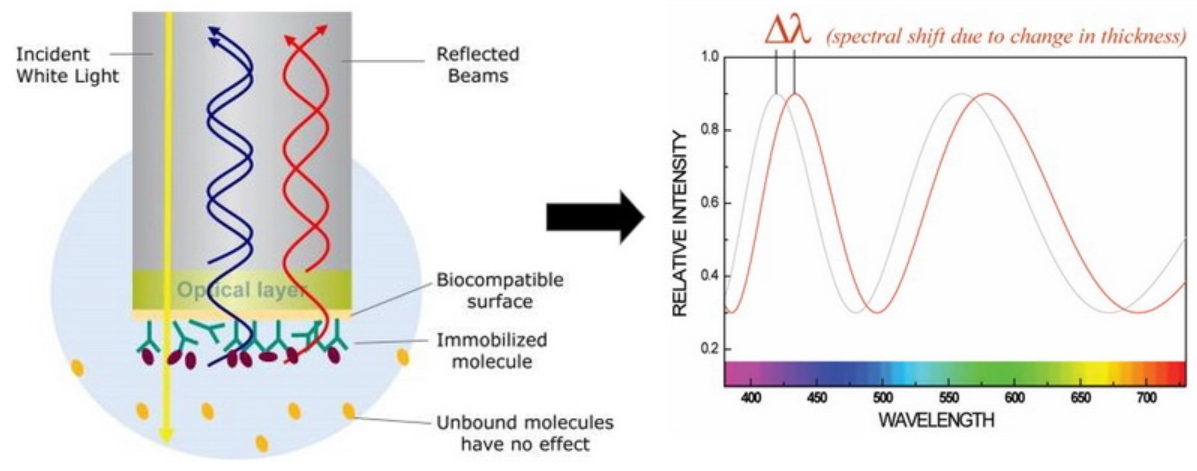
BLI (Bio-Layer Interferometry) is an optical detection technology that requires no labeling and provides real-time monitoring.
At the end of the BLI sensor, there is a layer of biofilm on which scientists fix one of the molecules (such as antibodies) onto the membrane. When another molecule (such as an antigen) binds from the solution, the thickness of the biofilm increases. When a beam of light hits the sensor, it reflects and interferes at different interfaces. Even slight changes in film thickness can cause displacement in the interference spectrum. By recording this displacement in real time, the instrument can "see" the entire process of molecular binding and dissociation.

BLI technology, with advantages such as label-free operation, real-time monitoring, high throughput, and low sample consumption, has been widely applied in antibody drug development and protein interaction research.
Single-point binding means testing antibodies using only a fixed concentration of antigen.
In the early stages of antibody discovery, scientists often have to deal with hundreds or even thousands of candidate antibodies. The advantages of single-point combined inspection are high speed and throughput. Usually, setting the antigen to a higher concentration (such as 5 μM) can quickly determine which antibodies have binding activity. Cloning with a response above a certain threshold is judged as "positive" and can proceed to the next round of screening.
However, single-point combination has obvious limitations—it can only provide a semi-quantitative preliminary judgment. The amplitude of the signal at a single concentration does not accurately reflect the true affinity magnitude.
Multi-concentration KD measurement uses a series of gradient dilutions of antigen concentrations (usually at least 5 concentration points) for detection. The concentration range generally ranges from 0.1 to 10 times the estimated KD value.
In multi-concentration experiments, scientists place binding and dissociation curves at all concentrations together for global fitting, usually using a 1:1 binding model. Through fitting, three key parameters can be precisely calculated:
Binding rate constant (kₒn): How fast molecules bind
Dissociation rate constant (kₒff): How quickly molecules separate
Equilibrium dissociation constant (KD): KD = kₒff / kₒn
The lower the KD value, the higher the affinity. For example, an antibody with KD=1 nM has 100 times stronger affinity than an antibody with KD=100 nM.
Multi-concentration KD measurement is the "gold standard" for formal kinetic data in antibody drug submissions. However, it requires more samples and time, making it unsuitable for large-scale initial screening.
In the early stages of antibody discovery, single-point binding is first used for high-throughput initial screening, quickly identifying "potential stocks" from hundreds of candidates; Then, a select few outstanding individuals undergo precise multi-concentration KD measurements to obtain reliable kinetic data.
This "rough screening first, precise testing later" strategy ensures both screening efficiency and the accuracy of key data, making it an effective "golden combination" in antibody drug development.
Currently, GentleGen offers antibody affinity testing services based on BLI technology, covering the entire process from rapid single-point combination screening to precise characterization of multiple concentrations of KD. Paired with GentleGen's specially designed high-throughput screening [High-Throughput Supernatant Expression Service], it helps your antibody drug R&D projects advance efficiently.
Relying on its independently developed GentSyn-Exp3.0G-Lab fully automated production line, GentleGen has built a one-stop, high-throughput technology platform covering gene design, synthesis, validation, protein expression, and antibody affinity characterization. Traditional R&D models rely heavily on manual validation, but GentleGen has redefined the efficiency and cost of wet experiments through automation.
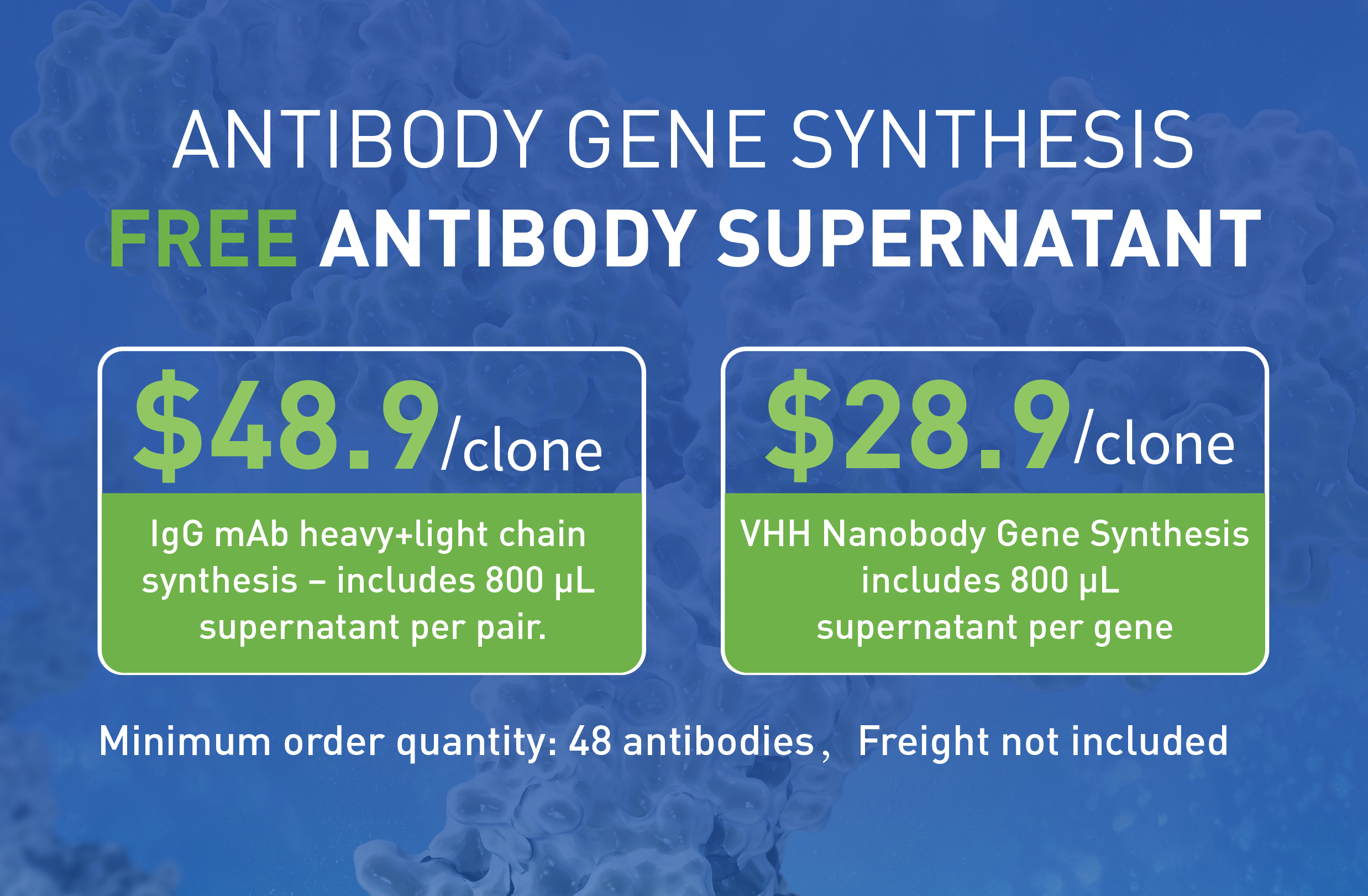
Cost-performance revolution: High-throughput expression screening greatly reduces the detection cost of individual samples—IgG monoclonal antibody at 48.9 USD/clone, VHH nanobody at 28.9 USD/clone. Previously, the budget only allowed for synthesizing one or two antibodies, but now GentleGen can complete high-throughput screening of dozens of antibodies.

Ready to use: Each antibody comes with 800 μl of antibody supernatant for direct functional validation—eliminating purification steps and skipping intermediate steps, delivering one-stop downstream testing from genes to antibodies.
For detailed information about related services, please send an email to marketing@gentlegen.com.