









热线电话:+86 512 6799 8818

在线咨询

TOP

*姓名

*电话

邮箱

咨询内容

*验证码

联系销售


Sales Image

联系销售助理


Sales Assistant Image

联系PM


PM Image
Multi-point breakthroughs in siRNA extrahepatic delivery technology by 2026—GentleGen's full-chain technical support
Release time:2026-08-10
Share:

Since 2018, nearly all of the eight siRNA drugs approved have relied on GalNAc conjugation technology—a delivery system that precisely targets receptors on the surface of hepatocytes. GalNAc's success has firmly locked siRNA indications "within the liver." However, beyond the liver, there are also brains, kidneys, heart, fat, skin, muscles, ...... These organizations are the "main battlefields" for most diseases. Delivering siRNA to extrahepatic tissues requires overcoming biological barriers far more complex than the liver: the blood-brain barrier, the glomerular filtration barrier, and the "natural fate" of nanocarriers being preemptively captured by the liver in the bloodstream.


PNP peptide nanoplatform: the world's first Phase II validation of extrahepatic delivery

Among the many extrahepatic delivery technologies, SinoPharma's PNP (peptide nanoparticles) platform is at the forefront. PNP is self-assembled from siRNA and histidine-lysine peptides, forming uniform nano-sized particles. Unlike traditional lipid nanoparticles, PNP uses a layerless solid spherical design with pH responsiveness. Its histidine residues can mediate the "proton sponge effect" in acidic environments, promoting efficient siRNA escape into the cytoplasm.


In May 2026, the PNP platform announced its Phase II clinical data, marking it as one of the few delivery platforms worldwide with Phase II clinical data for extrahepatic indications. This platform can precisely target tissues such as skin, fat, and muscle, and has proven its safety and efficacy in indications such as non-melanoma skin cancer and local fat reduction. More importantly, PNPs have dual cargo carrying capacity, can carry both siRNA and mRNA, and excel at local retention, making them especially suitable for skin, fat, muscle, eye, and solid tumor applications.


IVSA Self-Assembly in Vivo: Transforming the Liver into a "Biopharmaceutical Factory"

The IVSA technology developed by the Nanjing University team does not focus solely on manufacturing delivery vectors in vitro, but instead uses synthetic biology principles to transform the liver itself into a "biopharmaceutical factory" that continuously produces targeted vesicles.


In June 2026, this study, published in Science China: Life Sciences, showcased IVSA's ingenious design. By intravenously injecting a precisely engineered plasmid DNA, hepatocytes are reprogrammed to simultaneously produce three things: siRNA targeting EGFR, transmembrane proteins with GE11 navigation peptides (which give exosomes tumor-targeting capability), and co-driver promoters that ensure their co-expression. Vesicles produced by the liver automatically load siRNA and carry navigation peptides to precisely locate EGFR-positive tumors.


In various EGFR-mutant lung cancer models, IVSA is more effective than traditional small-molecule targeted drugs (such as gefitinib and osimertinib) and can ignore resistance mutations—because RNA interference directly degrades mRNA at the transcriptional level, unaffected by point mutations. More importantly, the system has demonstrated broad-spectrum anti-cancer potential in various tumors, including gastric and breast cancers.


WeChat Image_20260623111048_60_1


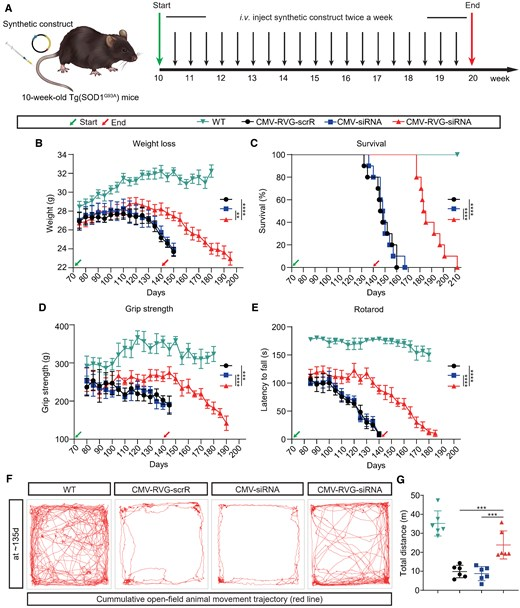
The same technical approach is also applied to neurodegenerative diseases. In a study published in March 2026 in Brain, the team used IVSA strategies to reprogram the liver into continuous production of small extracellular vesicles loaded with SOD1-siRNA, targeting neurons by displaying rabies virus glycoprotein on the surface. In the ALS mouse model, a single injection significantly reduced the mutant SOD1 protein, and typical symptoms such as weight loss, muscle atrophy, and impaired motor function were markedly improved.


Lipo-siRNA Coupling: Chemical precision breaks through the CNS barrier

Besides nanocarriers and bio-self-assembly, chemical conjugation is another important extrahepatic delivery pathway.


Chengdu Pioneer's Conjugate For platform anchors functional lipids to siRNA molecules through chemical coupling, giving them the ability to cross biological barriers. By selecting lipid molecules with different chemical structures and conjugating oligonucleotides, their protein-binding properties in the blood can be regulated, enabling targeted delivery to extrahepatic tissues. Additionally, a modular platform based on click chemistry can precisely mount multiple ligands on siRNA, enabling extrahepatic RNAi through systematic drug delivery.


In terms of CNS targeting, Sino-American Ruikang's SCAD™ platform achieves effective delivery to the central nervous system by conjugating siRNA double-strands with auxiliary oligonucleotides. Its candidate drug, RAG-17, targets the SOD1 gene for the treatment of familial ALS. Phase I clinical data published in April 2026 showed that after a single intrathecal injection, plasma nerve filament light chain protein, a key marker of nerve injury, decreased by 81%, and early signs of disease stabilization were observed in the highest-dose group.


Multi-point blossoming: precise delivery of spleen, kidneys, fat, and heart

By 2026, extrahepatic delivery will make further systemic progress in more organizations:

  • Spleen targeting: A study published in May 2026 in the Journal of Peptide Science engineered a structure-guided peptide to generate the pH-switchable endosomal lysate peptide HSEP-6, achieving selective spleen accumulation, significant Irf5 gene silencing, and markedly reduced TNF-α and IL-6 levels without systemic toxicity.

  • Kidney Targeting: Ribo Bio's RiboPepSTAR™ platform achieves specific uptake and gene inhibition of proximal renal tubular cells across multiple animal models, with inhibition rates up to 80%, covering models from mice to non-human primates.

  • Adipose tissue targeting: In non-human primates, the RiboPepSTAR™ platform achieves up to 96% gene inhibition, opening new avenues for precision treatment of metabolic diseases.

  • Heart-targeted: Data from Rebo Biotech also show that heart-targeted siRNA conjugates achieve sustained and stable gene suppression in cardiac tissue in mouse models, while being virtually inactive in the liver and kidney.


Programmable nucleic acid platform: o-FLARE's "plug and play" paradigm

In June 2026, Academician Tan Weihong and Zhang Penghui's team from the Hangzhou Institute of Medical Research, Chinese Academy of Sciences, reported on a programmable assembly platform called o-FLARE in Nature Biomedical Engineering. This platform is based on ligase-mediated DNA template polymerization technology, assembling functional modules such as nucleic acid aptamers, oncogene silencing oligonucleotides, and CpG motifs onto a circular single-stranded DNA template like a "Lego Brick," forming a stable circular closed structure with defined composition and valence states.

 

WeChat Image_20260623111411_61_1


The uniqueness of o-FLARE lies in its "carrier-free" feature—targeting the high-frequency mutation oncogene KRAS in pancreatic cancer, by assembling nucleic acid aptamers and ASO onto o-FLARE and efficiently uptaking by tumor cells without any transfection reagents, achieving efficient silencing of the KRAS gene with minimal impact on normal tissue. This "plug-and-play" engineering paradigm provides a brand-new universal platform for targeted extrahepatic delivery of nucleic acid drugs.

 

Empowering the industry: GentleGen's siRNA one-stop platform
In the process of siRNA drugs moving from concept to clinical practice, synthesis design, chemical modification, and process scale-up have always been core bottlenecks restricting R&D efficiency.

 

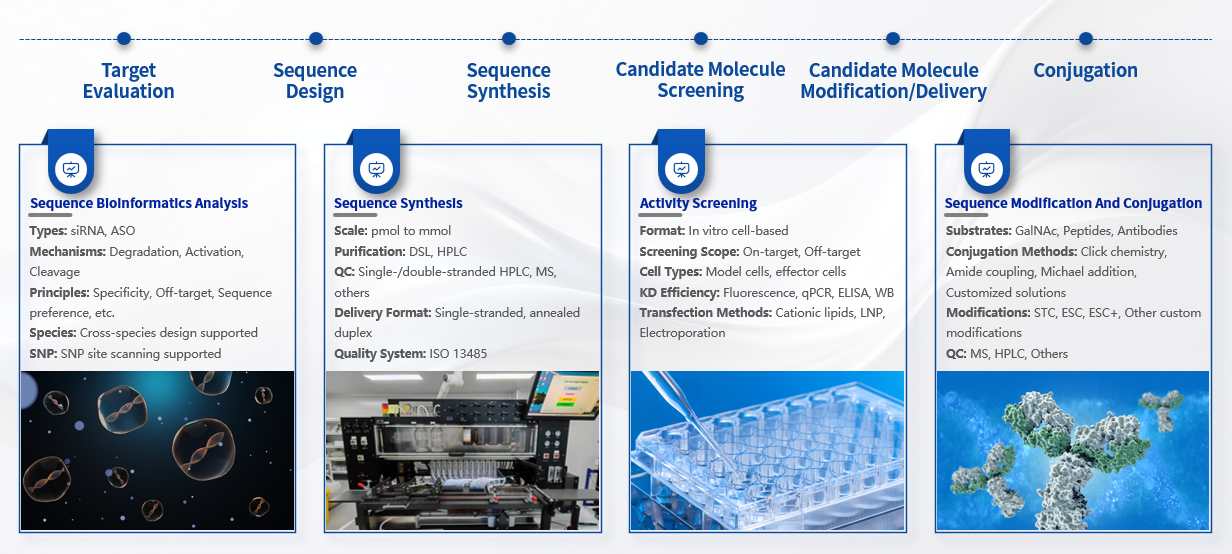
GentleGen's one-stop service platform is not simply a piece of various services, but deeply integrates core capabilities such as target evaluation, sequence design, synthetic purification, active screening, and sequence modification & conjugation, truly achieving a "just think and get" R&D experience.


企业微信截图_1784285893315


For every scientist striving forward on the path of nucleic acid drug development, choosing a reliable partner often means half the battle. Next time you feel troubled by siRNA/ASO synthesis and screening, you might remember: GentleGen's one-stop siRNA platform has already paved a "highway" to your destination. For more details about related services, please send an email to marketing@gentlegen.com.

Pre-sales consulting

Pre-sales consulting

A more reliable solution for your needs.
Download

Download

Welcome to our product library.
Sales network

Sales network

Complete sales and service network to ensure product quality.
Event Promotions

Event Promotions

Add to cart now and enjoy this shopping extravaganza!