If the past decade was the golden age of antibody drugs, then the next decade will belong to oligonucleotide drugs.
From 2025 to early 2026, Alnylam and Inceptive will reach a $2 billion AI drug discovery collaboration; two independent Ionis products will soon be approved for market launch; China's Ribome Biotech received hundreds of times subscription on its first day of listing on the Hong Kong Stock Exchange—behind these intense industry signals lies a clear and definite core message: the regulatory capability of the "gene coding" stage is moving from the laboratory to mainstream clinical practice.
Looking back at the entire pharmaceutical landscape, small molecule drugs act on proteins, antibody drugs act on extracellular targets, and oligonucleotide drugs directly touch the messenger at the very bottom of life—RNA—enabling precise intervention at the source of protein translation. This core mechanism is marking the beginning of the third wave of modern pharmaceutical manufacturing.
Technical route overview: two main trunks, one consensus
Currently, 23 oligonucleotide drugs (including those discontinued) have been approved and marketed worldwide, forming two clear technical backbones: ASO (antisense oligonucleotides) and RNAi (RNA interference).
Among them, 13 ASO products have been approved, covering indications for spinal muscular atrophy, familial hypercholesterolemia, and other diseases; Eight siRNA drugs have been approved, represented by Alnylam's Onpattro and Amvuttra, which have rapidly expanded in the liver-targeted field thanks to GalNAc delivery technology. The differentiation of technological approaches is accelerating: ASO excels at flexible regulation—both silencing protein expression and upregulating protein function through innovative mechanisms. The latter was pioneered by Angdo Biotech, whose ACT-UP1 platform enhances mRNA translation efficiency, increasing protein expression without altering mRNA levels, opening up new therapeutic space for "haploid insufficiency" diseases.
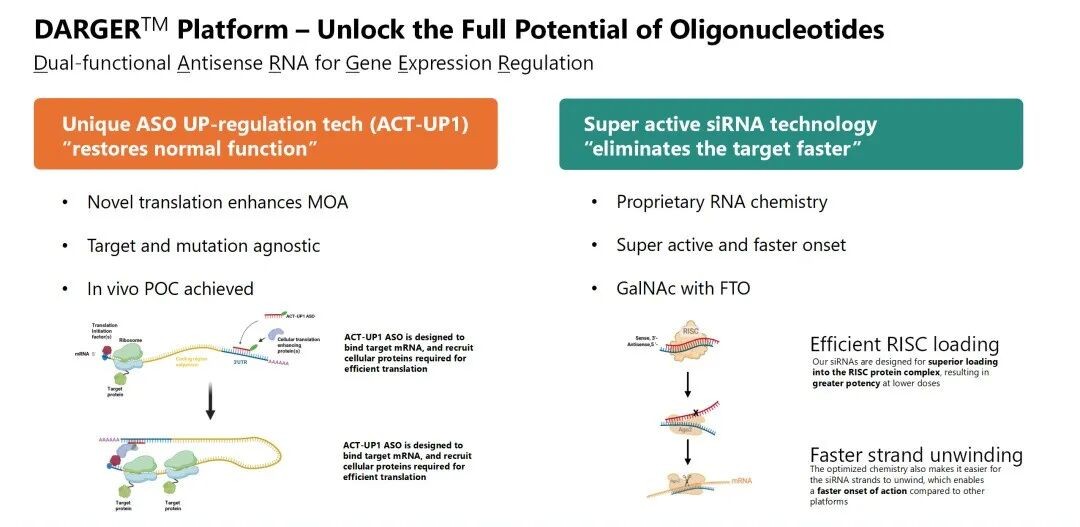
RNAi (mainly siRNA) focuses on precise knockdown, relying on the GalNAc delivery system for long-lasting and efficient delivery, with efficacy lasting over half a year. Companies like Ionis are exploring diversified drug delivery methods such as inhalation and CNS-targeted methods, further expanding the boundaries of applications.
High activity, high specificity, and durability—these three together form the core moat of oligonucleotide drugs.
Latest R&D progress: Indications continue to expand, accelerating at the last moment
1. Substantial breakthroughs in the field of chronic diseases
Weight loss, hypertension, hyperlipidemia—these broad-spectrum indications covering hundreds of millions of patients worldwide are becoming important testing grounds for oligonucleotide drugs.
Alnylam initiated Phase I clinical trials of ALK7-targeted siRNA (ALN-2232) in March 2026. Preclinical data from non-human primates show that ALN-2232 can knock down 95% of ALK7 gene expression in vivo; When combined with semaglutide, it not only produces a synergistic weight loss effect but also significantly avoids common muscle loss issues. If clinical validation goes smoothly, this will be the first oligonucleotide protocol to achieve both weight loss and muscle preservation—its impact on the weight loss drug competition landscape could be compared to Amgen's breakthrough in the small molecule GLP-1 field.
The LDR2402 developed with the pre-derivative has completed Phase II trials, aiming to achieve blood pressure intervention at the source; Rebo Bio's antithrombotic siRNA candidate drug RBD4059 has also advanced to Phase II trials, with preliminary data showing a significant reduction in bleeding risk while fighting thrombosis.
Beyond metabolic diseases, Ionis continues to expand coverage of chronic diseases. Its core pipeline, Olezarsen, has completed a pivotal Phase III study for severe hypertriglyceridemia, with both trials meeting primary endpoints. It is expected to submit a marketing application in 2026, and is expected to become the first independent commercialization product of oligonucleotide drugs in the chronic disease field.
2. Tumor pipeline: Precisely targets "non-druggable" sites
Tumor treatment is another promising area for oligonucleotide drugs.
NuPlus—the world's first DDB2-targeted oligonucleotide drug—is currently focused on metastatic triple-negative breast cancer (mTNBC). Due to high drug resistance, the five-year mortality rate for this disease can reach 90%, and current late-line treatments can only extend survival by 3–6 months. NuPlus is the first to convert the previously "undruggable" transcription factor DDB2 into an inhibitory target by blocking DDB2 binding to damaged DNA and inducing its degradation.
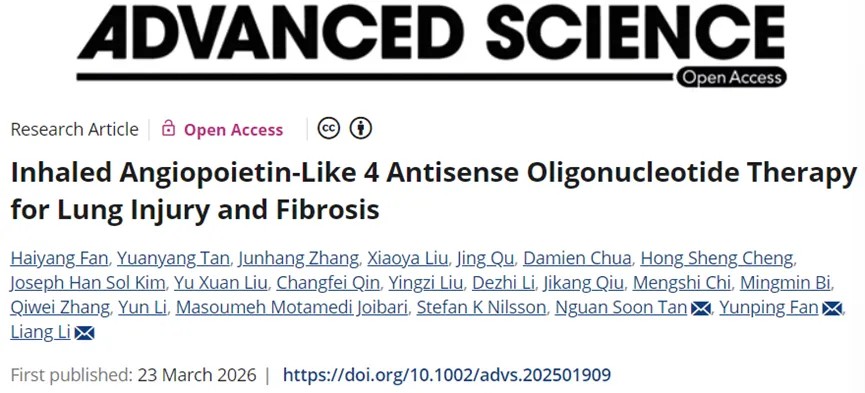
Li Liang's team's latest research reveals an inhaled ANGPTL4-ASO therapy. Under hypoxic conditions, this therapy effectively suppresses ANGPTL4 expression; after inhalation, the drug mainly remains in the lungs, with signals lasting up to 144 hours and extremely low extrapulmonary distribution. This not only opens new pathways for lung injury and fibrosis but also suggests that inhalation administration may bypass some systemic toxicity of intravenous injection.
3. Rare Diseases and Antivirals: High-barrier sectors are accumulating differentiated advantages
In the rare disease field, Salanersen, a spinal muscular atrophy (SMA) therapy from Bojian, has received FDA breakthrough therapy designation. This ASO drug requires only one dose per year, significantly improving patient compliance; Ionis's Alexander disease therapy zilganersen received FDA priority review.
In antiviral areas, more than ten new hepatitis B oligonucleotide drugs are in clinical development worldwide. In January 2026, Xingyao Kunze's Phase II clinical trial application for HT-101 (GalNAc-conjugated siRNA) combined with HT-102 was approved by the US FDA, intended for chronic hepatitis B. Tebo Biotech's ACT201 injection also received a clinical trial application in June 2026. This is an innovative ASO drug, and its innovative antisense oligonucleotide drug selected for major national science and technology projects is accelerating research on hepatitis B treatment.
Beyond hepatitis B, oligonucleotide drugs are attempting to build a pan-viral defense system. A study designing ASO targeting SARS-CoV-2 highly conserved RNA-dependent RNA polymerase (RdRp) showed that ASO targeting RdRp has broad-spectrum antiviral potential and can address the escape of different variants.
Market and Commercialization: From Blockbuster to Overseas Boom
1. The signaling significance of a blockbuster drug
Novartis's Leqvio, the world's first siRNA ultra-long-acting lipid-lowering drug, is expected to soar to $1.198 billion in sales by 2025, a year-on-year increase of 57%. This data directly addresses the industry's biggest doubt about whether oligonucleotides can be used for large-scale indications: Leqvio's dosing regimen, which requires only two injections per year, is reshaping the habits and competitive landscape of lipid-lowering drugs.
Driven by this momentum, in the first quarter of 2026 alone, global revenue from oligonucleotide drugs already marketed will exceed $2.2 billion; Alnylam product revenue reached $1.036 billion, up 121% year-over-year.
2. Major overseas orders: The internationalization momentum of domestic pipelines
In September 2025, Bowang Pharmaceutical reached two exclusive licensing agreements with Novartis, with a potential transaction value reaching $5.2 billion, setting a new record for China's oligonucleotide drug licensing cooperation. Including the previous $4.165 billion licensing deal, the total value of the two-year partnership with Novartis has approached $10 billion.
This is just a microcosm of the wave of domestic pipelines going global. From 2025 to early 2026 alone, the total amount of overseas oligonucleic acid transactions disclosed by domestic companies has exceeded 15 billion USD. The willingness of MNC companies such as Novartis, GSK, and Boehringer Ingelheim to pay fully reflects the global recognition of China's original capabilities.
3. CXO: From capacity competition to integrated competition
While the drug pipeline is booming, pressure on the production side is rising sharply. This is precisely the strategic value of the CXO segment.
WuXi AppTec's TIDES business revenue for Q1 2026 is 2.38 billion yuan, with an expected annual growth rate of around 40%; The company's total order backlog was 59.77 billion yuan, a year-on-year increase of 23.6%. Kailai Ying's emerging business revenue was 598 million yuan, a year-on-year increase of 74.07%. CSPC Pharmaceutical Group's SYH2053 domestic PCSK9 siRNA has been approved to initiate Phase III clinical trials, becoming one of the most advanced domestic oligonucleotide drugs.
Delivery Technology: The Most Critical "Last Mile"
Delivery capability directly determines the druggability of oligonucleotide drugs.
The liver has matured, and the extrahepatic surgery is the main battlefield. GalNAc technology has systematically addressed liver delivery issues—among the seven siRNA therapies approved by the FDA, six use GalNAc conjugation platforms. However, extrahepatic tissue delivery remains the biggest bottleneck restricting industry expansion.
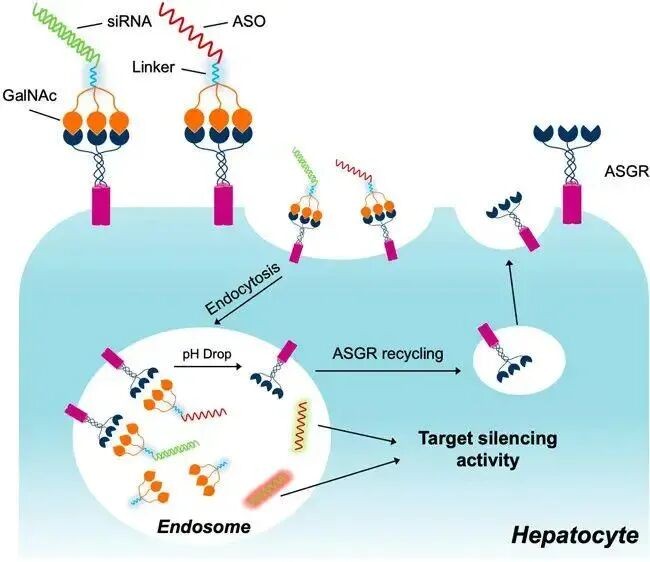
The kidneys can quickly clear drugs, but the blood-brain barrier blocks drug penetration, resulting in weak uptake capacity by myocardial cells and extremely low delivery efficiency in fat tissue. Overcoming these physiological barriers is a key step for oligonucleotide drugs to move from liver disease to multi-system diseases such as the nervous, metabolic, muscle, and cardiovascular systems.
Global leaders have already broken through on various routes:
-
In the CNS direction, Alnylam breaks through the blood-brain barrier with C16 lipophilic modification technology. Phase I clinical data from its early-onset Alzheimer's pipeline ALN-APP show that after two months of administration in the high-dose 150 mg group, the average reduction in cerebrospinal fluid Aβ42 and Aβ40 levels reached 61% and 79%, respectively, with effects lasting up to 12 months. Phase II clinical trials in this field are expected to begin in the first half of 2026.
-
In the field of adipose tissue, Arrowhead's ARO-ALK7 data showed that after a single dose of 200mg, at week 8, ALK7 mRNA in adipose tissue was knocked down by up to 94%, and visceral fat was significantly reduced by 14.1% compared to the placebo group. This is the world's first RNAi therapy to validate fat reduction through fat delivery.
-
In muscle targeting, Avidity overcomes muscle delivery bottlenecks through its AOC platform, with its core pipeline AOC 1001 advancing to critical clinical validation stages.
Potential challenges: Three types of bottlenecks urgently need to be overcome
1. Precision in sequence design
The most practical challenge in siRNA/ASO development is how to precisely locate the optimal silence window during sequence design. Current tools struggle to balance targeting specificity with cross-species homology, resulting in generally low design efficiency. This is precisely why leading companies like Alnylam are accelerating the advancement of AI-driven sequence screening platforms—generative AI is expected to convert large amounts of human trial and error into algorithm-driven iterative optimization.
2. Quality control standards and process scale-up
The quality control system and production process of oligonucleotide drugs are not highly standardized. Compared to chemical small molecule drugs, impurity profiling of oligonucleotide drugs is more complex, and developing quality control methods is more challenging; Pilot scale-up and commercial mass production are industry-recognized bottlenecks.
Leading domestic CXOs are making systematic plans for this (such as WuXi AppTec's new Changzhou base, Kailaiying's GalNAc raw material in-house, LanXiao Technology's full-chain carrier platform, etc.) are filling this gap, but there is still a significant gap to full localization and cost competitiveness.
3. Immunogenicity and off-target risk
Artificially synthesized oligonucleotides are at risk of being recognized by pattern recognition receptors (PRRs) and triggering immune responses. At the same time, clinical translation should also pay attention to issues such as the short half-life of oligonucleotides in blood and the silencing of nonspecific genes during AOC delivery due to cross-reactivity between antibodies and healthy tissues. These risks collectively limit the expansion of treatment windows.
GentleGen's one-stop service platform is not simply a piece of various services, but deeply integrates core capabilities such as target evaluation, sequence design, synthetic purification, active screening, and sequence modification & conjugation, truly achieving a "just think and get" R&D experience. For more details about related services, please send an email to marketing@gentlegen.com.
Establishing a foothold in the rare disease field is just the beginning; the real force that has made capital markets and MNCs bet simultaneously comes from the broad expansion of the chronic disease market—if all goes well, by 2034, the global oligonucleotide drug market could reach $54.9 billion.
The core driving forces supporting this market scale are: first, technological iteration (breakthroughs in extrahepatic delivery, AI-assisted sequence design, automated CMC); second, gradual commercialization validation (continuous scaling of products like Leqvio and Amvuttra); and third, overall enhancement of competitiveness across the entire domestic pipeline.