









热线电话:+86 512 6799 8818

在线咨询

TOP

*姓名

*电话

邮箱

咨询内容

*验证码

联系销售


Sales Image

联系销售助理


Sales Assistant Image

联系PM


PM Image
GentleGen's affinity testing technology: How to choose ELISA, BLI, and SPR?
Release time:2026-09-08
Share:

What are the detection principles of ELISA, BLI, and SPR?

  • ELISA (Enzyme-Linked Immunosorbent assay): Antigen or antibody is fixed at the bottom of a microplate, the sample to be tested is added to form an antigen-antibody complex, and then enzyme-labeled secondary antibody is added to catalyze the substrate's color change. By measuring absorbance, the binding strength is indirectly reflected. ELISA only reads signals after reaction equilibrium and cannot observe the processes of binding and dissociation.


  • BLI (Biolayer Interferometry): Ligands are fixed at the end of the fiber optic biosensor. After immersing the sensor in sample solution, molecules bind and cause the thickness of the biofilm at the sensor end to increase, causing a shift in the interference spectrum of the reflected light. The instrument records the displacement of the interferometric spectrum (nM) in real time, plotting the coupling and dissociation curves along the time axis, and directly calculates ka (bonding rate), kd (dissociation rate), and KD (affinity constant).


  • SPR (Surface Plasma Resonance): Ligands are fixed on the surface of a gold chip. When molecules bond, local refractive index changes on the chip surface, causing SPR angle shifts. The instrument records real-time changes in RU (Resonance Units), plotting the bonding and dissociation curves along the time axis to calculate kinetic parameters.


Comparison of core strengths and weaknesses of ELISA, BLI, and SPR

ELISA has advantages such as simple operation, high throughput, and low cost, making it suitable for large-scale initial screening. However, its limitations are also obvious: it is an endpoint-of-use method, requires enzyme-labeled secondary antibody labeling (which may affect the natural conformation of the antibody), can only obtain semi-quantitative data, and cannot provide binding kinetics parameters.


BLI's advantages include real-time label-free detection, low sample consumption, higher throughput than SPR, lower sample purity requirements (coarse supercharger can also be detected), and reusable sensors. Its limitation is that sensitivity is slightly lower than SPR and it is affected by changes in the buffer solution's refractive index.


The advantages of SPR lie in its extremely high sensitivity (detectable pM-level affinity) and the highest data recognition, recognized as the industry's gold standard. However, it has low throughput, extremely high sample purity requirements, the highest instrument and chip costs, and complex maintenance.


Why aren't the affinity results for ELISA and SPR/BLI tests parallel?

  • Different detection principles require different information dimensions: ELISA measures the binding signal strength (OD value) and reflects the "binding amount at a specific concentration"; SPR/BLI measures the rates of binding and dissociation, reflecting the "kinetic characteristics of binding." An antibody may show low affinity in SPR even if the signal is strong in ELISA due to rapid dissociation.


  • Labeling may alter antibody conformation: ELISA requires enzyme-labeled secondary antibodies for color development. Although the secondary antibody itself does not directly label the antibody to be tested, the formation of antigen-antibody-secondary antibody complexes may introduce steric hindrance or affect binding interfaces; SPR/BLI is label-free testing that reflects the true natural state of antibodies.


  • Differences in sample matrix: The crude supernatant contains impurities such as culture medium components and bovine serum proteins, which may interfere with ELISA and BLI detection, but for SPR, it may clog the microfluidic system. Crude supernatant may obtain usable data in BLI, but purified SPR data may yield different results.


How to use the three methods at different stages of antibody development?

During the hybridoma or phage display screening stage (involving hundreds or thousands of clones), ELISA is preferred for rapid initial screening, using a coarse supernatant to quickly exclude negative clones and obtain preliminary sequencing of binding signals. The ELISA positive threshold should not be set too high; the key is "no omissions" rather than "the most precise."
 

Entering the positive clone screening stage (about dozens of clones), it is recommended to use BLI for direct kinetic detection of the crude supernatant to achieve rapid sequencing and confirm binding activity. The sample can be either a crude supernatant or a preliminary purified product. BLI serves as a bridge between "coarse screens" and "precision measurements," providing reliable kinetic sequencing when sample quantities are limited.


After identifying the lead molecule (about a few clones), precise KD determination, epitope grouping, and competitive experiments are performed using BLI or SPR, which requires purified samples.


Upon entering the candidate drug characterization stage (1-2 molecules), SPR must be used to complete application-level accurate data (KA/KD/KD) and multi-condition stability analysis, requiring high-purity samples. During the declaration stage, SPR must be used to complete core data packets, as this is recognized by regulatory authorities as the gold standard.


During batch release and QC stages, SPR or BLI is used for batch-to-batch consistency confirmation, and the sample is purified. The choice between SPR and BLI depends on flux requirements and equipment configuration.


From high-throughput initial screening to application-level data: GentleGen's full-platform affinity testing service

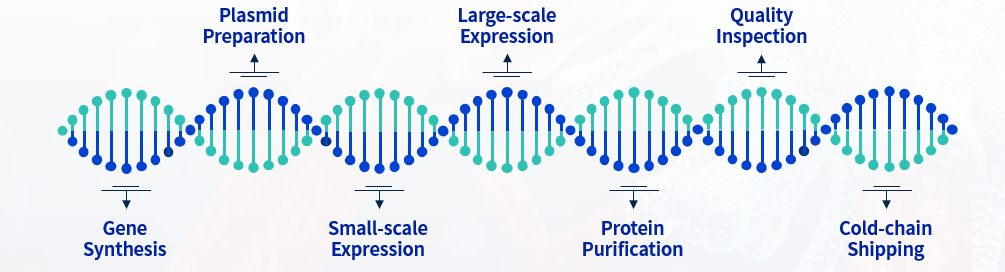
Relying on its independently developed GentSyn-Exp3.0G-Lab fully automated production line, GentleGen has built a one-stop, high-throughput technology platform covering gene design, synthesis, validation, protein expression, and antibody affinity characterization. Based on the characteristics and applicable stages of these three affinity detection technologies, GentleGen offers three major affinity testing platforms: ELISA, BLI, and SPR, covering the entire process from early high-throughput screening to precise characterization of candidate molecules.


企业微信截图_1788856758751


  • ELISA platform: supports antigen-antibody and ligand-receptor binding assay detection, suitable for semi-quantitative evaluation of binding signals during high-throughput screening stages.


  • BLI platform: Offers two approaches: single-concentration point initial screening and multi-concentration point precise kinetic analysis. Single-concentration point solutions are suitable for rapid confirmation of binding activity and preliminary sequencing; The multi-concentration solution can accurately calculate the values of ka, kd, and kD.


  • SPR platform: Equipped with Protein A chip (suitable for Fc-labeled antibodies) and NTA chip (suitable for His-labeled antibodies), among other sensor chips to meet affinity detection needs for different molecular types.


No matter what stage of antibody discovery you are at—from initial screening of massive clones, to kinetic sequencing of dozens of positive clones, and precise characterization of final candidate molecules—GentleGen can match you with the most suitable affinity testing solution, offering one-stop services from samples to data reports. For more details about related services, you can send an email to marketing@gentlegen.com.

Pre-sales consulting

Pre-sales consulting

A more reliable solution for your needs.
Download

Download

Welcome to our product library.
Sales network

Sales network

Complete sales and service network to ensure product quality.
Event Promotions

Event Promotions

Add to cart now and enjoy this shopping extravaganza!