



What components do mRNA drugs contain? What is the core principle behind its use in disease treatment?
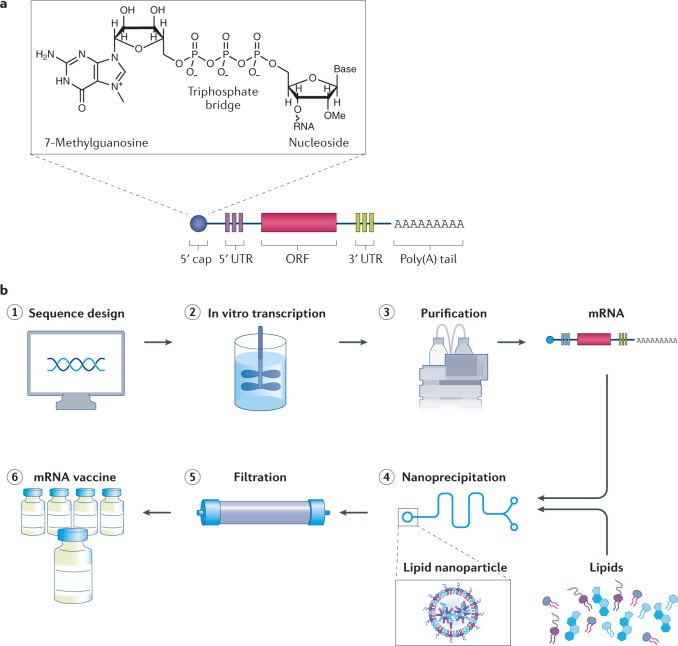
A typical mRNA molecular structure includes:
5' cap: Protects mRNA from nuclease degradation and recruits ribosomes to initiate translation. The integrity of the hat structure and the capping rate directly affect translation efficiency.
5' Non-Translational Region (5'UTR): Regulates translation initiation efficiency, affecting mRNA stability and translation level.
Open Reading Frame (ORF): The sequence encoding the target protein. The sequence accuracy of ORFs is central to safety evaluation—any mutation may lead to the production of abnormal proteins.
3' Untranslated region (3'UTR): affects mRNA stability and translation efficiency, regulating mRNA's half-life within cells.
Poly(A) tail: maintains mRNA stability and promotes translation. The length distribution of Poly(A) tails is a key indicator for mRNA mass analysis—too short reduces stability, while too long may affect translation efficiency.

mRNA drugs mainly utilize intracellular translation systems to directly synthesize target proteins, supplementing or replacing missing or abnormal protein functions.
After mRNA is delivered into the cytoplasm, the ribosome recognizes the 5' cap structure of the mRNA and begins translation, reading codons along the ORF region and gradually synthesizing the target protein. The synthesized proteins are folded and modified to exert therapeutic functions.
This principle gives mRNA drugs three major advantages: fast development (only changing sequences to target new proteins), controllable cost (no complex protein purification process), and adjustable immunogenicity (reducing immune activation by modifying nucleotides).
Are there undetectable mRNA drug traits in sequencing services for biopharmaceutical safety evaluation?
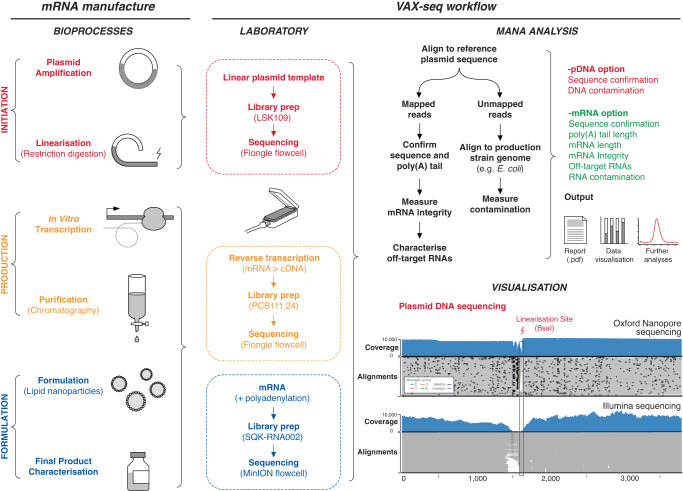
NGS sequencing services can detect mRNA sequence accuracy, sequence variation, Poly(A) tail length distribution, T7 polymerase fidelity, low-frequency RNA mutations, dsRNA residues, circular RNA quality, and more.
However, capping rate is a key quality attribute in mRNA structure analysis, reflecting the addition efficiency of the 5'-end cap structure. The cap structure is crucial for the translation efficiency and stability of mRNA. Without a cap, mRNA is recognized by cells as a "foreign substance" and rapidly degrades, resulting in extremely low translation efficiency. Detection of capping rates usually relies on non-sequencing methods such as liquid chromatography (HPLC) or mass spectrometry, quantifying by separating capped and uncapped mRNA fragments.

What sequence validation solutions are available for mRNA drugs?
Sanger sequencing: suitable for mRNA sequence validation (optionally including Poly(A) regions) and circular RNA sequence verification;
Second-generation sequencing (NGS): used for sequence validation, sequence variant detection, and double-stranded RNA (dsRNA) analysis;

Third-generation PacBio sequencing: used for plasmid and RNA sequence validation, Poly(A) tail length distribution analysis, polymerase fidelity, and low-frequency RNA mutation detection.
Why is it necessary to validate both plasmid and mRNA sequences simultaneously?
Because mRNA is transcribed from template plasmids outside the body, the accuracy of the plasmid sequence directly determines the accuracy of the mRNA sequence. If there is a mutation in the plasmid template, the transcribed mRNA will also carry the wrong sequence, ultimately translating the abnormal protein.
Therefore, mRNA drug safety evaluation must verify both plasmid and mRNA sequences, ensuring sequence accuracy throughout the entire chain from source to product.
GentleGen NGSafety™: Redefining safety assessment standards with NGS technology
GentleGen has launched an innovative NGSafety™ technology platform focused on the quality analysis and testing needs of CGT products, including mRNA-NGSafety™, CRISPR-NGSafety™, AAV-NGSafety™, Lenti-NGSafety™, and others, meeting regulatory requirements with strict quality control systems, precise sample preparation processes, and bioinformatics analysis capabilities. GentleGen's NGSafety™ platform has helped multiple clients in the CGT field successfully file IND applications for China or the United States.
GentleGen is committed to promoting the standardization and precision of biologics safety evaluation through NGS technology, helping pharmaceutical companies improve R&D efficiency, reduce clinical risks, and accelerate drug market launches. For more information, please contact us at: marketing@gentlegen.com.