


热线电话:+86 512 6799 8818

在线咨询

TOP

*姓名

*电话

邮箱

咨询内容

*验证码

联系销售


Sales Image

联系销售助理


Sales Assistant Image

联系PM


PM Image
GentleGen Observation | Mythos 5.1 Hit Rate Nearly 50%: No matter how strong large models are, wet experiments remain the gold standard for macromolecules
Release time:2026-09-29
Share:

In September 2026, Anthropic officially released Claude Mythos 5.1, delivering blockbuster experimental data from the original protein design: 12 target protein conjugates, wet test test hit rate close to 50%, far exceeding the industry's usual 10%~15% range. Once the news broke, it quickly spread across the AIDD macromolecule community. But we must still view it rationally: large models excel at expanding sequence spaces, and the dry-wet closed loop is the unshakable underlying logic in large molecule drug development.


What is Mythos 5.1? Core results of this protein design experiment

Mythos 5.1 is Anthropic's dedicated large model for high-risk fields such as life sciences and cybersecurity. Like the foundational model, there is also Fable 5.1, which is open to the public; the Mythos version only grants access to research institutions that have passed qualification review.


This protein design is not just about benchmarking, but a complete Agent workflow: Mythos 5.1 autonomously calls open-source protein design and folding tools to autonomously complete target binding site selection, sequence generation, structure prediction, candidate molecule screening, outputs candidate mini binders (small binding proteins), and then submits candidate sequences to two independent external labs for wet experiment validation. This is not an internal computer simulation self-evaluation. Core Data:


  • 12 test targets, with a combined hit rate close to 50%; Traditional protein design from scratch generally has a success rate of only 10%-15%;


  • On three of these targets, the affinity of the Mythos 5.1 design molecule reached 10 times that of the optimal molecule in the Adaptyv Bio international protein design competition;


  • The entire process is autonomously scheduled by large model agents using bioinformatics tools, reducing a large amount of manual operations and significantly shortening the design cycle for target candidate molecules.


Industry Hot Topic: 50% Hit Rate Does AI Mean AI Can Replace Wet Experiments?

Many people see the 50% figure and their first reaction: AI predictions are already accurate enough—could it reduce or even skip a large amount of lab screening?


The answer is quite the opposite: this 50% hit rate is the result of wet experiments.


The remaining 50% of molecules scored well by AI on computers showed no binding activity after synthesis and expression. Even with the significant improvements in Mythos 5.1 capabilities, half of the virtual design molecules still failed in the lab.
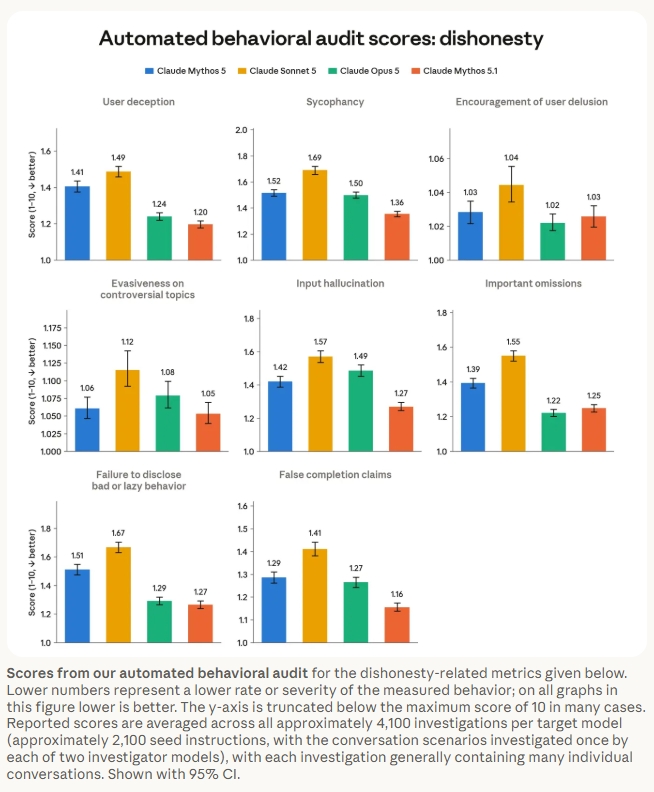
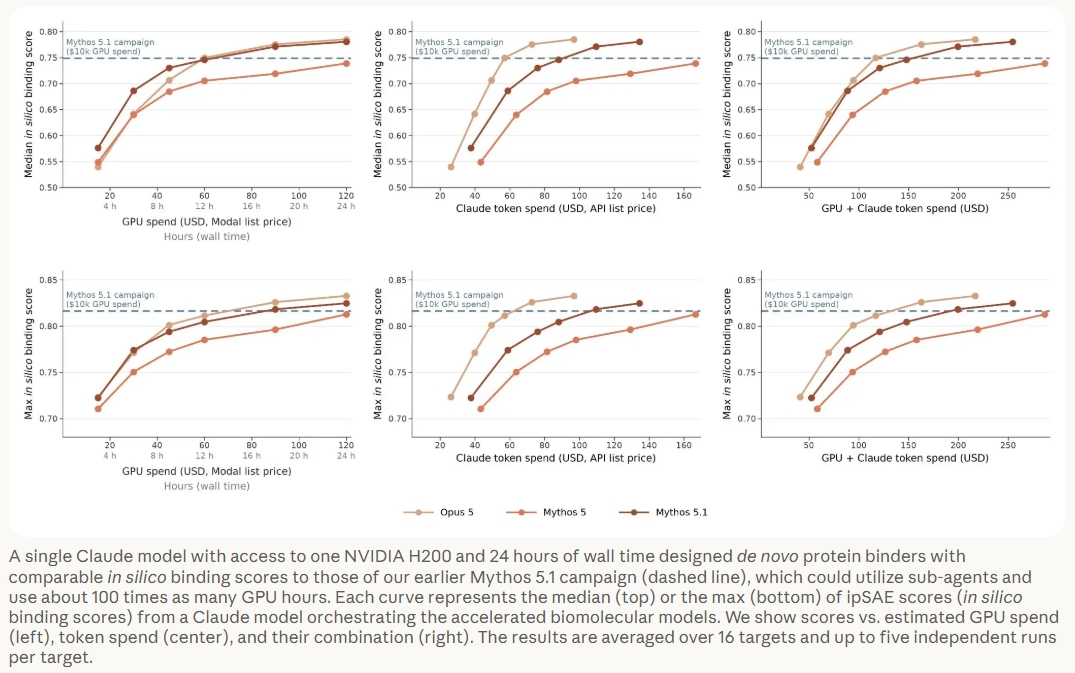
 

Screenshot _29-9-2026_163218_www.anthropic.com


The limitations of AI large models still objectively exist:


  • The model learns correlations from existing protein databases, making it difficult to fully predict the real intracellular environment: expression, folding, aggregation, degradation, and non-specific binding;


  • Calculation and prediction can only be used for probability prediction and cannot replace in vitro measurements such as protein expression, purification, or BLI affinity testing;


  • The more complex the macromolecule (full-length antibodies, bispecific antibodies, ADCs), the greater the model's prediction bias, making it much harder than the mini binder.


The Anthropic team also made it clear: this large model is a research accelerator, and all candidate molecules designed by AI must ultimately be validated through wet experiments to confirm true binding activity. This is precisely the core of the DBTL (Design-Build-Test-Learn) closed loop.


What insights does this bring to the AI antibody sector?

The breakthrough of Mythos 5.1 sends a very positive signal for AI macromolecule drug development: general-purpose large models can autonomously call biological tools and autonomously complete closed-loop protein design scheduling, greatly shortening candidate molecule screening cycles and reducing repetitive work for researchers.


Screenshot _29-9-2026_163939_www.anthropic.com


But from mini binder to full-length antibody, there are multiple hardcore hurdles:


  • Full-length antibodies require consideration of a series of indicators including heavy and light chain pairing, glycosylation, expression level, aggregation tendency, physicochemical stability, immunogenicity, and Fc function. AI finds it difficult to predict these metrics accurately all at once.


  • Even if AI outputs hundreds of high-resolution antibody sequences at once, it still needs to enter a high-throughput wet experimental system: cell expression, protein purification, BLI quantification, combination screening, KD affinity characterization, and step-by-step elimination.


AI is responsible for "casting a wide net and predicting high-potential candidates"; Wet experiments are responsible for "verifying authenticity, measuring activity and druggability," with experimental data backflow continuing to optimize the model. This is also the research paradigm commonly adopted by leading global AI antibody projects.


GentleGen: AI antibody R&D, committed to the core capability of closed-loop dry and wet environments

The Mythos 5.1 case also confirms GentleGen's platform construction strategy.


Relying on its independently developed GentSyn-Exp3.0G-Lab fully automated production line, GentleGen has built a one-stop, high-throughput technology platform covering gene design, synthesis, validation, protein expression, and antibody affinity characterization. Traditional R&D models rely heavily on manual validation, but GentleGen has redefined the efficiency and cost of wet experiments through automation.


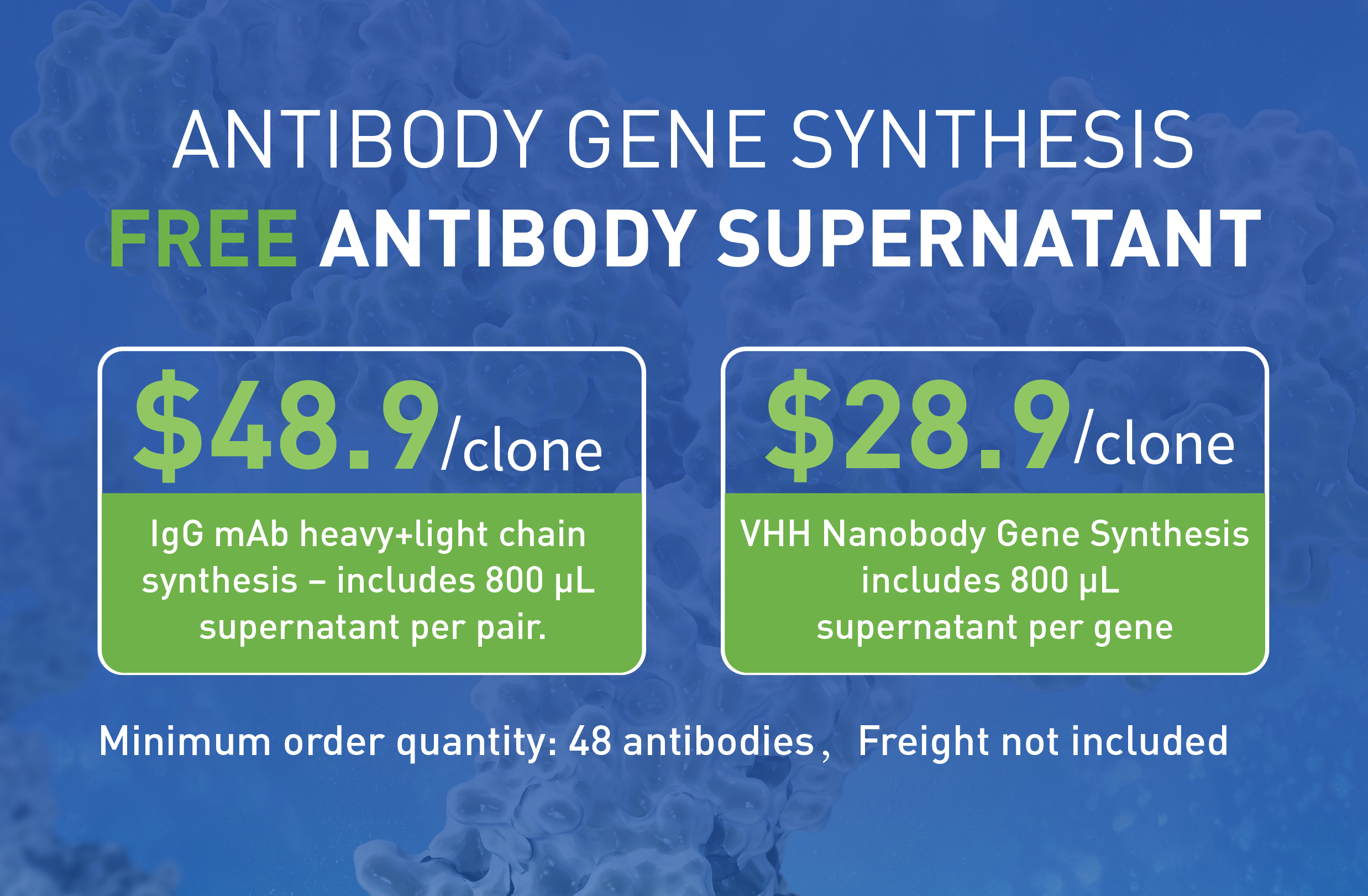
  • High-throughput screening: High-throughput expression screening greatly reduces the detection cost of individual samples—IgG monoclonal antibody at 48.9 USD/clones, VHH nanobody at 28.9 USD/clones. Each antibody comes with an 800 μl of antibody supernatant that can be directly used for functional validation—eliminating purification steps and skipping intermediate steps, providing one-stop downstream testing from genes to antibodies.


    1111-02


  • Affinity testing: GentleGen offers three major affinity testing platforms—ELISA, BLE, and SPR—covering the entire process from early-stage high-throughput screening to precise candidate molecular characterization. No matter what stage of antibody discovery you are in, GentleGen can match the most suitable affinity testing protocol.


What AI fears most is the "invalid feedback" caused by failed experiments. GentleGen leverages automation and AI algorithm optimization to achieve a first-time synthesis success rate as high as 99%, with sequence accuracy of 99.9%. This ensures that every feedback signal received by AI agents is genuine and reliable, greatly improving the efficiency of autonomous exploration.


No matter how general large models iterate, AI will always be the accelerator for R&D; High-quality, automated high-throughput wet experiment validation is the ultimate judge in selecting high-quality antibody candidates. For more details about related services, you can send an email to marketing@gentlegen.com.

Pre-sales consulting

Pre-sales consulting

A more reliable solution for your needs.
Download

Download

Welcome to our product library.
Sales network

Sales network

Complete sales and service network to ensure product quality.
Event Promotions

Event Promotions

Add to cart now and enjoy this shopping extravaganza!