










TOP

From target discovery to clinical entry, a small nucleotide drug typically needs to screen dozens to hundreds of candidate sequences, undergo multiple rounds of chemical modification and delivery optimization, and complete multi-layered validation at the cellular level across more than ten indicators including transfection efficiency, silencing activity, off-target effect, and cytotoxicity.

But the reality is: after the bioinformatics company completes the design, it is handed over to the synthetic CRO; After synthetic samples are sent to third-party testing laboratories, they face issues such as mismatched transfection reagents and inconsistent standards; Once the knocking is low and efficiency fails, the problem is difficult to trace in the design, synthesis, or transfection stages.
The challenges and bottlenecks in oligonucleotide drug development
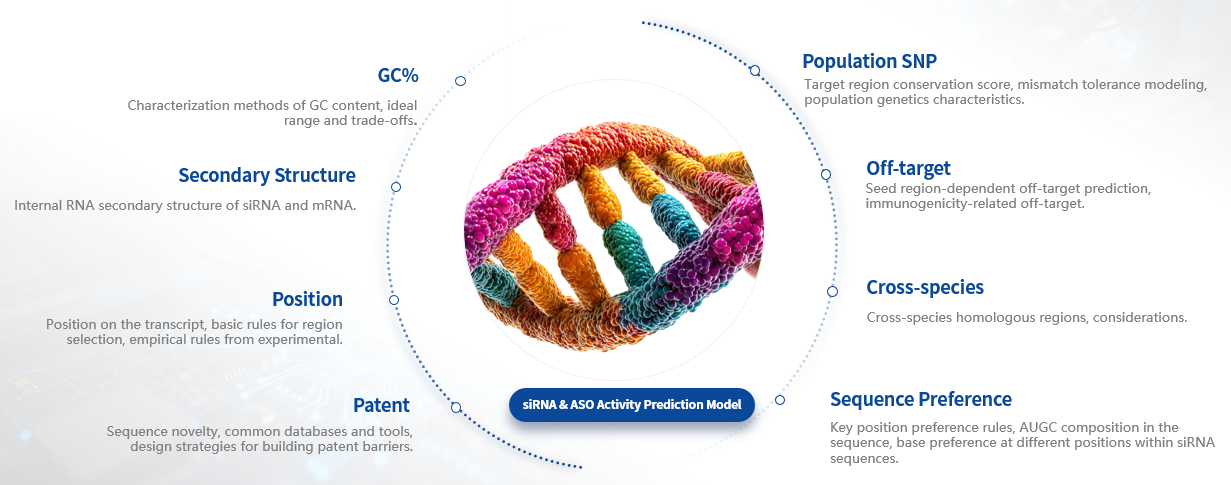
Insufficient precision in target selection and sequence design: Designing oligonucleotide drugs requires consideration of non-specific binding to non-targeted genes and off-target effects, and many mRNAs have different transcripts, further increasing the difficulty. Traditional methods rely on empirical rules and lack systematic evaluation of cross-species conservatism and off-target effects.

Complex chemical synthesis and modification processes: Solid-phase synthesis requires precise control of multi-step reactions, and the difficulty of synthesizing different sequences varies greatly. To improve stability and reduce immunogenicity, various modifications such as 2'-OMe and LNA need to be introduced, further increasing uncertainty in the choice of modification schemes and process compatibility.
The delivery system is the "bottleneck" link: bare siRNA is easily degraded by nuclease in the blood and struggles to cross the cell membrane. Although GalNAc can address liver targeting, extrahepatic tissues still require new strategies such as LNP and antibody conjugation. Building and evaluating delivery systems requires specialized technical expertise, which many early-stage teams lack.
Cell validation lacks standardized tools: transfection efficiency, knockdown efficiency, off-target effects, cytotoxicity, etc., require multiple systems to evaluate separately, resulting in long cycles and high costs. Different laboratories use large differences in reagents and methods, resulting in poor data comparability.
Long R&D chains and high switching costs: From design to validation, multiple suppliers are usually required. Each switch brings hidden costs such as sample shipping and standard matching, making the issues difficult to trace.
How can one-stop services solve this dilemma?
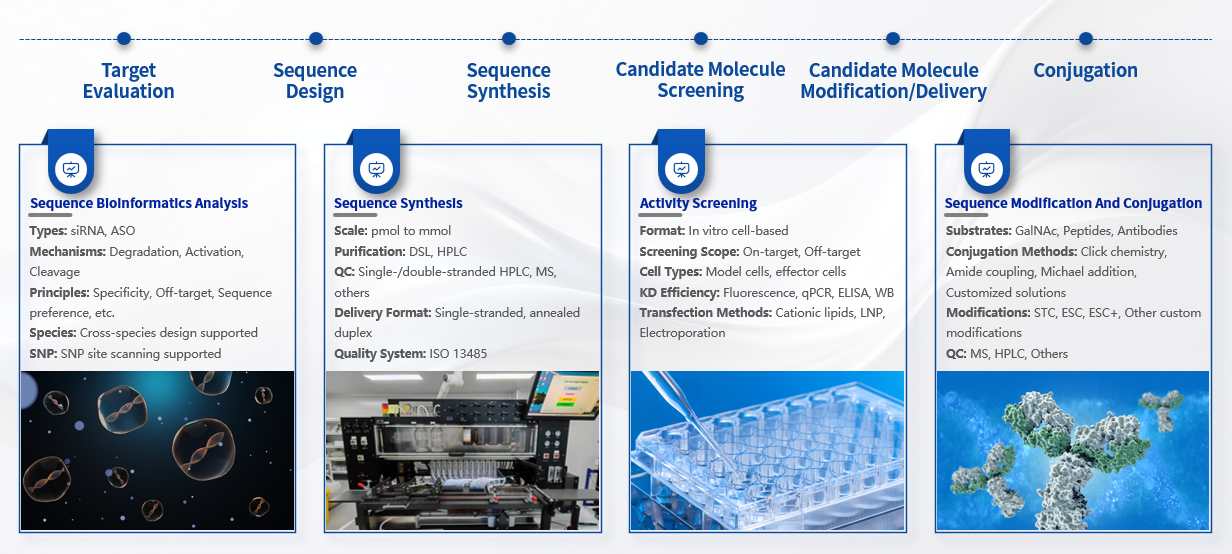
The one-stop platform deeply integrates core capabilities such as target evaluation, sequence design, synthesis and purification, active screening, and modification coupling, achieving seamless transition from "concept" to "candidate molecules."
Target Evaluation and Sequence Design: The one-stop platform is equipped with a self-developed bioinformatics analysis system, using machine learning and deep learning models to predict siRNA silencing efficiency and off-target effects. Some platforms have introduced AI algorithms to optimize design logic based on actual knockdown efficiency feedback, filtering out high-risk sequences from the source.

Chemical synthesis and modification: The platform offers flexible production throughput, supporting screening from PMOL to gram-level preclinical dosages, with HPLC purity generally exceeding 90%. At the same time, it has a rich reserve of modification monomers (such as 2'-OMe and LNA). 2'OMe-RNA and LNA have been proven to enhance the target chain invasion ability and specificity of antisense oligonucleotides and siRNA, enabling rapid customized synthesis of various complex modification schemes.
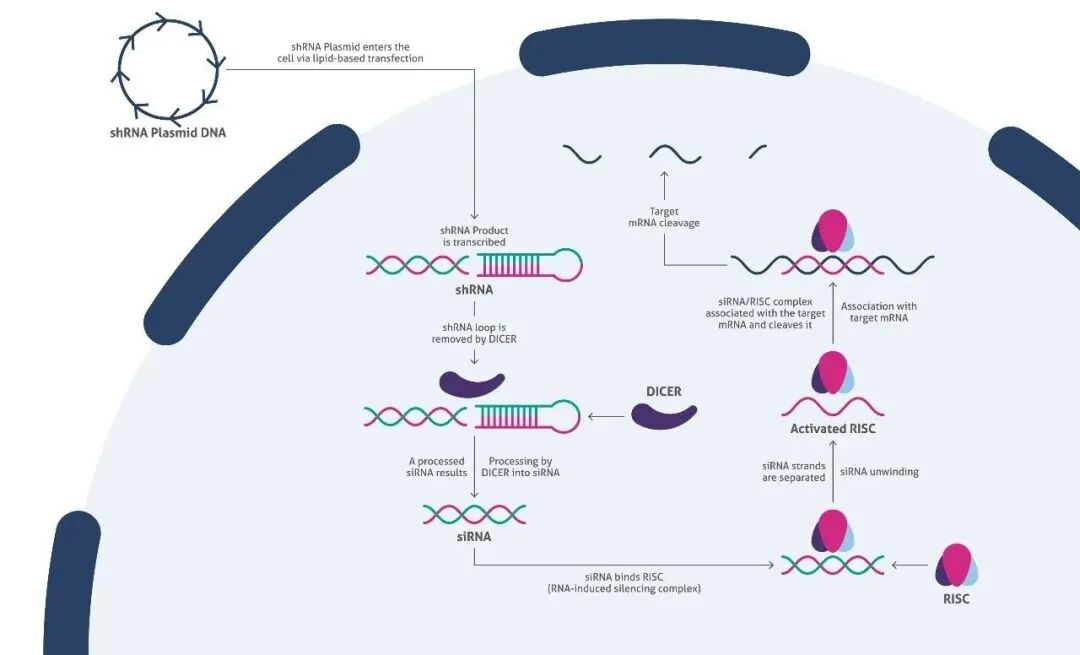
Delivery system development: One-stop platforms typically offer parallel development and evaluation services for various delivery technologies such as GalNAc conjugation, LNP encapsulation, and antibody-nucleic acid conjugation. GalNAc efficiently mediates hepatocyte uptake, while LNP is currently the most mature ionizable lipid delivery system. Customers can compare different solutions on the same platform, avoiding inconsistent standards and delays caused by being scattered across multiple suppliers.
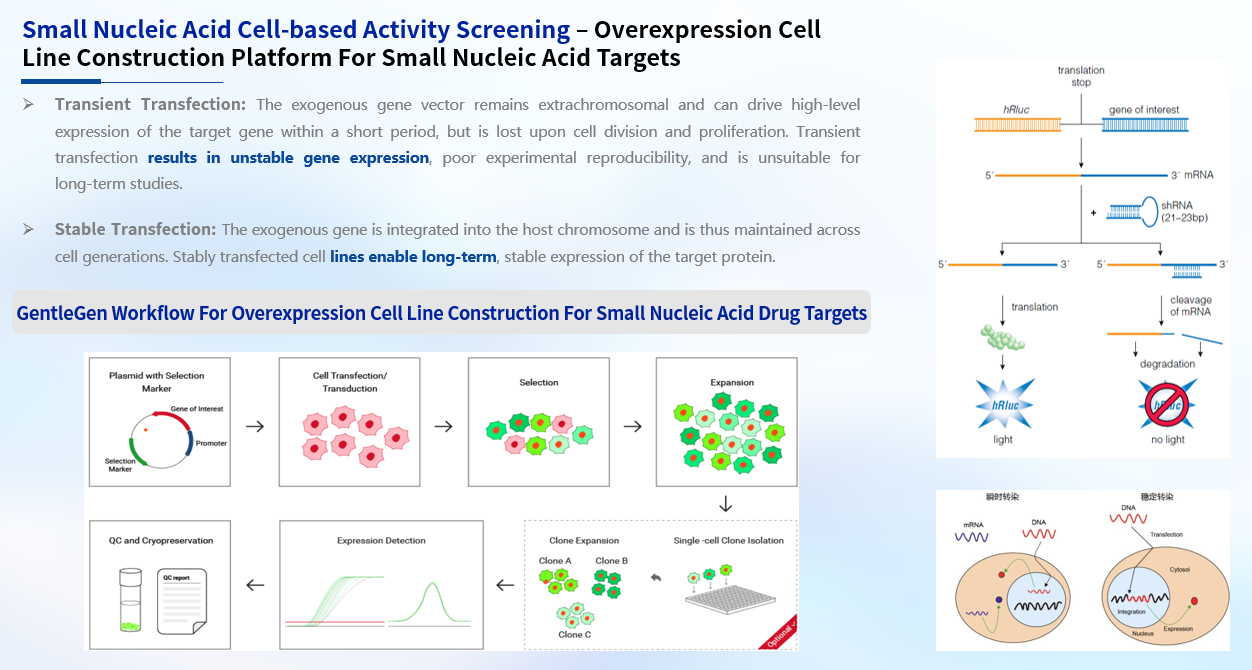
Standardized cell validation: The platform addresses validation challenges through standardized processes and dedicated tools: equipped with low-toxicity, high-throughput transfection reagents to ensure stable and compliant transfection efficiency; qPCR was used to detect knockdown of mRNA levels (at 24, 48, and 72 hours after transfection), and protein levels were detected at 48, 72, and 96 hours; Off-target effects were evaluated through multiple dimensions such as psiCHECK2 seed sequence analysis and RNA-seq; At the same time, it combines functional tests for cell viability, proliferation, and apoptosis to achieve a one-stop comprehensive assessment.
The integration model brings significant value: shortening cycles—all links are coordinated on the same platform, avoiding time wasted when switching suppliers; Risk reduction — some platforms offer efficiency assurance commitments to lower trial and error costs; Ensuring data consistency—full-process data traceability, with complete records at every stage from design to validation.
To address the pain points of target selection and design: Junji, relying on its proprietary bioinformatics analysis platform, integrates cross-species conservation analysis, SNP scanning, and activity and off-target prediction, filtering potential risk sequences during the design phase.
Addressing synthesis throughput and efficiency challenges: The platform is equipped with a 48/192-channel synthesis instrument, supporting PMOL to gram-level synthesis, with HPLC purity stable exceeding 90%, delivery as fast as 2 days, and support for parallel processing of thousands of sequences. The two major bases in Suzhou and Tianjin ensure production capacity.

Addressing the pain points of cell validation standardization: GentleGen independently developed the GentFect® RNAi HTS transfection reagent, specially designed for large-scale RNAi screening, achieving a good balance between high efficiency and low toxicity.
Addressing the pain points of delivery and modification complexity: GentleGen offers a variety of conjugation services such as GalNAc and antibodies, as well as advanced chemical modification options like STC and ESC+.

GentleGen can provide related services. For detailed information about related services, please send an email to marketing@gentlegen.com.