







热线电话:+86 512 6799 8818

在线咨询

TOP

*姓名

*电话

邮箱

咨询内容

*验证码

联系销售


Sales Image

联系销售助理


Sales Assistant Image

联系PM


PM Image
A single article tackling the "three musketeers" of the gene knockdown world: How to choose RNAi, CRISPRi, and ASO?
Release time:2026-08-27
Share:

Simply put, gene knockdown means temporarily "going silent" on a gene without permanently removing it, unlike gene knockout where DNA is altered. This allows us to observe what happens when cells are missing this gene, and thus infer their function. Each of the three techniques has its own unique features: some cut mRNA in the cytoplasm, some block transcription in the nucleus, and some can enter both the nucleus and the mass.


So, if you want to knock down a gene, which should you choose: RNAi, CRISPRi, or ASO? Don't worry, this article will help you solve your "choice anxiety"~


RNAi: The fastest-acting "emergency responder"

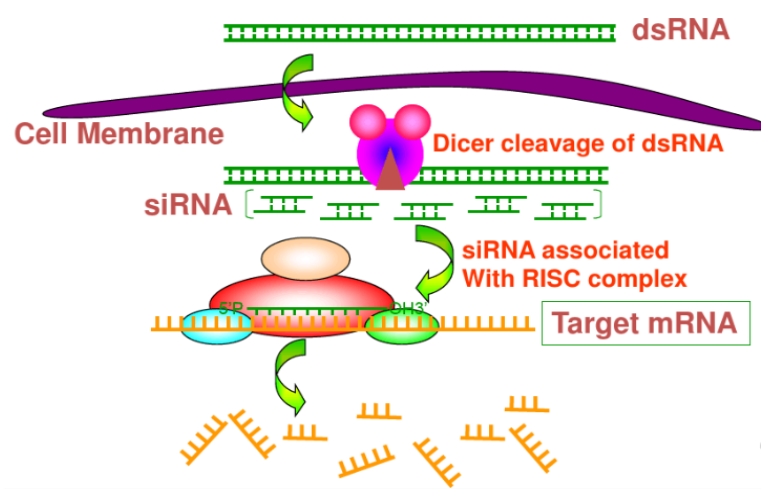
Imagine a "delivery man" (mRNA) team inside a cell, delivering genetic information to the ribosome to produce proteins. RNAi uses a small interfering RNA (siRNA) as a "fake delivery note," guiding the RISC scissors inside cells to precisely cut down the real mRNA, preventing it from completing delivery.


The specific process is: double-stranded RNA is cut into small segments by Dicer's enzyme, then one strand is fitted with RISC complexes, and through base complementary pairing, the target mRNA is found and cut in two, making protein production impossible.


Screenshot_14-8-2026_105324_thbcyjy.sxtcm.edu.cn


RNAi acts in the cytoplasm, degrading mature mRNA that has already been transcribed, acting extremely quickly and reversibly, suitable for rapid validation. Good universality but low efficiency for intranuclear lncRNAs. The main drawback is the obvious off-target effect, where only short sequence complementation is needed to accidentally harm non-target genes, so rigorous controls must be set up in the experiment.


CRISPRi: The "Engineer" in the Protracted War

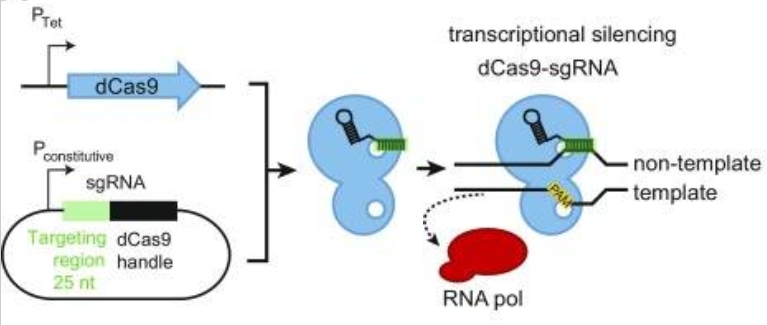
CRISPRi uses the "toothless" Cas9 protein (dCas9)—it doesn't cut DNA, but under the guidance of single-stranded guide RNA (sgRNA), it acts like a giant magnet, firmly attaching itself to the gene's promoter or transcription start, blocking RNA polymerase and preventing transcription from starting. If dCas9 is also tied to a "mute button" (the KRAB suppression domain), a "Do Not Disturb" label can be added to chromatin, making the silencing effect longer.


Screenshot_14-8-2026_105622_www.ncbi.nlm.nih.gov


CRISPRi acts at the DNA level in the nucleus, blocking gene expression from the initial transcription stage, efficiently silencing promoters and intranuclear lncRNAs, and is reversible. The disadvantage is that the process is complex, requiring the construction of stable dCas9/sgRNA cell lines, which is time-consuming; There may be expression differences among clones (cloning effect), making them suitable for long-term mechanistic studies rather than rapid screening.


ASO: The 'Special Forces' Who Strike Wherever You Point

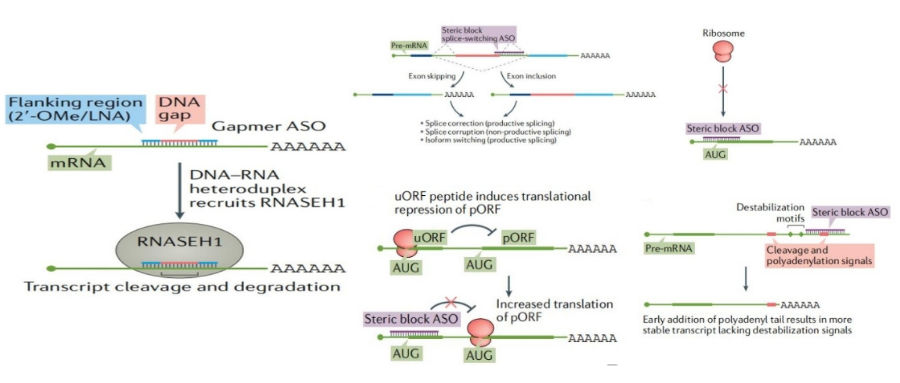
ASO is an artificially synthesized "spy" nucleotide that is especially stable after chemical modifications (such as locking in RNA RNA). It enters the cell, pairs with the target RNA base, and forms the RNA-DNA heterozygous double-strand—this is like putting a "wanted notice" on the target, and the RNase H enzyme inside the cell immediately rushes in to tear apart the RNA strands in the heterozygous double-strand.


What's impressive is that RNase H is present in both the nucleus and cytoplasm, so ASO can knock down mRNA and efficiently silence lncRNAs in the nucleus—a major advantage over RNAi. Additionally, some ASOs can block ribosome binding or affect splicing through sterical blockade.


ASO


ASO is similar to RNAi: direct transfection acts quickly, and its inhibitory effect gradually disappears with drug metabolism, offering good reversibility. However, unmodified oligonucleotides are easily degraded by nucleases, so chemical modifications such as LNA must be introduced to enhance stability and target affinity, which is costly; The off-target effect can be better controlled by optimizing the sequence.


So how should you choose?

  • If you're short on cash, want to hurry, and just want to see a preliminary phenotype, decisively choose RNAi—it's the most user-friendly;

  • If your target gene is lncRNA in the cell nucleus, or if RNAi doesn't work, ASO will be your lifesaver;

  • If you plan to conduct long-term, induceable inhibition experiments and don't mind spending time building stable cell lines, CRISPRi will give you peace of mind and even more thorough silence.


Of course, there is no magic key; sometimes three methods need to cross-validate for a conclusion to stand. Don't be afraid of trial and error. Scientific research is like crossing a river by feeling the stones.


Why choose GentleGen's one-stop platform?

Having discussed how to choose technology, if you are planning to start experiments, why not check out GentleGen's tailor-made gene knockdown service for you? GentleGen has highly competitive project advantages, helping you save worry, money, and generate good data:


siRNA and ASO:

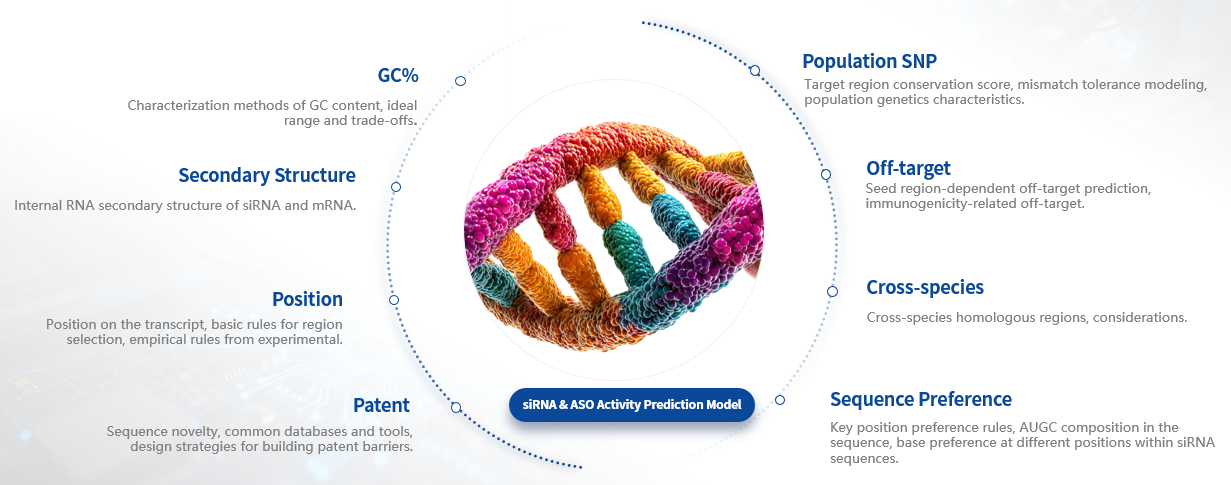
  • Relying on its self-developed bioinformatics analysis platform, GentleGen can achieve cross-species conservation analysis, SNP scanning, and activity/off-target prediction, significantly enhancing sequence efficacy and safety.


企业微信截图_17842826796426


  • The platform supports preliminary screening at the PMOL level to preclinical research doses at the gram level, with HPLC purity consistently exceeding 90%. Moreover, GentleGen can process thousands of sequences in parallel, with delivery in as fast as 3 days.


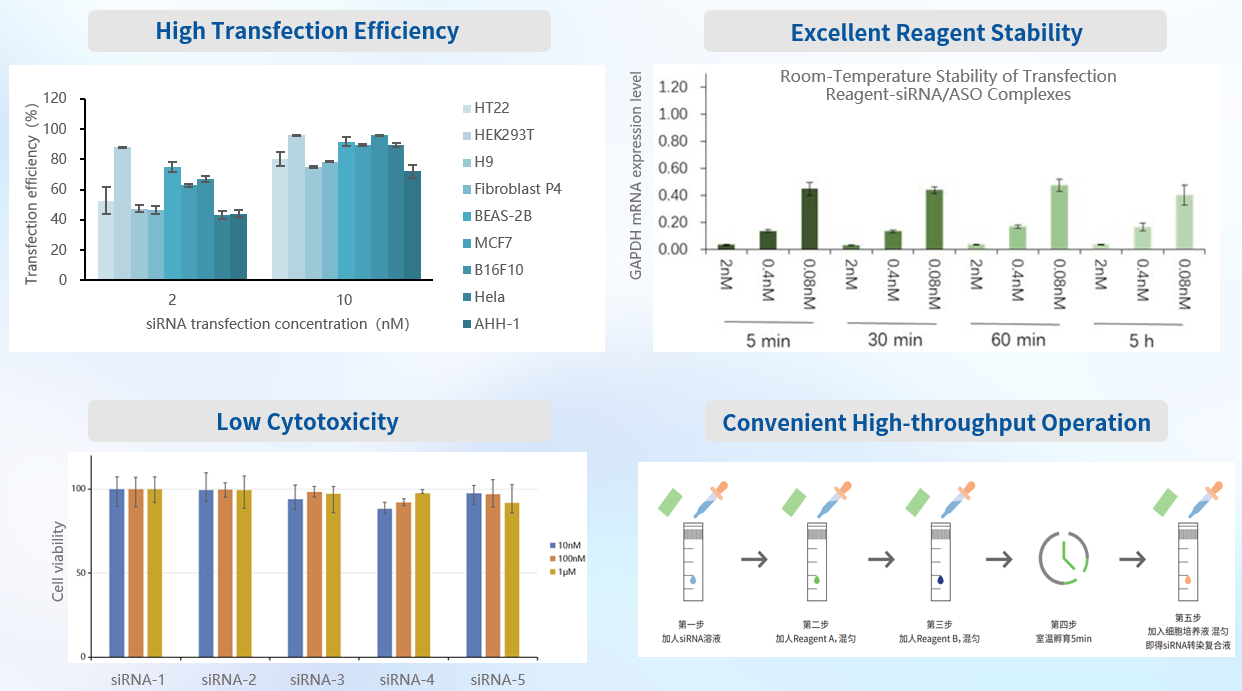
  • GentleGen's independently developed GentFect RNAi HTS transfection reagent not only outperforms mainstream international products in efficiency but also strikes a perfect balance between "high efficiency" and "low toxicity," significantly reducing screening errors caused by delivery issues.


企业微信截图_17878234171174


  • To address the most critical issues of nucleic acid drug stability and targeting, GentleGen offers a wealth of chemical modification and conjugation options.


Regarding CRISPRi:

  • Relying on its self-developed oligonucleotide synthesis platform, GentleGen has achieved an ultimate mutation rate of 1‰ in oligonucleotide synthesis—meaning that for critical sequence lengths, GentleGen can ensure that over 90.5% of sgRNA sequences perfectly match theoretical designs.


  • Under a strict quality control system, GentleGen delivers over 99% library coverage to clients, while maintaining an industry-leading level of uniformity below 10.


  • GentleGen independently validates each delivered plasmid library strictly according to NGS sequencing depth ≥300× to deliver high-purity, endotoxin-free plasmids (total ≥ 200μg).

 

  • GentleGen can directly provide standardized human and mouse whole-genome knockout libraries to support large-scale genetic screening efforts. GentleGen also offers customized services, designing and synthesizing tailored to each client's unique targets.


  • Relying on strong NGS bioanalytical capabilities and long-term gene editing experience, GentleGen is not limited to library plasmid construction—from lentiviral packaging, cell infection, screening pressure application, to final high-throughput sequencing and data analysis.


GentleGen can provide related services. For detailed information about related services, please send an email to marketing@gentlegen.com.

Pre-sales consulting

Pre-sales consulting
A more reliable solution for your needs.
Download

Download

Welcome to our product library.
Sales network

Sales network

Complete sales and service network to ensure product quality.
Event Promotions

Event Promotions

Add to cart now and enjoy this shopping extravaganza!