










Article Title: Activation of ER stress mediated by HspB4/Cryaa reduction contributes to photoreceptor apoptosis in rd9 mouse model of X-linked Retinitis Pigmentosa
Article Link: https://www.nature.com/articles/s41419-026-09191-1
Journal Name: Cell Death & Disease
Impact factor: 12.2
Client: People's Hospital of Zhengzhou University
GentleGen provides services: siRNA synthesis services
Research Background: Unsolved mysteries in the RD9 model
X-linked retinitis pigmentosa (XLRP) is one of the most severe subtypes of retinitis pigmentosa, mainly caused by mutations in the RPGR gene. Patients typically develop night blindness before age 20 and become legally blind between 40 and 50. Although the pathogenicity of RPGR has long been established, the underlying mechanism of how its downstream triggers apoptosis of photoreceptor cells, leading to irreversible vision loss, remains unclear.
rd9 mice are natural XLRP animal models carrying Rpgr gene frame deletions, with photoreceptor cells undergoing progressive apoptosis, perfectly mimicking the pathological process in human patients. Taking this as an entry point, the research team turned their attention to the endoplasmic reticulum stress pathway, which had previously received little attention in XLRP.

Cryaa is the "key link" linking mutations and apoptosis
Through proteomic screening, the team found that Cryaa (also known as HspB4, a minor heat shock protein) in the retinas of rd9 mice was significantly downregulated. Cryaa is highly expressed in photoreceptor cells in the normal retina, acting as a "molecular chaperone" that helps proteins fold properly and maintain endoplasmic reticulum homeostasis.

Based on the above evidence, the following pathogenic pathways are proposed:
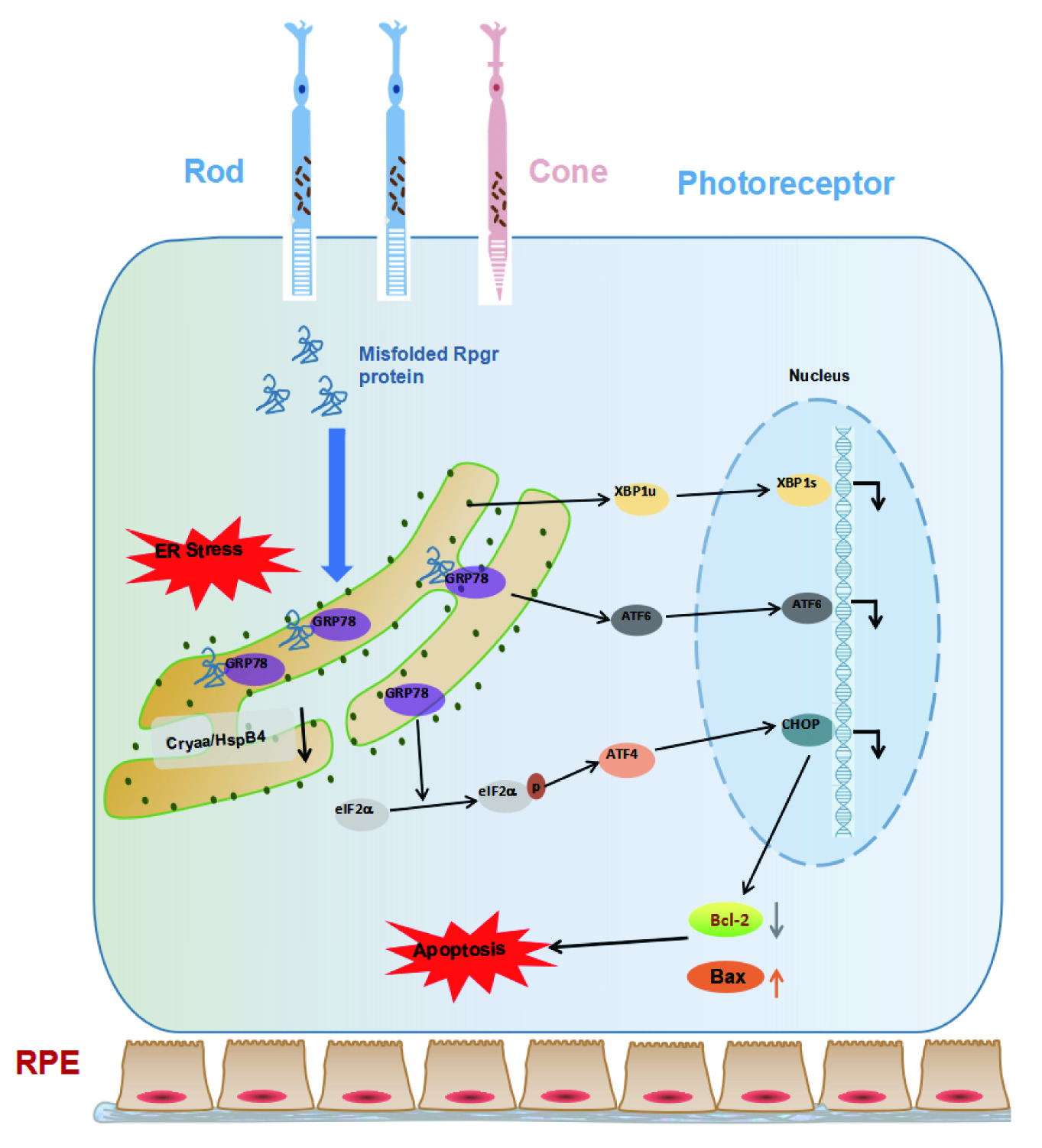
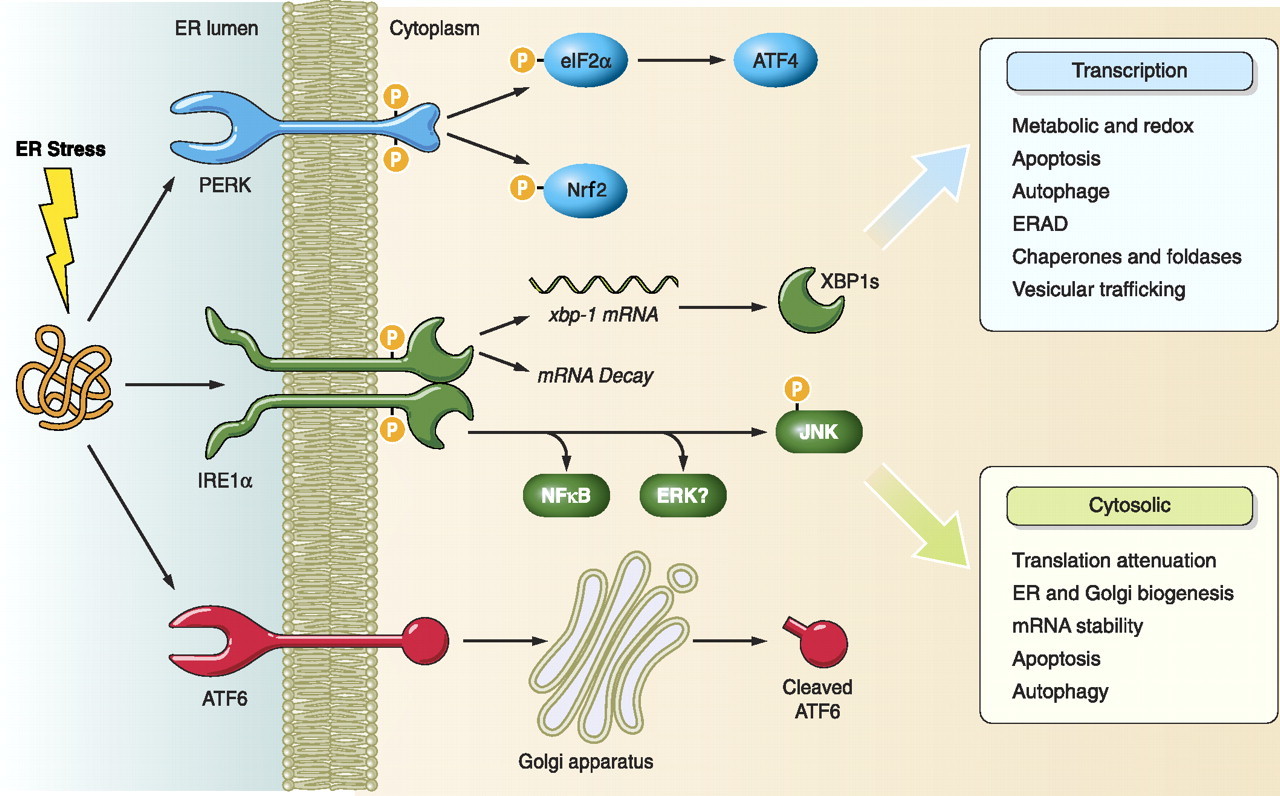
RPGR mutation → Cryaa (HspB4) downregulation → Endoplasmic reticulum protein folding imbalance → UPR activation (GRP78/p-eIF2α/ATF4/CHOP pathways) → photoreceptor apoptosis → retinal degeneration
This model is the first to link RPGR mutations in XLRP to endoplasmic reticulum stress via Cryaa, filling the mechanistic gap between "gene mutations and apoptosis."
From Mechanism to Translation: Research Significance and Clinical Prospects
This study revealed that Cryaa acts as a key guardian of ER homeostasis in photoreceptor cells, and its downregulation is an early driving event for photoreceptor apoptosis in XLRP. This discovery not only enhances our understanding of the pathogenesis of XLRP: downregulation of the HspB4/Cryaa protein drives photoreceptor cell apoptosis by activating endoplasmic reticulum stress and the unfolded protein response (UPR). More importantly, key nodes in the Cryaa or UPR pathways (such as PERK, ATF4, CHOP) may become potential therapeutic targets for XLRP.
GentleGen Contribution
As one of the providers of siRNA products in this study, GentleGen provided tool support for gene silencing experiments targeting Cryaa, helping researchers build a complete logic chain from in vitro knockdown to mechanism validation.

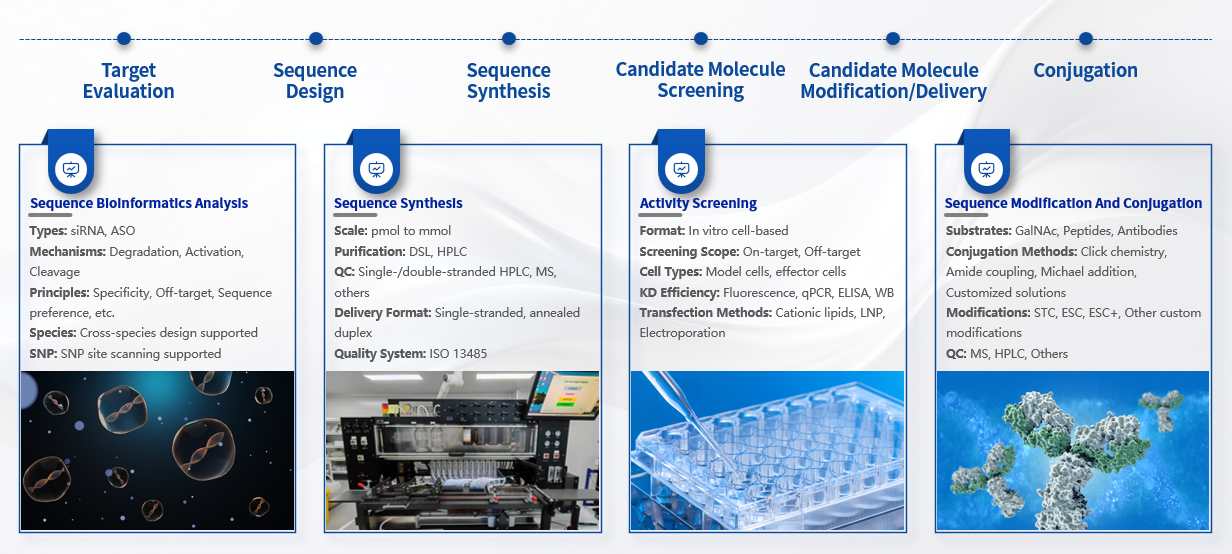
GentleGen's one-stop service platform is not simply a piece of various services, but deeply integrates core capabilities such as target evaluation, sequence design, synthetic purification, active screening, and sequence modification & conjugation, truly achieving a "just think and get" R&D experience.
For every scientist striving forward on the path of nucleic acid drug development, choosing a reliable partner often means half the battle. Next time you feel troubled by siRNA/ASO synthesis and screening, perhaps remember: GentleGen's one-stop platform has already paved a "highway" to your destination. For detailed information about related services, please send an email to marketing@gentlegen.com.