On October 9, 2026, GSK officially announced that it would deepen its AI antibody R&D collaboration with Chai Discovery. Leveraging its own industrial-grade wet-lab system, GSK completed an independent technical evaluation and achieved positive binding hits across all tested targets.
This result has once again brought AI drug discovery into the spotlight, but the industry widely suffers from the misconception of over-glorifying model capabilities. From an industrial translation perspective, AI can only complete virtual molecular design; standardized wet-lab validation and a dry-wet iterative closed loop are the core barriers for AI antibodies to move from technical concept to commercial druggability.
Industry reality check: full target coverage does not equal R&D success
The most easily misread core of this collaboration is the evaluation result of “all-target hits.” In public communication, this figure is often simplified as “100% success” in AI antibody R&D, but in the pharmaceutical industrial system, these are completely different concepts.
GSK's empirical result only means that for every tested target, at least one antibody molecule with binding activity was screened out; it is a coverage metric at the target dimension. It only proves that AI can produce binding molecules for the corresponding targets; it cannot reflect the per-sequence success rate, stability, or druggability potential.
At present, officials have not disclosed key information such as the number of sequences tested per target, the proportion of ineffective molecules, or affinity gradient data. Without core denominator data, it is impossible to determine the true precision of AI design, let alone equate it directly with a druggable candidate.
Looking back at Chai-2’s 2025 data helps clarify the boundary. In early academic experiments, the average hit rate of a single AI-generated antibody was only 15.5%; only 26 of 52 targets yielded positive molecules, a target success rate of 50%.
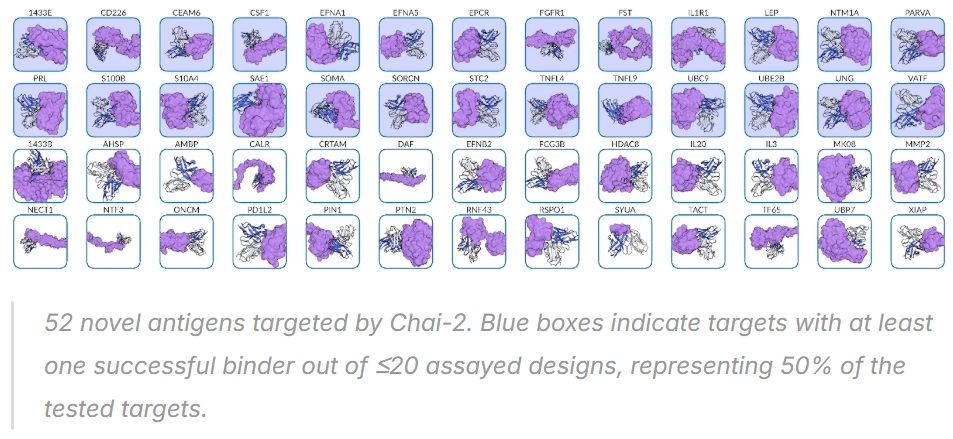
This dataset came from small-sample laboratory research and is not the same set of experiments as GSK’s industrial evaluation. One cannot compare the early 15.5% molecular hit rate with this round’s 100% target coverage and directly conclude that the model has made a leap.
This is also a typical cognitive bias in the current AIDD field: equating preliminary binding positivity with a drug R&D breakthrough. In fact, antigen-specific binding is only the most basic entry condition for antibody development; there are still multiple stringent hurdles before clinical development and commercialization.
The GSK team also clearly stated that this evaluation was only used to verify the industrial applicability of the AI platform. Meeting target coverage does not mean the model has all-scenario, universal drug design capability, and the industry needs to view this technical result rationally.
Technological innovation: generative AI reshapes the traditional R&D paradigm
Traditional antibody R&D has long relied on technologies such as phage display and hybridoma screening, with an overall model biased toward random screening. Not only are R&D cycles lengthy and labor costs high, but due to the limitations of natural sequence libraries, it is often difficult to produce high-quality candidate molecules against difficult-to-drug targets such as GPCRs and membrane proteins.
Chai Discovery's technological breakthrough lies in using biological large models to achieve de novo targeted design of antibodies. It no longer relies on random screening of natural sequences; instead, by precisely analyzing antigen epitope structures and protein folding principles, it generates entirely new antibody sequences and spatial conformations in a targeted manner.
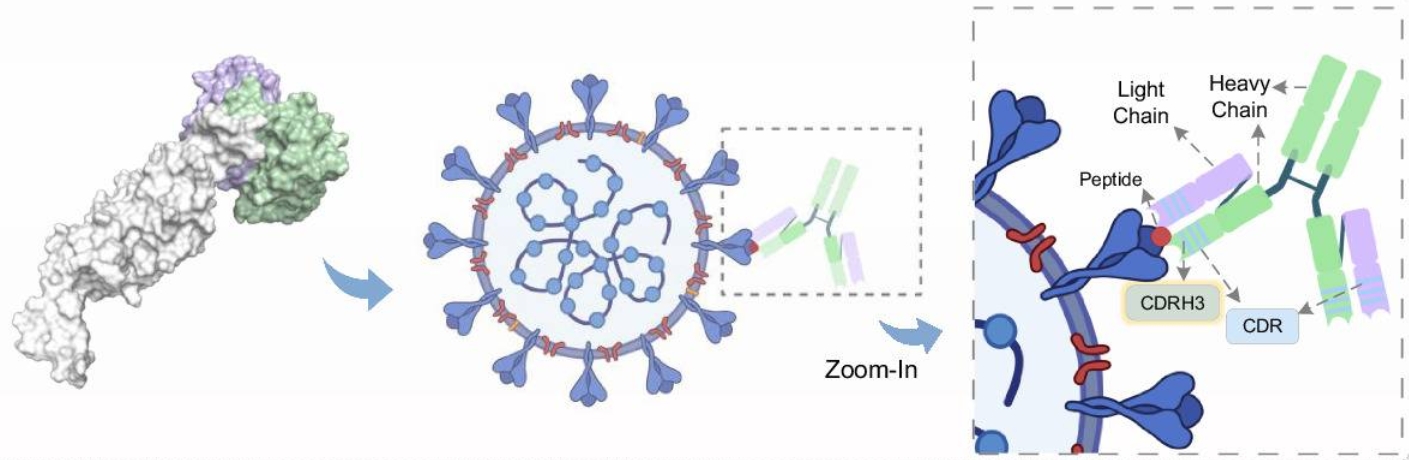
This GSK evaluation adopted a zero-shot design mode; the model did not need fine-tuning for specific targets to complete cross-target molecular design, fully demonstrating the generalization capability of the new generation of AI models. Compared with the traditional screening cycle of several months, AI can compress early-stage target screening to two weeks, achieving a qualitative improvement in R&D efficiency.
However, faster efficiency cannot replace experimental validation. AI outputs only theoretically optimal sequences, which commonly suffer from problems such as in vitro folding abnormalities, expression defects, and physicochemical instability. No matter how high the algorithm's precision is, AI sequences that have not been validated by wet-lab experiments are merely virtual data and cannot be transformed into real R&D assets.
Strategic logic: AI is a tool, not a replacement for R&D
As a leading global pharmaceutical company, GSK has already built a complete in-house AI platform and standardized drug R&D pipeline. Continuously increasing collaboration with Chai is not about filling technical gaps, but reflects a new AI industrialization strategy by a multinational pharmaceutical company.
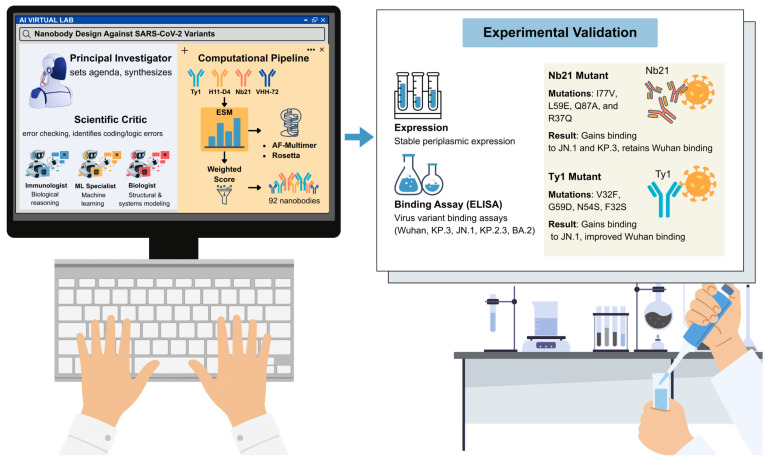
The industry has now moved past the stage of heavy-asset in-house AI buildout and turned to a collaborative model of “external AI for diversity + internal experiments for translation.” Chai is responsible for breaking through the sequence bottleneck of traditional libraries and providing massive numbers of newly designed molecules; GSK relies on its industrial-grade experimental system to complete screening, validation, and optimization, forming an efficient complement.
This collaboration has upgraded from a one-time technical evaluation to a long-term platform license, meaning AI molecular design has formally been embedded into GSK's routine new drug R&D process. Chai currently serves many leading global pharmaceutical companies, including Eli Lilly, Pfizer, and Novartis, proving that generative AI has become a standard tool for innovative drug R&D.
But commercial collaboration does not equal pipeline output. Passing a technical evaluation only means the model is usable; whether it can continuously produce high-quality developable molecules still requires long-term experimental data. At the same time, this evaluation did not specify the model iteration version, and the actual gains of the new version still need continuous observation and verification.
Core logic of druggability: multiple hard thresholds and experimental closed-loop translation
AI can rapidly generate antibody sequences in batches, but very few drugs can pass layer upon layer of experimental screening and ultimately reach the market. The core of druggability has never been “can it bind the target,” but “can it be stably, safely, and industrially developed.”
A qualified therapeutic antibody must simultaneously meet multiple criteria, including high expression, low aggregation, physicochemical stability, scalable manufacturing, and low in vivo immunogenicity. Although most AI-designed molecules meet in vitro binding criteria, they stop at early screening due to various physicochemical defects and manufacturing challenges.
This also explains why AI model benchmark scores continue to rise while the speed of industrial pipeline translation remains relatively flat. Virtual design can be optimized indefinitely, but real biological systems have extremely low error tolerance; only standardized wet-lab experiments can screen out molecules with true development value.
The value of GSK's independent third-party empirical evaluation lies precisely in moving beyond company self-verified data, completing objective validation according to industrial R&D standards, and providing a highly referential translation model for the industrialization of AI antibodies.
GentleGen: AI antibody R&D, committed to the dry-wet closed loop
GentleGen has built a one-stop, high-throughput technology platform covering gene design, synthesis, validation, protein expression, and antibody affinity characterization, based on its self-developed GentSyn-Exp3.0G-Lab fully automated production line. Traditional R&D models rely on extensive manual validation, while GentleGen uses automation to redefine the efficiency and cost of wet-lab experiments.
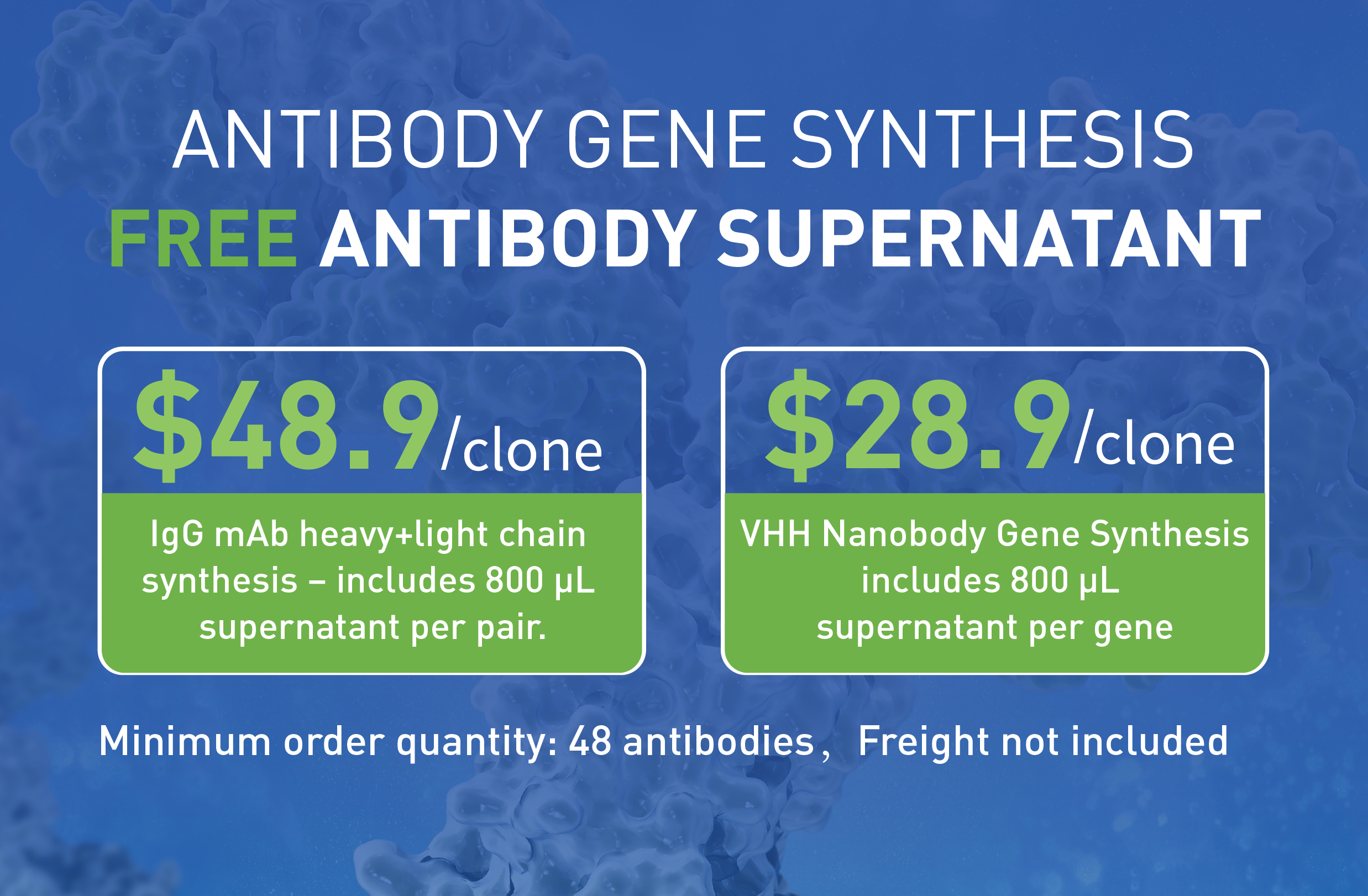
- High-throughput screening: High-throughput expression screening greatly reduces the per-sample testing cost—IgG monoclonal antibody at 48.9 USD/clones, VHH nanobody at 28.9 USD/clones. Each antibody comes with 800 µL of antibody supernatant directly usable for functional validation—eliminating purification steps, skipping intermediate steps, and going one-stop from gene to antibody directly to downstream experiments.
- Affinity measurement: GentleGen provides three affinity measurement platforms—ELISA, BLI, and SPR—covering the full workflow from early high-throughput screening to precise characterization of candidate molecules. No matter which stage of antibody discovery you are in, GentleGen can match the most suitable affinity measurement solution.
What AI fears most is “invalid feedback” caused by experimental failure. Leveraging automation and AI algorithm optimization, GentleGen achieves a first-time synthesis success rate of up to 99% and sequence accuracy of 99.9%. This ensures that every feedback signal received by the AI agent is authentic and reliable, greatly improving the efficiency of autonomous exploration.
For more details on relevant services, please email marketing@gentlegen.com.