




热线电话:+86 512 6799 8818

在线咨询

TOP

*姓名

*电话

邮箱

咨询内容

*验证码

联系销售


Sales Image

联系销售助理


Sales Assistant Image

联系PM


PM Image
GentleGen Observations | Claude Large Model Autonomously Completes De Novo Protein Design, Upgrading the AI Paradigm for Biologics R&D
Release time:2026-10-30
Share:

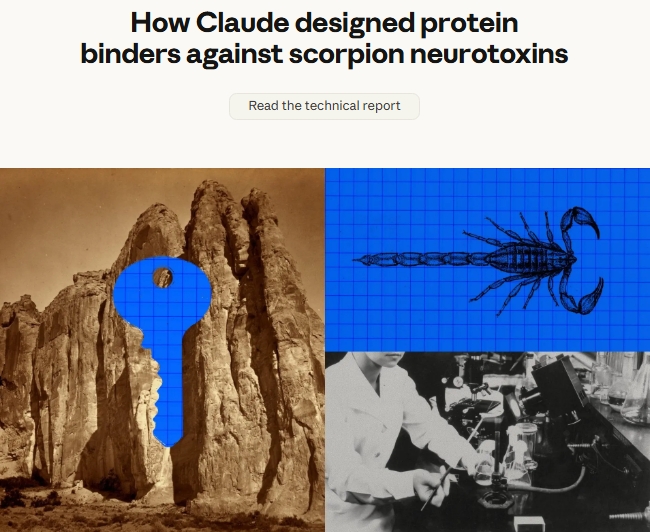
In October, Anthropic announced a major research project leveraging the Claude general large model to achieve autonomous protein-binding molecule design, completing a one-stop process from target analysis and epitope selection to sequence generation and virtual screening, providing new ideas for the early development of antibodies, binding proteins, and neutralizing molecules.


屏幕截图_23-10-2026_164340_www.anthropic.com


General large models unlock design from scratch

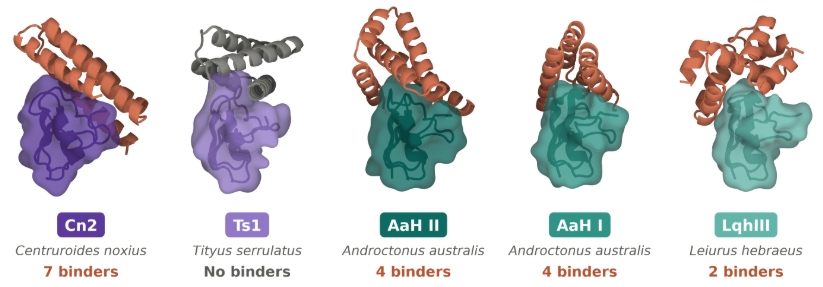
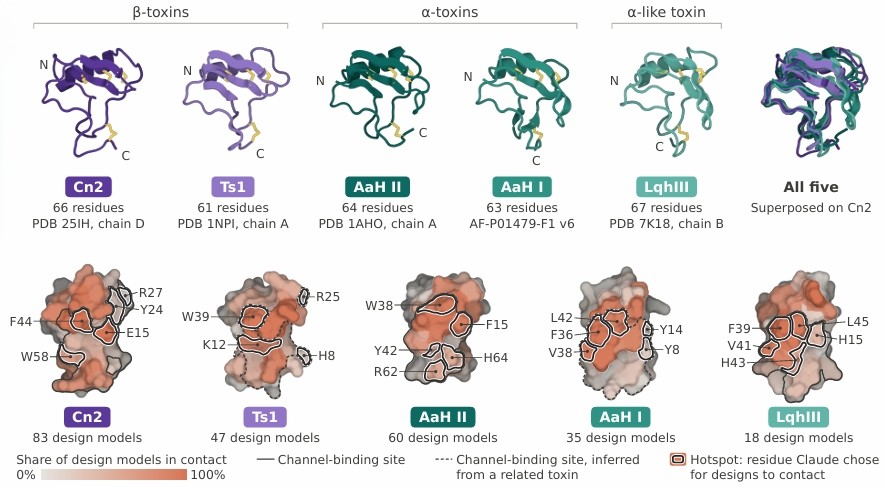
This study targets scorpion neurotoxins to verify the ability of general large models to independently design functional binding proteins. Scorpion stings affect over a million people worldwide each year, especially in tropical regions such as the Middle East, Africa, and South Asia, where some strains can be life-threatening. However, existing antivenoms face long-term pain points such as limited production capacity, high production costs, and narrow strain adaptation ranges, making the demand for new protein neutralizing molecules extremely urgent.


Traditional protein design pathways from scratch usually require experienced computational biologists to manually select the structural framework, repeatedly fine-tune sequences, and then rely on specialized tools like protein language models and diffusion models for stepwise iteration.


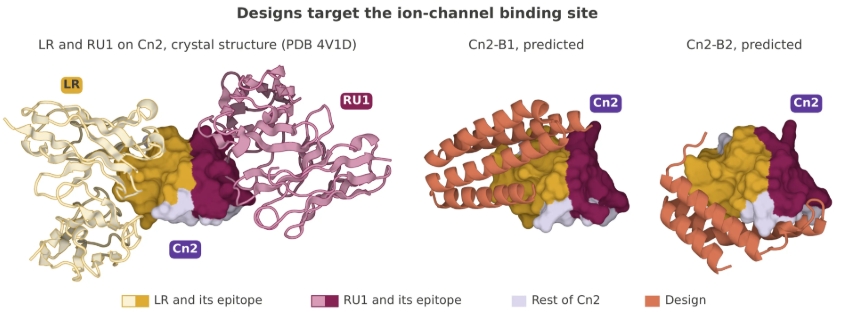
Claude, as a general-purpose large model, independently coordinates multiple protein structure prediction and design tools in this study, making full autonomous decisions throughout the entire process—from target information mining and epitope selection to sequence generation and scoring screening—without step-by-step guidance from researchers, significantly lowering the professional threshold for macromolecule design.


屏幕截图_23-10-2026_164425_www-cdn.anthropic.com


Hundreds of thousands of candidate sequences are produced in a short period

The entire AI design cycle lasts only 64 hours. The model has generated 318484 candidate protein sequences, automatically completed over 550,000 structural predictions, scoring, and screening, and ultimately selected 211 candidate molecules for wet experiment validation by two independent CROs, ensuring neutrality and reproducibility of the results.


In vitro binding test results showed that among 211 candidates, 17 protein molecules stably bind to the target scorpion neurotoxin, meeting preset affinity standards, proving that general large models can directly produce novel proteins with true binding activity, rather than merely "theoretical strategizing" at the sequence level.


屏幕截图_23-10-2026_163151_www.anthropic.com


Special note: Currently, only in vitro combination validation has been completed; in vivo neutralization and animal efficacy trials have not yet been conducted, which is an early proof-of-concept achievement. Even so, being able to consistently produce effective candidates in such a short time is already a landmark advancement in the AIDD field.


Reconstructing the macromolecule AI design workflow

  • General large models independently schedule and design the entire chain in an integrated manner

Claude is not just about outputting sequences; it truly understands the logic of protein design tasks, autonomously retrievals target information, selects binding epitopes, calls structure prediction tools, and optimizes interface interactions. It is like an AI research assistant running the entire molecular design process autonomously, compressing tasks that previously required multiple experts and multiple software systems into a single agent.


屏幕截图_23-10-2026_163211_www.anthropic.com


  • Significantly shortening the R&D cycle

Traditional de novo protein design often takes weeks or even months from target identification to obtaining testable candidate molecules. This work compresses the candidate molecule production cycle to under 3 days, significantly reducing the time cost of early screening and making "rapid trial and error, batch exploration" possible.
 

  • Expanding the boundaries of AIDD tools
In the past, the de novo design of high-quality proteins mostly relied on specialized biological models (such as protein LLMs and RFdiffusion). This study demonstrates that knowledge-injected general large models can also handle challenging largemolecule design from scratch, enabling more teams without deep computational biology backgrounds to access AIDD capabilities.


AI is no longer limited to single-point structural prediction but is evolving toward autonomous experimental agents. AI can mass-produce massive candidate molecules, but virtual scoring and structure prediction are ultimately computational results. The affinity, specificity, and stability of all candidate proteins ultimately must be validated by standardized wet experiments.


Only by closely linking computational prediction with wet experiment validation can the value of AI design truly be realized in pipeline advancement. This closed loop of "AI design — experimental verification — data feeding back into the model" is the key to whether the AIDD pipeline can run smoothly.


GentleGen: AI antibody R&D, insisting on a closed-loop dry and wet system

Relying on its independently developed GentSyn-Exp3.0G-Lab fully automated production line, GentleGen has built a one-stop, high-throughput technology platform covering gene design, synthesis, validation, protein expression, and antibody affinity characterization. Traditional R&D models rely heavily on manual validation, but GentleGen has redefined the efficiency and cost of wet experiments through automation.


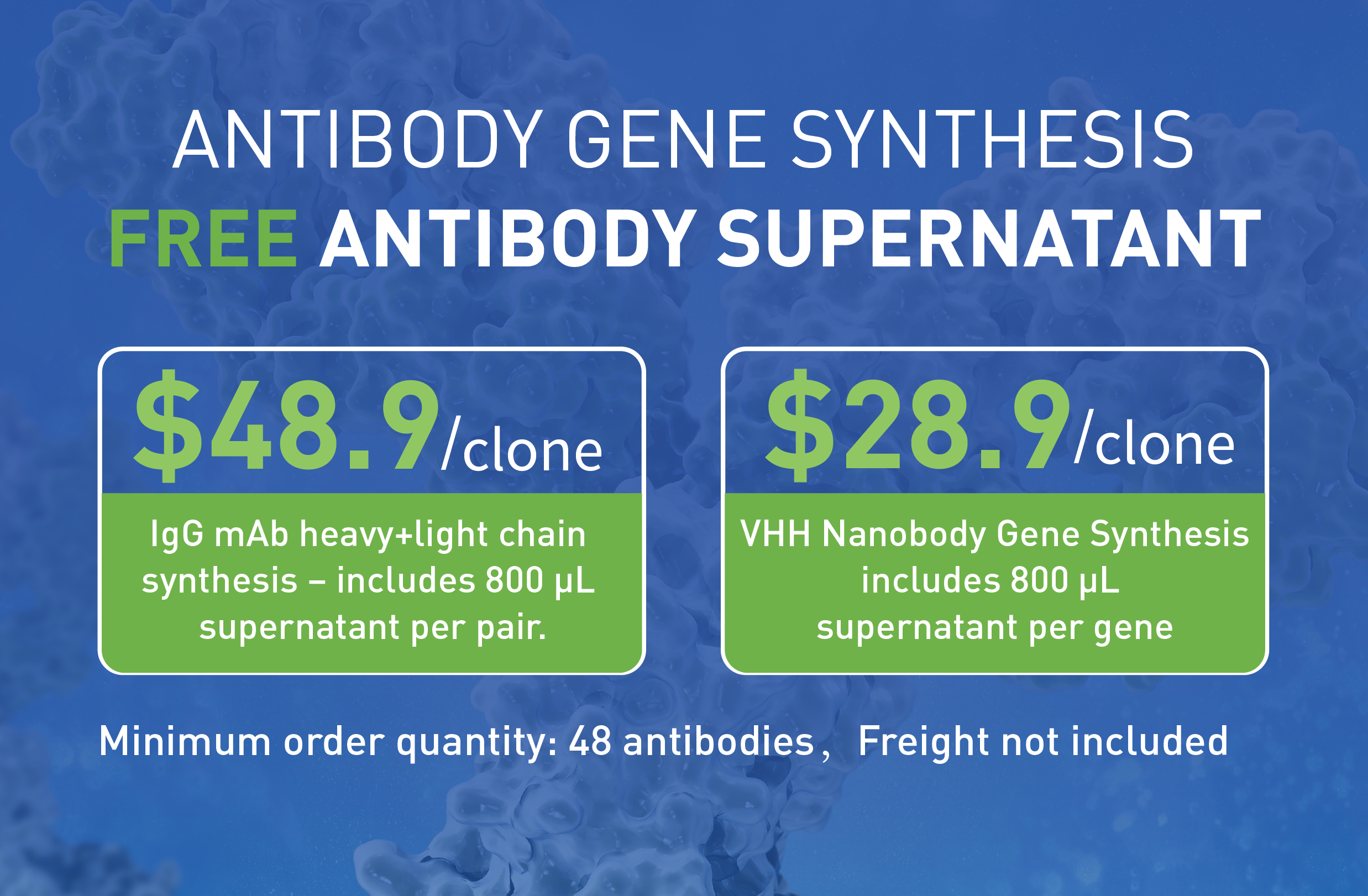
  • High-throughput screening: High-throughput expression screening greatly reduces the detection cost of individual samples—IgG monoclonal antibody at 48.9 USD/clones, VHH nanobody at 28.9 USD/clones. Each antibody comes with an 800 μl of antibody supernatant that can be directly used for functional validation—eliminating purification steps and skipping intermediate steps, providing one-stop downstream testing from genes to antibodies.


1111-02


  • Affinity testing: GentleGen offers three major affinity testing platforms—ELISA, BLE, and SPR—covering the entire process from early-stage high-throughput screening to precise candidate molecular characterization. No matter what stage of antibody discovery you are in, GentleGen can match the most suitable affinity testing protocol.


AI prediction models can narrow the pool of candidates and reduce ineffective workloads; Automated wet experiments produce high-quality, real data, which in turn drives continuous iteration and upgrading of AI models.


No matter how large models iterate, AI will always be the accelerator for R&D; High-quality, automated high-throughput wet experiment validation is the ultimate judge in selecting high-quality antibody candidates. For more details about related services, you can send an email to marketing@gentlegen.com.

Pre-sales consulting

Pre-sales consulting

A more reliable solution for your needs.
Download

Download

Welcome to our product library.
Sales network

Sales network

Complete sales and service network to ensure product quality.
Event Promotions

Event Promotions

Add to cart now and enjoy this shopping extravaganza!