




The rational design of oligonucleotide drugs has always been a challenge in the industry. Recently, USTC released the structRFM RNA foundational model, bringing new breakthroughs to RNA structure prediction and refocusing the industry on the value of early screening of oligonucleotide RNA.
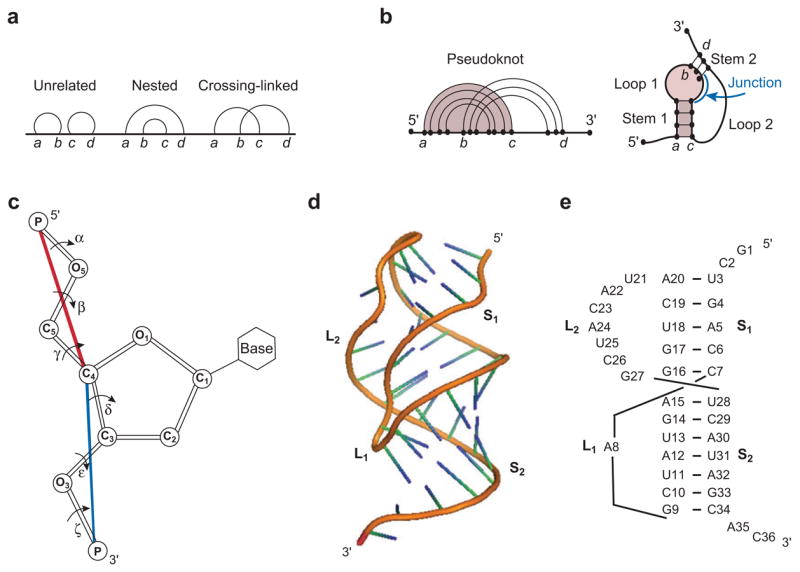
Small nucleotide drugs, thanks to their ability to precisely regulate gene expression, have become a hot direction in the innovative drug sector. However, RNA itself has highly dynamic structural characteristics. Unlike the relatively stable folded forms of proteins, RNA continuously changes conformationally with ion concentration, temperature, and base interactions. The secondary and tertiary structures directly determine target binding efficiency, off-target potential, intracellular stability, and delivery adaptability.
RNA structure is difficult to predict
For a long time, RNA computational modeling has had obvious shortcomings. Most previous RNA large models were pre-trained with sequences at the core, lacking the constraints of authentic structural validation, making it difficult to accurately capture complex structural units.
Many AI tools overlook issues such as local folding of target mRNA, self-looping of candidate nucleic acids, and double-strand mismatches. Sequences with excellent model scores often have low activity, obvious off-target behavior, and are easily degraded by nuclease enzymes after synthetic and cellular activity experiments. A large amount of R&D resources is spent on wet experimental validation of ineffective candidate molecules, extending the development cycle for small nucleic acid pipelines and increasing early screening costs.

Given these industry pain points, RNA foundational models that balance sequence, structure, and function have become urgently needed foundational tools in the oligonucleotide AIDD field.
structRFM's new architecture: enables collaborative modeling of sequences and structures
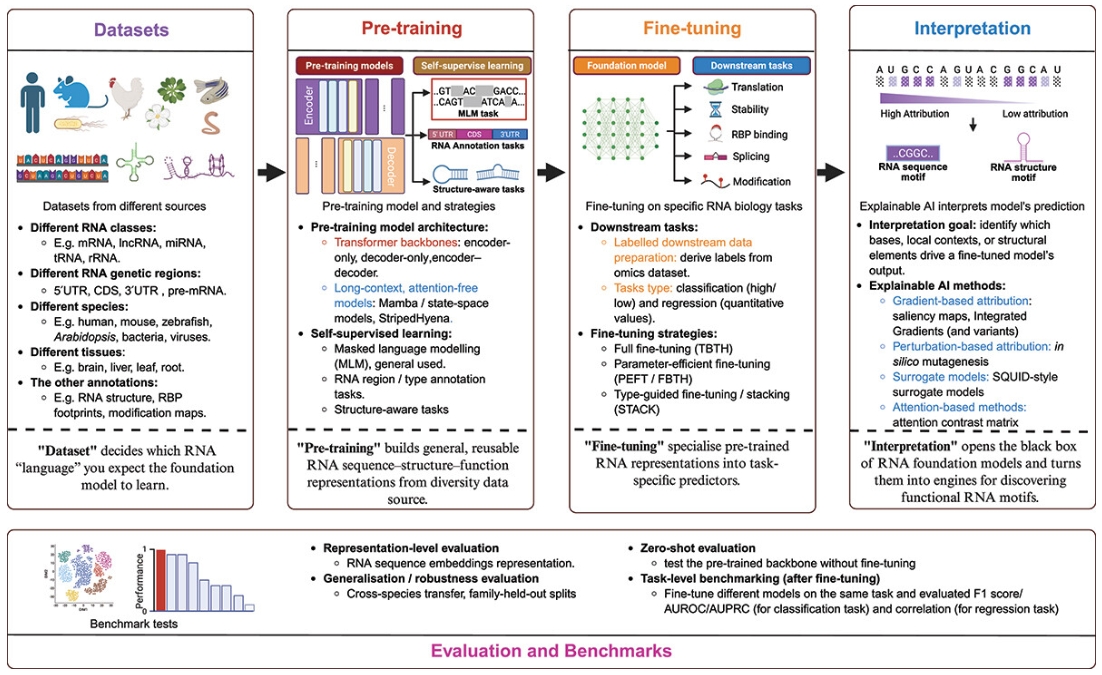
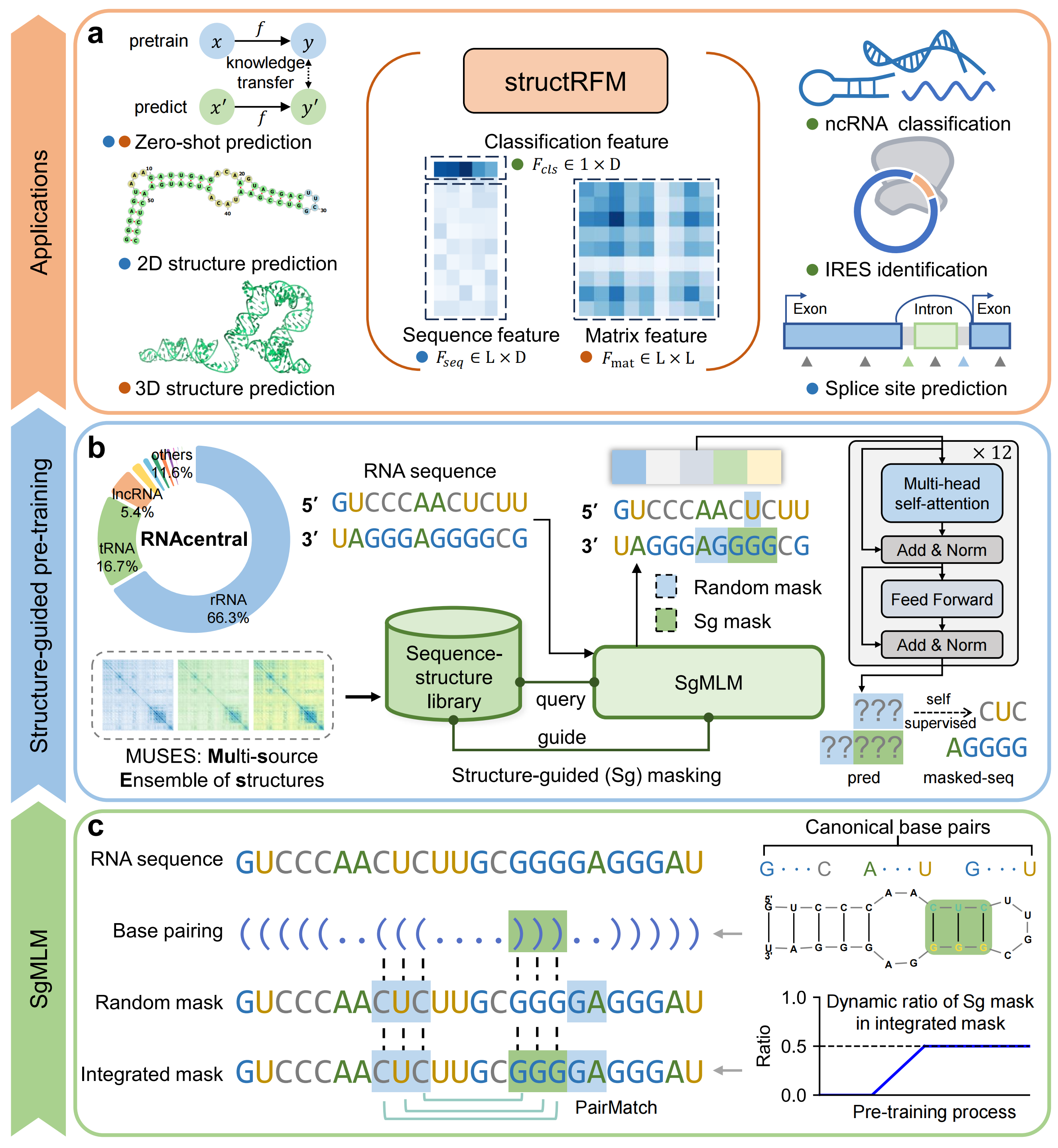
The structRFM (Structure-aware RNA Foundation Model) released by the USTC team is a structure-aware model The core innovative approach of RNA-based large models is to break the traditional paradigm of separating "sequence prediction and structure prediction" by incorporating base pairing information from RNA's secondary structure into the pre-training framework, allowing the model to learn base arrangement patterns while naturally understanding RNA's spatial folding logic.

Multi-scale RNA Structure Characterization to Overcome Challenges in Identifying Complex Structures:
The model training gathers massive functional data from PDB databases that are difficult to predict. Traditional models have extremely high prediction errors for pseudo-knot structures, whereas structRFM can identify these non-classical base pairings and accurately characterize interactions within RNA.
A unified multi-task framework to meet the full-chain computing needs of drug development:
After pre-training is complete, the model can be directly migrated to multiple downstream tasks without large-scale fine-tuning for each task, supporting continuous computation from target area analysis and preliminary screening of candidate sequences to druggability prediction.
Open source, open, and lightweight deployment lowers industry usage barriers:
All models are open source, and compared to foundational RNA models of similar scale, structRFM achieves lightweight optimization while ensuring prediction accuracy. It does not require ultra-large-scale GPU clusters and can be deployed locally or in private computing environments, independently embedding its own AIDD development processes to avoid data spillover.
Significant improvement in benchmark performance:
On the public independent test set, structRFM outperforms some mainstream RNA foundational models; On difficult sample sets containing many false knots, the advantages are further amplified, solving the pain point of previous models where "simple structures are accurate but complex structures fail."
Implementing AIDD: supplementing structural dimension judgments

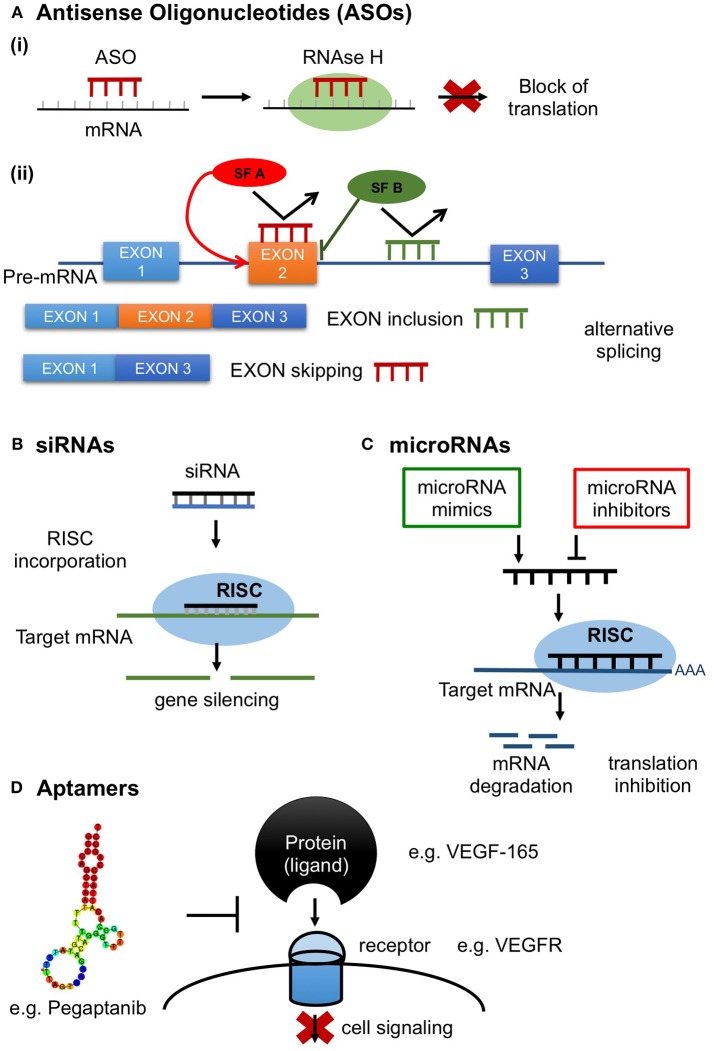
For the early design of small nucleic acid drugs such as siRNA and ASO, structRFM offers a pre-screening approach at the structural level, filling the blind spot of pure sequence screening tools:
Target site accessibility assessment: Analyze the folding state of target mRNA regions, prioritizing regions with loose structures, no strong self-folding, and no stable pseudojunctions as binding sites, avoiding highly dense regions that are difficult to contact ASO/siRNA;
Risk prediction of candidate sequence selffolding: Assessing the probability of intramolecular folding and hairpin structure formation in siRNA and ASO self-sequences, screening siRNA molecules that are more likely to form stable double-strands and are more favorable for RISC complex loading;
Refined off-target risk assessment: not just simple sequence homologous comparison, but also combining local conformations of off-target RNA to distinguish between "sequence matching but spatically unable to combine" and "sequence approximation with conformational fitting with high off-target risk," reducing false positive off-target early warnings;
Batch molecular initial screening for cost reduction and efficiency improvement: In large-scale candidate sequence libraries, molecules with unstable structures and poor druggability are pre-screened, reducing unnecessary synthesis and activity testing workload.
However, it should be objectively recognized that this model is a foundational model, focusing on the association prediction of RNA conformations and sequences, and still falls short of a complete oligonucleotide service system that can be directly delivered for drug development: the model itself does not cover experimental steps such as target biological validation, oligonucleotide synthesis processes, diversity modification evaluation, conjugation process development, or cell-level activity screening, and the computational results still require closed-loop wet experiment validation.
New industry consensus: AI integrated platforms support R&D implementation
The oligonucleotide track has moved beyond the early proof-of-concept stage, with multiple siRNA drugs commercialized. Industry competition has shifted from "whether it can be made" to "how to screen high-quality candidates faster and more efficiently." The value of AI in oligonucleotide research has also evolved from simple sequence generation to structure-driven rational design.

The open-source use of structRFM provides the industry with a high-quality RNA structure computing foundation. Research teams and pharmaceutical companies can use this foundation for secondary development and build their own nucleic acid prediction modules, driving the industry's transformation from "random screening and extensive trial and error" to "rational structural design."
At the same time, this achievement clearly demonstrates that computational models are important enabling tools, but a single AI model cannot independently complete the entire development process of a small nucleic acid molecule from target to active candidate. An integrated platform combining dry and wet methods and connecting multiple links remains the core carrier for small nucleotide R&D implementation.
Empowering industries: Junji Biotech's one-stop oligonucleotide platform
The success or failure of oligonucleotide development largely depends on the early screening stage. Completing early conformation, off-target, and druggability pre-evaluation can significantly reduce the entry of ineffective molecules into wet experiments, saving R&D time and costs.
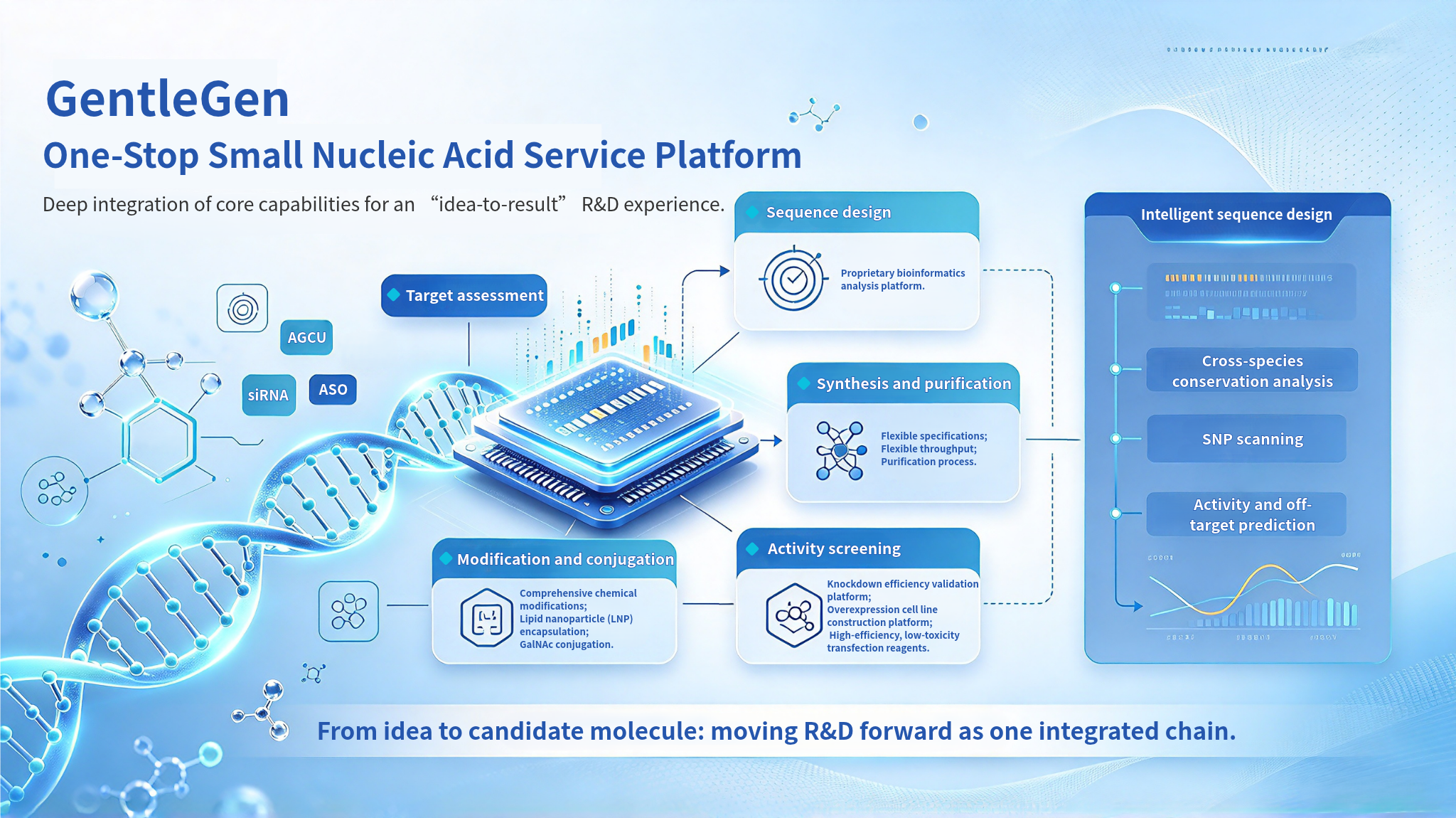
GentleGen's one-stop oligonucleotide service platform is not simply a combination of various services, but deeply integrates core capabilities such as target evaluation, sequence design, synthesis purification, active screening, and sequence modification & conjugation, truly achieving a "just imagine and get" R&D experience.

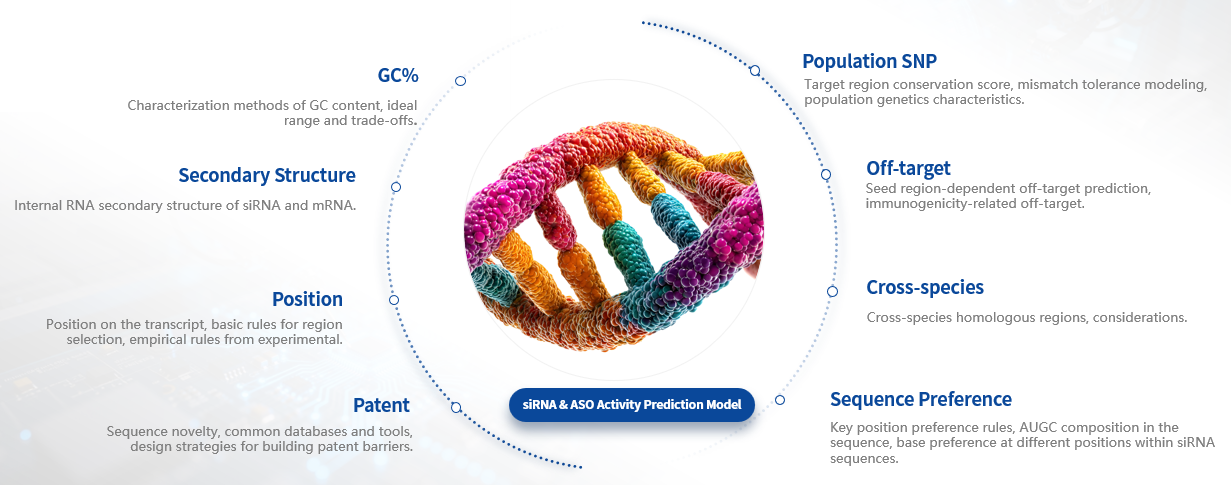
In intelligent sequence design, GentleGen leverages its self-developed bioinformatics analysis platform to achieve cross-species conservation analysis, SNP scanning, and activity/off-target prediction.

GentleGen's one-stop platform has already paved a "highway" to your destination. For more details about related services, you can send an email to marketing@gentlegen.com.