





热线电话:+86 512 6799 8818

在线咨询

TOP

*姓名

*电话

邮箱

咨询内容

*验证码

联系销售


Sales Image

联系销售助理


Sales Assistant Image

联系PM


PM Image
GentleGen Observation | To put it simply, AI can design active proteins? The new model Pinal can do it!
Release time:2026-11-16
Share:

If you simply say to AI, "I want an enzyme that can break down plastics," can it design a protein sequence that truly works in the lab?


On October 21, the team led by Lu Hongyuan from HKUST, together with Yuan Fajie and Liu Jianming's teams from Westlake University and the same team from the Shenzhen Advanced Institute of the Chinese Academy of Sciences, published the foundational protein design model Pinal in 《Nature》: by inputting a natural language description of the target function, the model can generate candidate protein sequences and then submit them for subsequent screening and experimental validation.
 

Why was the threshold for design protein so high in the past?

Proteins in living organisms perform functions such as catalysis, transport, and luminescence. Customizing new proteins according to function is crucial to green manufacturing and biocatalysis.
 

But for a long time, this path has not been easy: researchers often have to first find prototypes in natural proteins, then repeatedly modify and experimentally select them; Even with AI, functional requirements often need to be translated into structural constraints, critical sites, and other specialized conditions. Between "what do you want protein to do" and "how to obtain such proteins?" lies a gap that requires experience in structural biology, protein engineering, and computational modeling.


After AlphaFold overcame the challenge of "predicting structures from sequences," the generative model began reverse learning, designing proteins that do not exist in nature; However, users still need to use formal technical specifications to guide the model, specify structural constraints or mutation sites, and the threshold remains high.


Pinal approach: first sketch the structure, then fill in amino acids

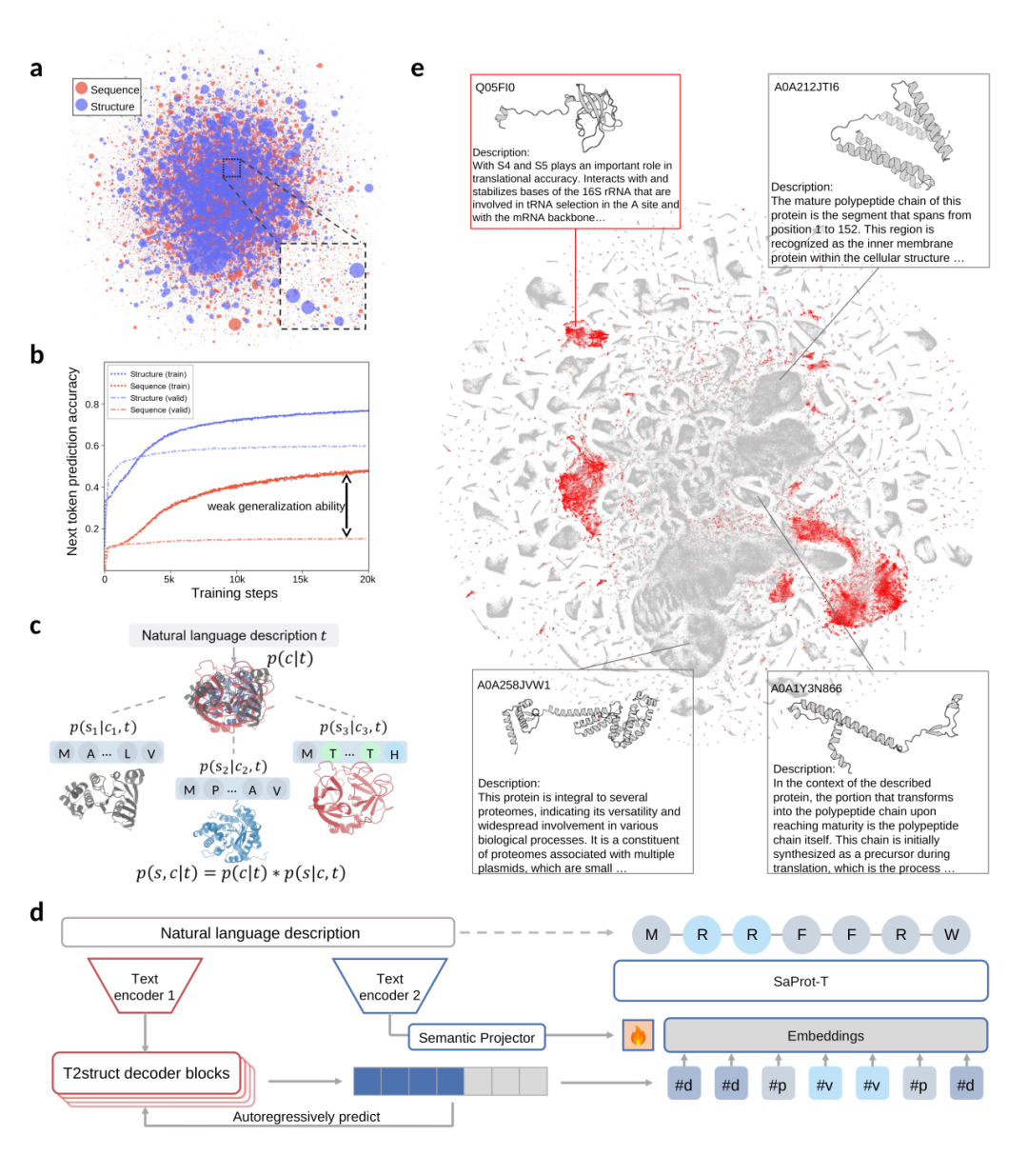
What Pinal aims to achieve is to directly initiate protein design in everyday language. The team noticed that having the AI model directly produce an entire amino acid sequence from text is not perfect; A more feasible approach is to first deduce the protein structure from text, then arrange the sequence within the structure. Just like sketching the entire plan according to purpose and then determining the positions of components one by one, the structure becomes the relay for functional description leading to molecular sequences.


image


The model is divided into two phases, with no user required to provide structural or sequence details throughout the process:

  • The first stage reads the functional description and generates several candidate structures;

  • The second stage combines blueprints and text to select amino acids for each location.


The model does not bet on a single scheme; multiple candidate structures are translated into sequences and then scored and sorted uniformly; The best designs may not correspond to the most intuitive shapes; retaining diverse candidates is the only way to make room for experimentation.


1.7 billion pairs set, trained to produce a model with 16 billion parameters

Supporting this path is large-scale model training. The team accumulated about 1.7 billion histone and text-based pairing samples, involving approximately 135 million sequences and their structures: text descriptions were generated by large models based on sequences, and structures were predicted using AlphaFold. The two modules were trained separately: one learned to "push the skeleton from text prompts," the other learned to "hold the skeleton and select residues with prompts," ultimately combining into a Pinal with about 16 billion parameters.


The evaluation showed that as sample size and model size increased, the consistency between the produced molecules and target functions, as well as the quality of fold prediction, steadily improved, while sequence differences and structural novelty also left room for experimental selection.


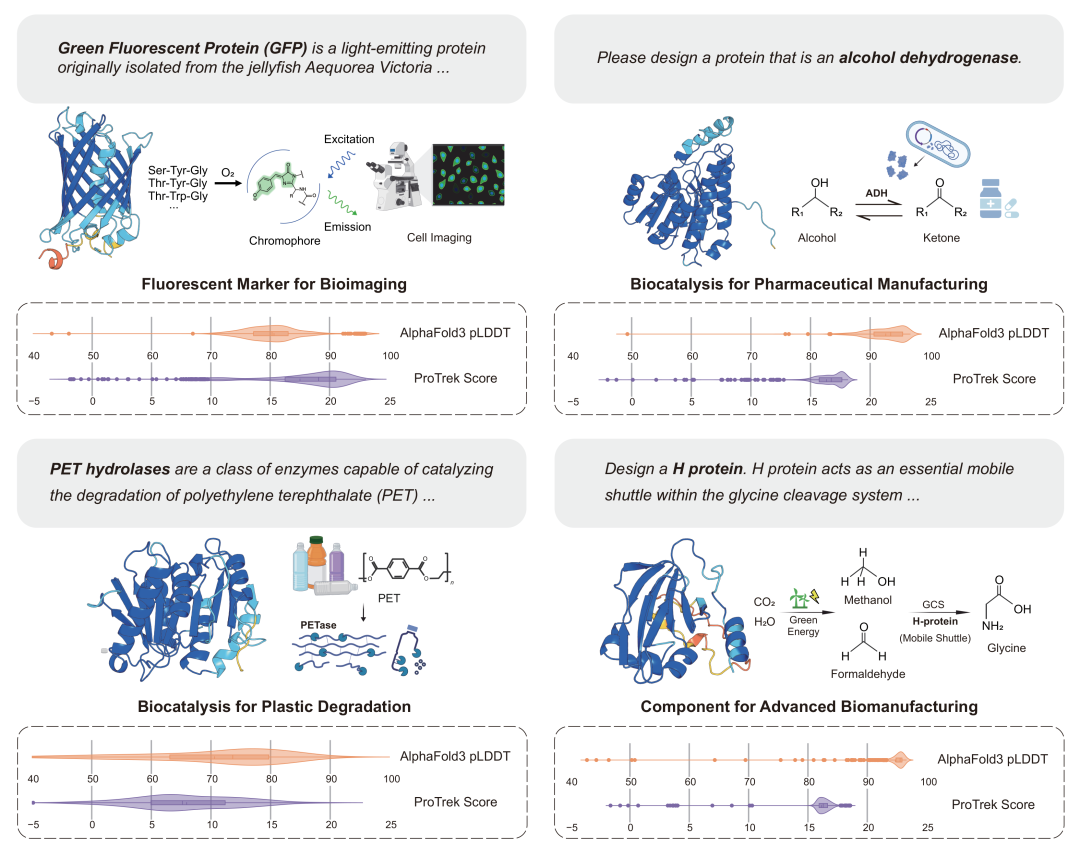
No matter how well the computer calculates, it still depends on whether the sequence can be properly expressed, folded into structure, and truly effective—this is the unavoidable final review. The team selected four types of proteins with different uses, all based on text prompts, and after calculation and screening, tested item by item.


image-1


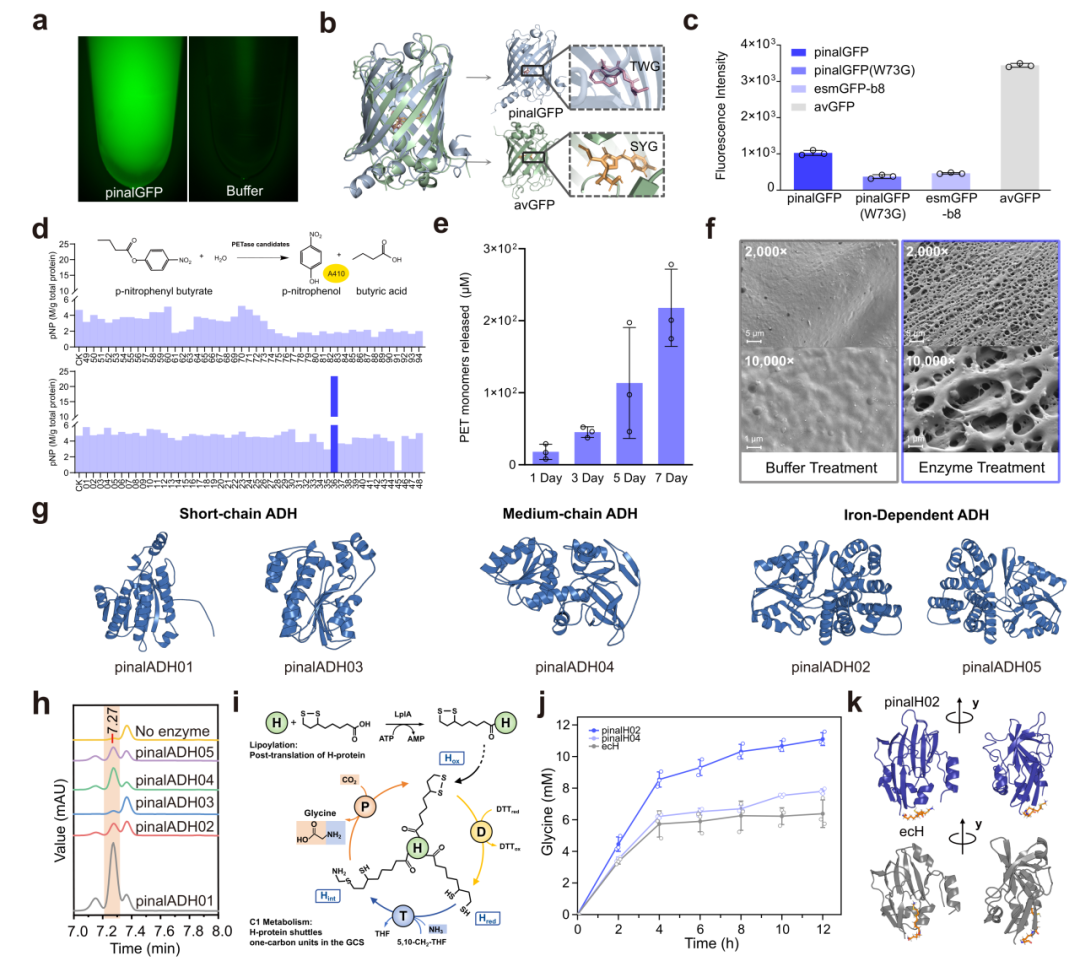
  • Green fluorescent protein: pinalGFP was found among 29 preferred candidates, with luminescence consistent with common GFPs; After modifying key residues involved in chromophore formation, the fluorescence disappears, thereby confirming the emission path.


  • Alcohol dehydrogenase: Since the subfamilies or chain lengths are not limited, five active alcohol dehydrogenases were ultimately obtained, covering short, medium, and iron-dependent long chain subfamilies, demonstrating the model's ability to generate different molecular schemes.


  • PET hydrolase: Screening for catalytic pinalPETase36, which can hydrolyze model ester substrates and, under specific conditions, act on solid PET; Degradation products were detected during the reaction, and obvious pits and pits appeared on the PET surface under electron microscopy.


  • Multi-enzyme system H protein: H protein is responsible for transporting reaction intermediates, requiring structural formation, post-translational modification, and coordination with other enzymes. Among the 20 candidates, 14 are soluble and expressed, and 5 are active in in vitro carbon sequestration systems; The optimal pinalH02 achieves glycine concentration of 11.1 mmol/L, which is 1.7 times that of natural E. coli H protein, and is based on the initial design and has not yet been iteratively optimized. Simulations suggest its transfer "swing arm" is more flexible, but this explanation still needs further verification.


Rational perspective: natural language does not mean skipping experiments

Many of the Pinal candidates still have unsuccessful approaches, with success rates varying by task: fluorescent proteins initially produce about 50,000 sequences, filtered down to 29 tests, and ultimately only one emitted light; Of the 20 candidates for H protein, 5 are active. The team also acknowledged that the model still has limitations in precisely specifying fine-grained quantitative properties such as fluorescence wavelength; computational screening cannot replace real catalytic activity measurements; heuristic screening may also confin exploration to local design spaces.


image-2


Natural language lowers the threshold for "making demands," rather than eliminating the wet experiment barrier; As functional data accumulates and models and high-throughput experiments are further integrated, this design approach is expected to cover a broader range of biomanufacturing needs.


GentleGen: AI antibody R&D, insisting on a closed-loop dry and wet system

Pinal's value lies not only in performance, but also in redefining protein design to address the issue of usable functional language specification. AI is rapidly expanding candidate space, but what truly determines efficiency and cost is whether high-quality, drug-ready molecules can be quickly screened out in the early stages. The earlier candidates are identified, eliminated, or retained, the more controllable the subsequent experimental investment will be.


Relying on its independently developed GentSyn-Exp3.0G-Lab fully automated production line, GentleGen has built a one-stop, high-throughput technology platform covering gene design, synthesis, validation, protein expression, and antibody affinity characterization. Traditional R&D models rely heavily on manual validation, but GentleGen has redefined the efficiency and cost of wet experiments through automation.


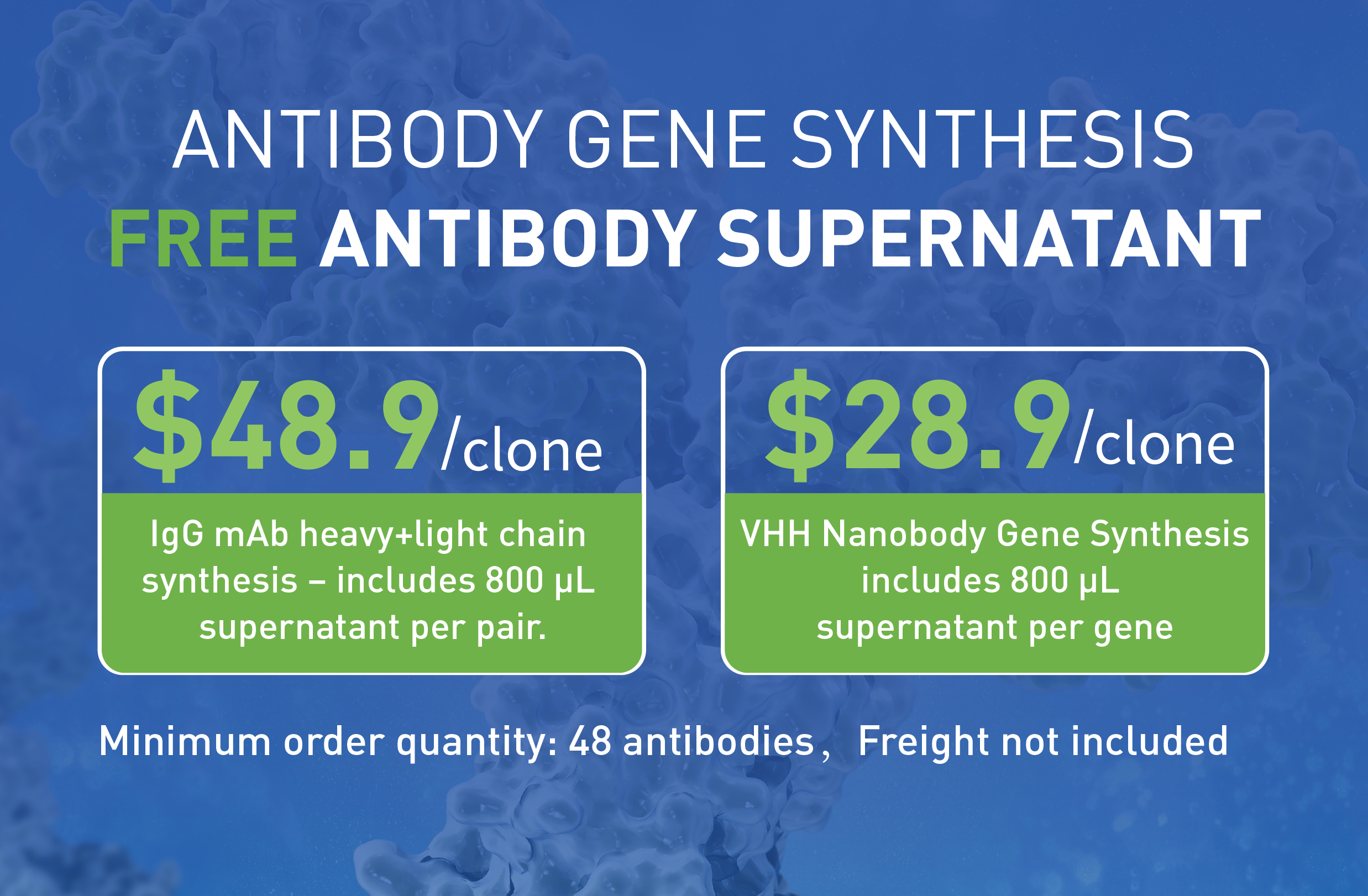
  • High-throughput screening: High-throughput expression screening greatly reduces the detection cost of individual samples—IgG monoclonal antibody at 48.9 USD/clones, VHH nanobody at 28.9 USD/clones. Each antibody comes with 800 μl of antibody supernatant that can be directly used for functional validation—eliminating purification steps and skipping intermediate steps, providing one-stop downstream testing from genes to antibodies.


    1111-02


  • Full-chain experimental coverage: gene synthesis and vector construction, transient transfection of mammalian cells and antibody supernatant expression, and high-throughput affinity characterization of Octet® RH96 BLI. Relying on the G-Lab automation platform to connect the entire process, unify experimental standards, ensure stable and comparable data for the same batch, and adapt to data feedback needs for AIDD model iterations. 


For detailed information about related services, please send an email to marketing@gentlegen.com.

Pre-sales consulting

Pre-sales consulting

A more reliable solution for your needs.
Download

Download

Welcome to our product library.
Sales network

Sales network

Complete sales and service network to ensure product quality.
Event Promotions

Event Promotions

Add to cart now and enjoy this shopping extravaganza!