
热线电话:+86 512 6799 8818

在线咨询

TOP

*姓名

*电话

邮箱

咨询内容

*验证码

联系销售


Sales Image

联系销售助理


Sales Assistant Image

联系PM


PM Image
In the AIDD Era: How GentleGen Bridges the Last Mile of AI Drug Discovery
Release time:2026-09-24
Share:

Antibody drugs are a pillar of biomedicine, but traditional R&D pathways take years and often fail to yield high-affinity antibodies against difficult-to-drug targets. More frustratingly, even when AI provides high-scoring sequences, they may still fail in wet-lab testing on druggability metrics, causing huge cost losses. These pain points are driving a new paradigm in AI-designed antibodies.


AI drug discovery (AIDD) is an emerging field that uses artificial intelligence to accelerate drug R&D, with the core idea of letting AI learn the relationship between molecular structure and function from massive data, directly generating or screening drug candidates, and replacing traditional "needle-in-a-haystack" experimental trial-and-error.


AI drug discovery computes accurately, but cannot move fast enough?

AI drug discovery covers the entire drug R&D chain: at the target discovery stage, AI identifies new targets through multi-omics data; at the molecule generation stage, diffusion models and protein language models design small molecules or antibody sequences from scratch; at the affinity prediction stage, tools such as AlphaFold-Multimer predict complex structures and calculate binding strength; at the ADMET prediction stage, AI screens out difficult-to-develop molecules in advance; and at the clinical stage, AI optimizes patient stratification and trial protocols. In short, the goal is to transform drug discovery from "experiment-driven" to "computation-driven."


However, industrialization still faces multiple bottlenecks.


  • High-quality data are scarce and fragmented: drug R&D data are scattered across patents and literature, and negative results are often unpublished, leading to bias in model training.


  • Wet-lab validation throughput is insufficient: AI can generate thousands of candidate molecules in a week, but traditional synthesis, expression, purification, and testing workflows cannot keep up, creating a "fast design, slow validation" scissors gap. More critically, multiple papers point out that the true wet-lab binding hit rate of AI de novo designed full-length IgG is only 1%–5%. A large number of high-scoring sequences on the computer turn out to have fatal defects such as extremely low expression, protein aggregation, and poor thermal stability after being sent to the lab. By the time these problems surface at the CMC stage, all R&D costs have been sunk.


  • In addition, insufficient model interpretability makes it difficult to determine the causes of failure, thereby affecting the efficiency of iterative optimization; clinical translation rates are low, and no AI-designed drug has yet been approved; and regulatory pathways are unclear, so the filing standards for computationally generated drugs are still being explored.


Clinical stages have broken through, but validation is still racing ahead.

Despite the many challenges, AI drug discovery has made substantial progress in recent years, and several landmark cases have proven its feasibility:


  • In the small-molecule field: Insilico Medicine's TNIK inhibitor ISM001-055 took only 18 months from target discovery to preclinical candidate, and has now entered Phase III clinical trials;


  • In the antibody field: Absci's AI-designed antibody ABS-101 has entered the clinical stage, targeting tumor necrosis factor-like cytokine 1A (TL1A) for the treatment of inflammatory bowel disease (IBD); Generate Biomedicines' GB-0895 (an anti-TSLP long-acting antibody) has also entered clinical development.


gr1


According to Insight industry data, across the entire AI pharmaceutical industry, AI-driven new drug clinical pipelines grew to more than 170 in 2026, showing exponential explosion, with nearly ten advancing to Phase III.

 

Dry-wet closed loop: the "last mile" of AI drug discovery.

The future of AI drug discovery lies in the deep integration of AI and automated experiments. The industry is currently building a "design → build → validate → data feedback" dry-wet closed loop: AI generates candidates → automated platforms rapidly synthesize and express → high-throughput functional validation → data flows back to optimize the model. Each cycle improves the model's predictive ability and shortens the R&D cycle.


When AI pushes drug design toward scale, who will undertake the experimental demand released by this design revolution? This has become a core proposition for the industrialization of AI drug discovery.


GentleGen has formed a strategic partnership with Wecomput, and the jointly launched AI antibody design platform is bringing this closed loop to the ground. GentleGen provides fully automated wet-lab validation capabilities, covering gene synthesis, protein expression, and functional testing; Wecomput's WeMol platform integrates artificial intelligence, biophysics, and molecular simulation, and can design, predict, and optimize antibody sequences.
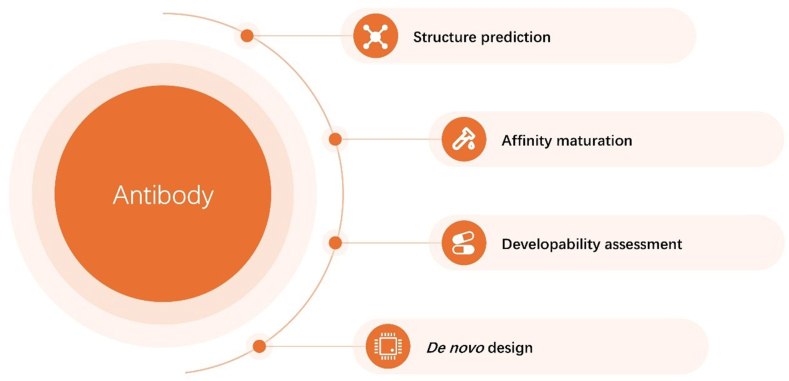
 

AI-generated candidate antibody sequences enter GentleGen's automated platform, where high-throughput expression and affinity testing are completed, and experimental data flow back in real time to the WeMol model, driving the next round of design iteration. The more the model is used, the more accurate it becomes, and the shorter the R&D cycle becomes. This "AI design—automated validation—data feedback" dry-wet closed loop is exactly the "validation foundation" jointly built by both parties for the AI pharmaceutical era.


Full-process automation: making AI high-throughput screening a lab routine.

Relying on its self-developed GentSyn-Exp3.0G-Lab fully automated production line, GentleGen has built a one-stop, high-throughput technology platform from gene design, synthesis, and validation to protein expression and antibody affinity characterization. Traditional R&D models rely on a large amount of manual validation, whereas GentleGen uses automation to redefine the efficiency and cost of wet-lab experiments.


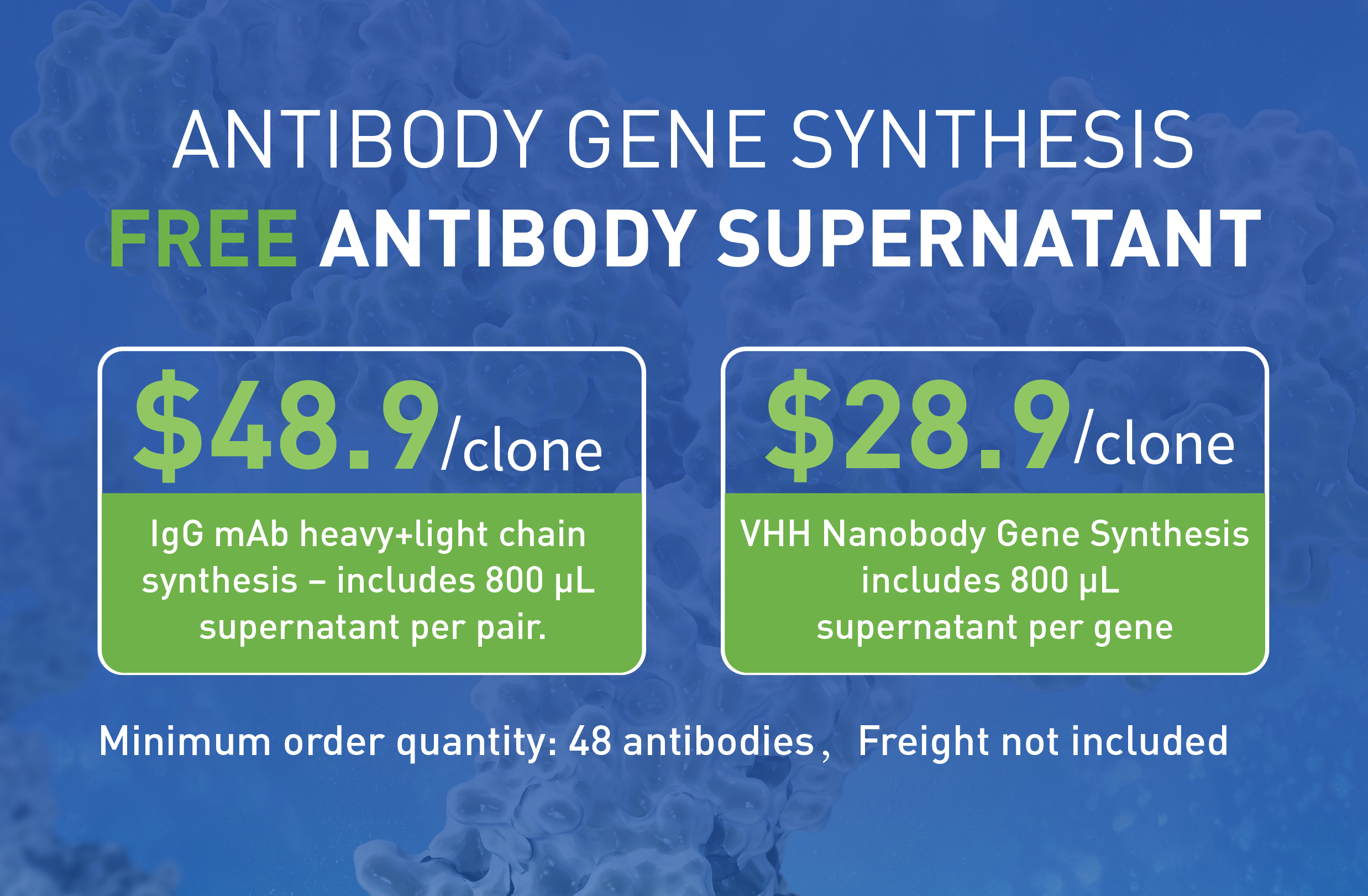
  • High-throughput screening: high-throughput expression screening greatly reduces the detection cost per sample—IgG monoclonal antibody at 48.9 USD/clones, VHH nanobody at 28.9 USD/clones. Each antibody comes with 800 μL of antibody supernatant that can be directly used for functional validation—eliminating the purification step and skipping intermediate links, from gene to antibody, one-stop direct access to downstream experiments.


1111-02


  • Affinity testing: GentleGen provides three major affinity testing platforms—ELISA, BLI, and SPR—covering the full-process needs from early high-throughput screening to precise characterization of candidate molecules. No matter which stage of antibody discovery you are in, GentleGen can match the most suitable affinity testing solution.

What AI fears most is "invalid feedback" caused by experimental failure. Relying on automation and AI algorithm optimization, GentleGen achieves a first-time synthesis success rate of up to 99% and sequence accuracy of 99.9%. This ensures that every feedback signal received by the AI agent is true and reliable, greatly improving the efficiency of autonomous exploration.

Let AI-designed candidate molecules obtain wet-lab data in the shortest possible time. To learn more about related services, please send an email to marketing@gentlegen.com.

Pre-sales consulting

Pre-sales consulting

A more reliable solution for your needs.
Download

Download

Welcome to our product library.
Sales network

Sales network

Complete sales and service network to ensure product quality.
Event Promotions

Event Promotions

Add to cart now and enjoy this shopping extravaganza!