


Currently, in the AI antibody sector, numerous platforms can output hundreds or even thousands of candidate antibody sequences in a short time. But many projects face a practical dilemma: AI provides high-scoring sequences, but wet experiments fail frequently; After each round of design-test cycle, the decision logic of "why choose this one, why eliminate that one" fails to accumulate, and project knowledge is lost as personnel transition occurs. On October 1, 2026, DaltonTx in the UK officially launched its next-generation AI antibody discovery platform, making "recording and accumulating every decision step" its core differentiator, bringing new perspectives to the industry.
Current industry pain points: Sequences everywhere, making decisions hard to keep
Many AI antibody tools on the market now have core capabilities focused on: antibody sequence generation from scratch, protein structure prediction, and candidate molecule scoring and sequencing. After the run, the developers are given a long list of candidate sequences and a computer scoring table.

But real drug development is far more than just a sequence:
Which sequences are prioritized for synthesis expression, and why?
Which molecules are eliminated because they predict physical and chemical failure standards? Or is it a combination of target risks?
After wet experiments yield positive/negative results, how will this failure guide the next round of AI design?
Often, these judgments only exist in researchers' notes, meeting minutes, and minds. After project iterations and personnel turnover, a large amount of valuable trial-and-error knowledge is directly lost. AI models can only read sequences and final experimental results, but do not know "why people make this choice," resulting in model iterations lacking complete context.
Even with a DBTL (Design-Build-Test-Learn) closed loop, if decision logic cannot be digitally preserved, the effectiveness of closed-loop learning is greatly reduced. This is exactly the industry pain point that DaltonTx's new platform aims to address.
Core capabilities of the next-generation antibody AI platform
DaltonTx officially launched in October, integrating antibody sequence design, structure prediction, and candidate molecule priority assessment into a unified workflow. The biggest difference from ordinary AI antibody platforms is not stronger sequence generation capability, but the decision logic recording system.
Integrated end-to-end workflow:
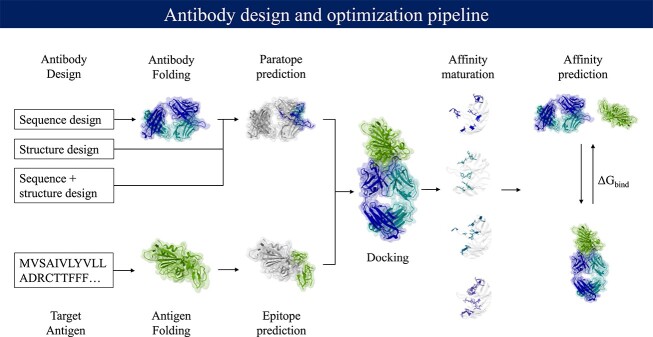
The platform covers a complete chain from target input, AI antibody sequence generation, structure prediction, and feasibility evaluation to candidate molecule prioritization, enabling large-scale analysis of millions of antibody sequence libraries to help researchers focus on the most promising candidate molecules.
Conversational interaction, fully preserving decision reasons:
The platform uses a chat interface to fully record the entire project decision-making process: why a particular antibody is prioritized, which molecules are eliminated, and what the target is for each round of screening. With the help of a dedicated ontology knowledge base, researchers can link their observations and judgments with corresponding antibody sequences and experimental results.
AI predictions and real wet experiments continue to align:
The platform emphasizes that AI outputs must be continuously compared with wet experiment results. Rather than relying solely on virtual scoring, the system feeds real-world data together with decision-making background, allowing the system to evolve alongside the project progress, striving to screen antibody candidates that are not only computationally sound but also have drug development potential.
DaltonTx CEO Garry Pairaudeau mentioned: "Researchers today have access to an unprecedented range of AI models and computational tools for antibody discovery, but turning those outputs into confident scientific decisions remains a challenge. We built these capabilities to bring data, models and expert judgement together in one coherent workflow. Ultimately, we're helping teams reduce complexity, accelerate discovery and focus resources on the most promising opportunities. ”
Decision-making knowledge is just as important as data return
The release of DaltonTx marks an important shift in the AI antibody industry: the industry has moved past the initial stage of "whether antibody sequences can be generated" and is now pursuing the accumulation and reuse of knowledge throughout the entire R&D process.
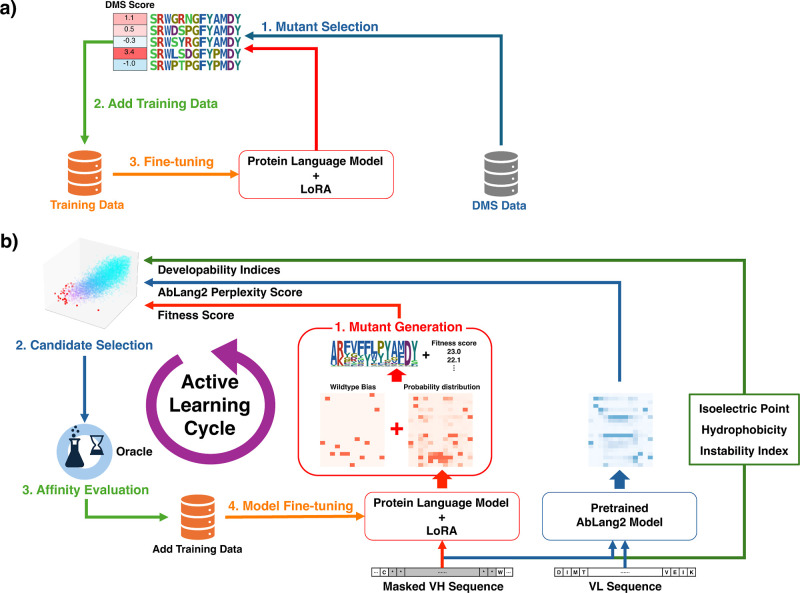
In the past, when discussing the DBTL wet and dry closed loop, the focus was mainly on sequence output→ synthetic expression→ obtaining active data, → feeding data back to the model.

DaltonTx reminds us that human decision-making logic is also an indispensable part of the closed loop.
For the same set of wet experiment data, different R&D personnel will make completely different candidate choices; If the decision logic is not recorded and the activity values are simply fed to AI, the information learned by the model is incomplete.
Of course, we must also view it objectively: recording decision logic is an important upper-level capability, but it cannot bypass hardcore wet experimental verification.
No matter how the platform improves its decision-making process, antibody candidates provided by AI must still undergo high-throughput expression, purification, ELISA/BLI/SPR affinity testing, and multiple layers of physicochemical evaluation. No matter how sophisticated the calculations and predictions, they cannot replace the real behaviors of protein folding, expression, and binding within cellular systems.
GentleGen: AI antibody R&D, insisting on closed-loop dry and wet environments
The DaltonTx case further proves that a truly effective AIDD closed loop requires both AI prediction capabilities and high-fidelity humidity experiment validation—both are indispensable.
GentleGen, together with the Wemol AI prediction platform, covers antibody codon optimization, expression prediction, physicochemical property assessment, and sequence risk prediction.
Relying on its independently developed GentSyn-Exp3.0G-Lab fully automated production line, GentleGen has built a one-stop, high-throughput technology platform covering gene design, synthesis, validation, protein expression, and antibody affinity characterization. Traditional R&D models rely heavily on manual validation, but GentleGen has redefined the efficiency and cost of wet experiments through automation.
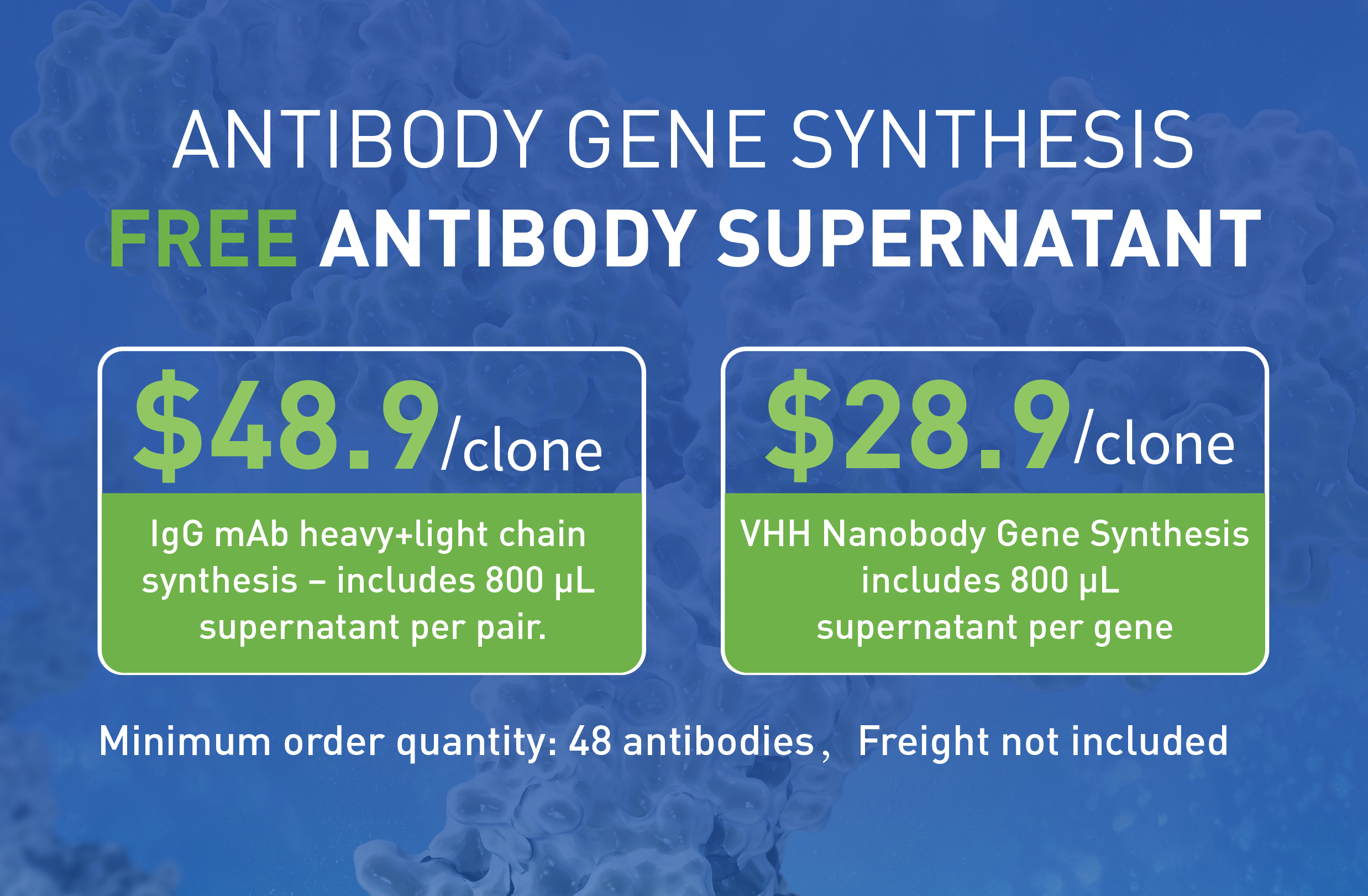
High-throughput screening: High-throughput expression screening greatly reduces the detection cost of individual samples—IgG monoclonal antibody at 48.9 USD/clones, VHH nanobody at 28.9 USD/clones. Each antibody comes with an 800 μl of antibody supernatant that can be directly used for functional validation—eliminating purification steps and skipping intermediate steps, providing one-stop downstream testing from genes to antibodies.

Affinity testing: GentleGen offers three major affinity testing platforms—ELISA, BLE, and SPR—covering the entire process from early-stage high-throughput screening to precise candidate molecular characterization. No matter what stage of antibody discovery you are in, GentleGen can match the most suitable affinity testing protocol.
AI prediction models can narrow the pool of candidates and reduce ineffective workloads; Automated wet experiments produce high-quality, real data, which in turn drives continuous iteration and upgrading of AI models.
No matter how large models iterate, AI will always be the R&D accelerator; High-quality, automated high-throughput wet experiment validation is the ultimate judge in selecting high-quality antibody candidates. For more details about related services, you can send an email to marketing@gentlegen.com.