











What are the basic structures and packaging principles of lentiviruses and adeno-associated viruses?
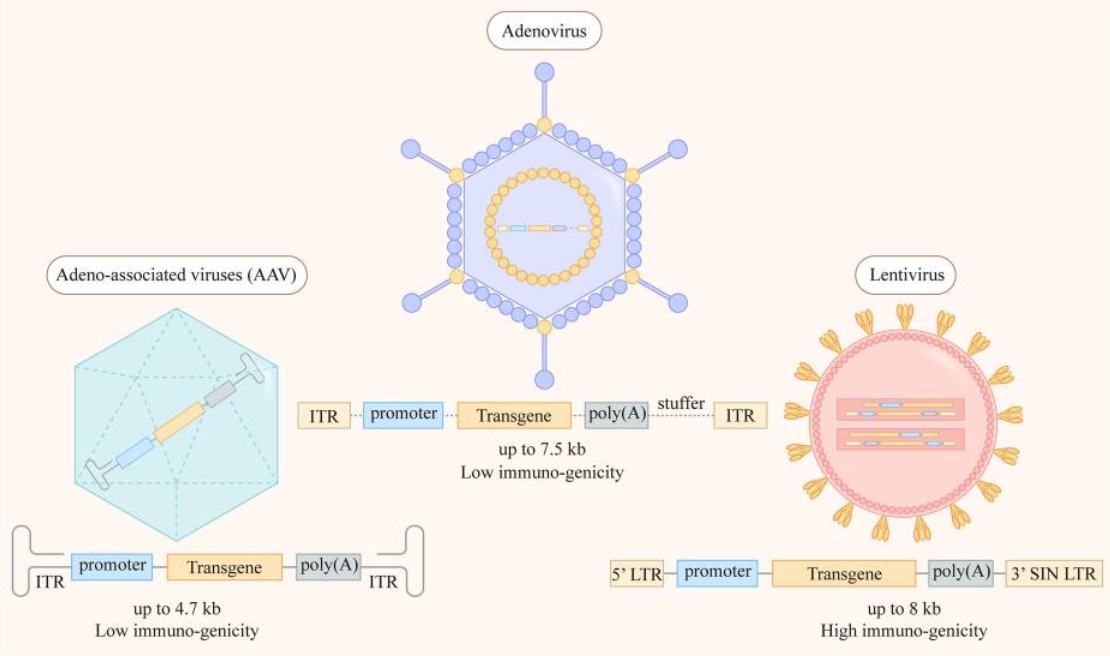
Lentiviruses belong to the family Retroviridae, with a genome consisting of single-stranded RNA. During packaging, lentiviral vector plasmids (including target genes) were co-transfected with packaging plasmids (Gag/pol, Rev) and envelope plasmids (VSV-G) into 293T cells, assembling them into viral particles inside the cells. After lentivirus infects host cells, RNA is reverse transcribed into DNA and integrated into the host genome, achieving long-term stable expression. Among them, 293T cells highly expressed SV40 T antigen, which efficiently supported the packaging of lentiviral vectors and amplification of viral particles.
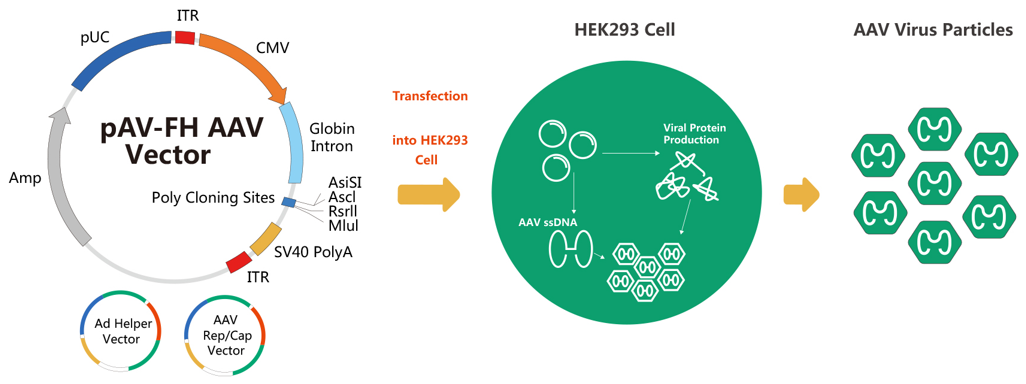
AAV (adeno-associated virus) belongs to the parvoviridae family, with a single-stranded DNA genome. During packaging, the AAV vector plasmid (containing ITR and target gene) was co-transfected with the Rep/Cap plasmid and helper plasmid into HEK293 cells, resulting in AAV viral particles. After AAV infects host cells, its DNA usually exists in the nucleus in a free form, with a very low integration rate, but it can be expressed over a long period. HEK293 serves as a packaging cell, providing the necessary environment for replication and packaging in AAV production.

What are the differences between the two types of virus packaging?
The integration feature is the fundamental safety difference between the two: lentiviruses integrate into the host genome, carrying the risk of insertion mutations that may activate proto-oncogenes or disrupt tumor suppressor genes; AAV is mainly free with a very low integration rate and a low risk of insertion mutations, but low-frequency integration may still occur during vigorous cell division.

Additionally, lentiviruses have high immunogenicity, mainly derived from envelope proteins and reverse transcription intermediates; AAV has relatively low immunogenicity, but neutralizing antibodies are widespread in the population, which may affect repeated dosing.
How does Junji ensure lentivirus packaging efficiency and titer?
Core factors affecting lentiviral packaging efficiency include:
Special sequences such as excessively long target genes or high GC reduce plasmid packaging fit;
Low plasmid purity and poor transfection efficiency directly affect viral particle synthesis;
293T cells with low viability and unsuitable plate density are common reasons for packaging experiment failures;
Improper control of cultivation temperature (standardized 37°C) and incubation time can interfere with the assembly and release of viral particles.
However, GentleGen standardizes all factors to ensure virus packaging efficiency and titers: adding polybrene during lentivirus packaging can neutralize negative charges on the cell surface, promote lentiviral particle binding to cells, and significantly improve infection efficiency.
How should one choose between different experiments?
Lentivirus is suitable for long-term stable expression in vitro and cell therapy modifications:
When it is necessary to construct stable cell lines, screen CRISPR libraries, or modify immune cells such as CAR-T/CAR-NK, lentiviruses are the first choice, as they can be integrated into the genome and remain stably expressed after cell passage;
When the total length of the target gene or expression element exceeds 4.5 kb, lentiviruses are more suitable than AAV;
Lentivirus packaging titers can reach 1E+8 TU/mL, with high infection efficiency, suitable for most in vitro cell experiments.
AAV is suitable for in vivo gene therapy and animal testing:
AAV has low immunogenicity and good safety, making it the preferred vector for in vivo gene therapy. Different serotypes (AAV2, AAV8, AAV9) can target various tissues such as the liver, muscle, and brain. In animals such as mice and rats, when genes are overexpressed or knocked down, AAV can be expressed long-term in non-dividing cells (such as neurons and cardiomyocytes);
If the experiment only requires the expression of the target gene for a period of time, or if there are concerns about integration risks, AAV is the safer choice;
AAV is also commonly used to deliver CRISPR/Cas9 systems into animals, and its inconformity makes it more suitable for in vivo applications.
Why is it necessary to perform lentiviral and AAV genomic integration site testing?
GentleGen uses QIAseq Targeted DNA Panel to enrich fragments containing integration sites, combined with UMI and NovaSeq sequencing to achieve highly sensitive detection.

The core goal is to determine the insertion site of foreign genes in the host genome from a genetic perspective, assess the risk of insertion mutations, and avoid safety issues such as cell cancer caused by abnormal genomic integration. This test is a mandatory requirement for safety evaluation during drug development and submission.
Full-chain technical support for CGT drug development
NGSafity® Platform: Empowering CGT drug quality analysis
During drug development, quality control and safety evaluation run throughout the entire process from R&D to production. GentleGen's NGSafty® technology platform, including a series of solutions such as AAV-NGSafety®, meets regulatory requirements for gene and cell therapy drugs through a strict quality control system, precise sample preparation processes, and professional bioinformatics analysis capabilities.
The platform has successfully assisted multiple clients' R&D pipelines in completing China-US IND filings, covering key quality attribute analysis.
One-stop gene services: full-chain support from synthesis to analysis
GentleGen has built a one-stop gene service platform covering gene synthesis, oligonucleotide synthesis, Sanger sequencing, high-throughput sequencing, gene editing, and protein expression.
GentleGen provides professional solutions that meet regulatory requirements for the development and quality control of gene and cell therapy drugs through the NGSafity® platform and one-stop gene services. In this process, a comprehensive quality analysis and safety evaluation system will continue to safeguard the safety and efficacy of the drug. For more details about related services, please send an email to marketing@gentlegen.com.